




Help us help you
I was in Washington, D.C., recently for an industry lobbying effort that brought together key players from the school bus community.
I was in Washington, D.C., recently for an industry lobbying effort that brought together key players from the school bus community.
Sponsored by the National School Transportation Association (NSTA), this “Day on the Hill,” as it was called, put nearly 60 industry leaders in contact with lawmakers and staff in both the House and Senate.
Chief among the attendees were the three presidents of the industry’s top organizations — Lenny Bernstein of the National Association for Pupil Transportation, Pete Japikse of the National Association of State Directors of Pupil Transportation Services and John Corr of the NSTA. The “3 Ns,” as they are collectively known, are committed to finding common interests that can be projected through a single unified voice.
In D.C., they were supported by several members of the supplier community, including representatives of Blue Bird Corp., Collins Bus Corp./Mid Bus Inc., International Truck and Engine Corp., Thomas Built Buses and both industry publications.
Voices need to be heard
Together, these leaders of the school bus industry discussed ongoing issues with lawmakers and also pushed for House recognition of School Bus Safety Week, which has been in the works for several months now.
It’s vitally important that the industry make a push at the federal level to draw attention to the challenges faced by school bus operators, such as sky-high fuel costs, security concerns and funding for the Clean School Bus USA program. As a single voice, the associations have weighed in on these issues in letters to Congress and testimony on Capitol Hill. Their efforts are commendable.
It’s clear that the highest levels of the industry are marshaling their resources to provide key federal decision-makers with information about crucial issues. What’s also needed, however, is for school districts and contractors across the country to lend their voices to the cause.
And that can be accomplished without traveling to the nation’s capital.
Has something positive occurred at your operation recently? A bus driver celebrating a 25th anniversary on the job? An aide who helped to avert a potentially dangerous medical issue with a student passenger? Or an inspection of your buses by the state patrol that turned up no deficiencies?
Spread the good news
These stories need to be told. Local print and broadcast outlets are the perfect places to share these stories with your community. Take the initiative to contact the newspapers and radio and TV stations in your area with these stories. In addition, place these stories on your Websites, so parents, teachers and other community members will see them when they’re cruising for other information.
These positive stories will percolate up to higher levels. Local newspapers are scanned daily by staff members for legislators at the city, regional, state and federal levels. If enough positive stories about school transportation are making their way into the news, it will have two effects. One, it will counter all the bad news about school transportation that invariably makes its way into the headlines. Two, it will slowly change the perception of the industry — hopefully, into one that merits, no, demands federal attention and badly needed financial support.
At SCHOOL BUS FLEET, we try to focus on the positive developments in the industry, while, at the same time, not ignoring the areas where improvements are necessary. You should be making the same effort, for the betterment of the entire industry.
More Management

The Back-to-School Checklist Every Director Should Complete Before the First Bell
Help your transportation team start the school year strong with these tips for contingency planning, communication, fleet visibility, technology, and trip management.
Read More →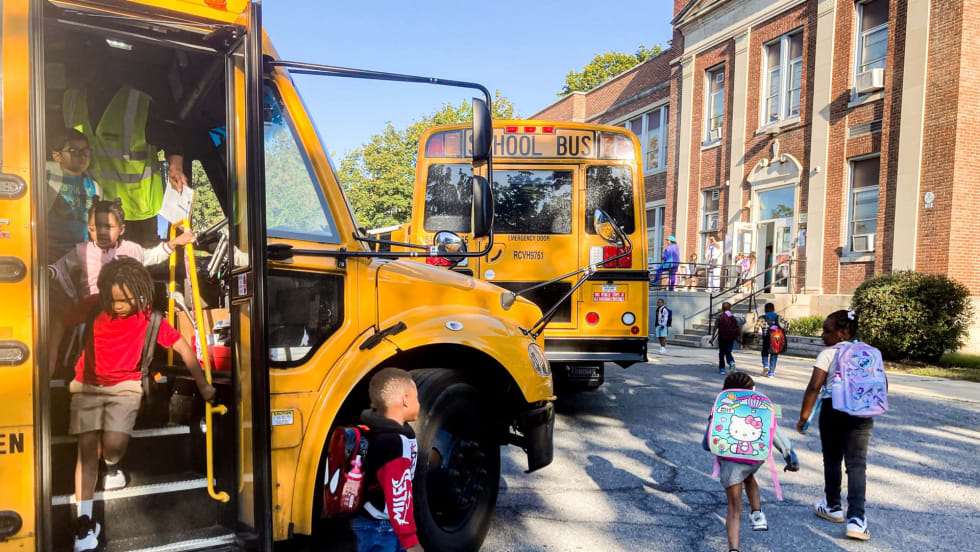
How a New York District Cut Nearly $1M in Transportation Costs While Expanding Bus Access
A data-driven overhaul with BusRight reduced Poughkeepsie City School District's planned routes from 26 to 17 while extending school bus service to about 1,200 additional students.
Read More →
Budgets Down, Enrollment Shifting: What the Data Says Districts Should Watch
School transportation departments face two converging challenges this year: tightening budgets and shifting enrollment. Most districts still address these issues separately, but the assumption that either trend will simplify operations is proving incorrect.
Read More →
These 8 School Transportation Companies Made the 2026 Inc. 5000 List
Find out which school transportation contractors, technology providers, and suppliers ranked among America’s fastest-growing private companies.
Read More →
The Link Between Emotional Intelligence and School Bus Safety
How can emotional intelligence help transportation pros navigate stress, manage change, and build stronger relationships? Listen to find out.
Read More →
What Emotional Intelligence Has to Do With School Bus Safety
In this video, discover how emotional intelligence can help transportation leaders and drivers navigate stress, manage change, and build stronger relationships. The Route is sponsored by IC Bus.
Read More →
Beyond Two-Way Radios: School Bus Communications Evolve With Push-to-Talk Over Cellular
PRYME Radio and PositionPTT join forces to advance hands-free radio use and reduce distracted driving. See how PoC compares with traditional radios on range, cost, safety, and connectivity.
Read More →
Have School Districts Adapted to Bus Driver Shortages or Simply Accepted Less Service?
According to a recent report from HopSkipDrive, many districts appear to have recalibrated what "normal" transportation service looks like.
Read More →
Reliable Transportation Linked to Better Student Outcomes, New EverDriven Study Finds
See why new research suggests transportation consistency improves student outcomes while influencing attendance, funding, IEP compliance, and family trust.
Read More →
Switzer-CARTY Enters the U.S. with New Acquisition
The Canadian contractor’s acquisition of Minnesota-based Agnes Corporation marks its first cross-border expansion into the United States and adds 350 vehicles.
Read More →