




GPS Brings School Buses into Range
Global positioning system (GPS) technology is becoming widely used, but will it satisfy the requirements of school bus operators?
Global positioning systems (GPS) technology is becoming increasingly common in everyday life. Motorists, hikers and boaters are using it to determine their exact position and direction. Car-rental agencies, in particular, have embraced GPS technology, which can help navigationally challenged customers find their destinations. GPS is also making inroads into the mass transportation industry. For example, the transit authority in Mannheim, Germany, tracks light-rail cars using GPS and relays that information to touch-screen displays at tram stops. Passengers can get real-time information about the location and arrival time of any train along the length of the line. In the United States, some transit agencies are using GPS for automatic vehicle location (AVL), which allows them to track buses in real time. In Santa Clara County, Calif., a paratransit agency called Outreach uses GPS to track its fleet of minivans. The agency reportedly saved $500,000 the first year the AVL systems were installed. But will this technology ever make the leap to school bus fleets as a management tool? The answer is "perhaps," depending on the potential applications and the cost barriers. At least one school transportation director believes GPS systems will play a prominent role in fleet management in the next century. "I don't think there's any doubt that GPS is a technology that we'll be using in the future," says Pete Thompson, transportation director at Coweta County Schools in Newnan, Ga. "It's going to happen. I don't know how or when, but it's going to happen." Thompson tested a GPS tracking system for two weeks earlier this year. The system, developed by Worldwide Notification Systems in Atlanta, allowed Thompson to track one regular-route bus, two special-needs buses and two other district vehicles. "Basically, it did everything it was supposed to do," he says.
Bus locations pinpointed
"We could pinpoint where a bus was at any specific time and that helped us clear up some of the radio traffic," Thompson says. Moreover, the system included an emergency alert function that allowed the driver to immediately report violent incidents, medical emergencies, accidents or maintenance problems. This feature, he says, was tied into a cellular phone system for greater response capability. Thompson says he would like to buy some of the GPS receivers for his fleet of 150 buses, especially the special-needs vehicles, but cannot afford the cost, about $1,000 to $1,500 per unit. "We're still trying to make sure that we have new school buses, two-way radios and video cameras," Thompson says. Although real-time tracking makes the best use of GPS capability, there are applications that use the technology in a different fashion. For example, some systems use GPS to intermittently compute a school bus' location, speed and heading. The information is stored in a recording unit for eventual downloading and review. Although this is not real-time tracking, it can help to re-create a driver's route. Dave Jones, transportation director at Leon County Schools in Tallahassee, Fla., uses the Sidekick system, which was developed by Savannah River Technologies (SRT) in Aiken, S.C. The Sidekick unit, which includes a GPS receiver and event recorder, costs about $1,200 to $1,500 and records data points every 15 to 30 seconds along the route, according to John Anderson, director of engineering at SRT. He adds that data points can represent events such as complete stops, door activity and stop-arm usage. Jones has installed Sidekick's GPS receivers in four of his 240 buses, mainly to verify that drivers are sticking to routes and not using the vehicles for personal errands or other unauthorized uses. "My drivers now know these units are out there, but they don't know what buses they're on, so there's more of a tendency to be accurate with the routes they're running, the times, etc., than they have been before," Jones says. When a supervisor wants to review the data, he pulls the memory card out of the recorder and inserts it into his computer for uploading. "This lets him see the trip on a map that shows a little arrow for every data point that was recorded," Anderson explains. Although drivers have complained about the monitoring device, Jones says parents have had the opposite response. "I'll guarantee you that for every driver who didn't like it, I got 10 phone calls from parents saying 'That's what we like to see,'" he says.
Internet link explored
GPS technology is still relatively unexplored in school transportation, but a system that integrates automatic vehicle location and the Internet could have several useful applications. For example, let's say school buses used for transporting students to athletic events were able to be tracked in real time and this information was relayed to a school district's Website. Parents with Internet access could monitor the bus' location and arrive at school at the proper time to pick up their youngsters. Thompson of Coweta County says he would favor this development. "Wouldn't it be nice for a parent to be able to bring up the location of their child's bus on their home computers?" he says. His only concern would be the amount of access available to parents. "We would have to be able to block the parent from accessing the whole system." Parents could also log on to the Internet to check on the status of buses on their regular routes. During inclement weather, such as extreme cold or heavy rain, this would allow them to wait until the bus is within range before sending their children to the bus stop. Such a system already exists, in a slightly different form. The BusCall system, manufactured by NotiCom L.L.C., uses a combination of GPS, cellular communications and conventional telephone service to track school buses. The system automatically calls parents and informs them of the impending arrival of the school bus. David Hall, president of NotiCom, says the system was installed for a six-month trial in Bemidji (Minn.) Area Schools last year. Although the testing was limited to less than 100 homes, it performed as expected and will be instituted on a permanent basis, Hall says. BusCall requires each bus to carry a GPS receiver, a wireless transceiver and a processor, in addition to a special antenna. This allows the fleet operator to access the vehicle's whereabouts on a PC, which would pull up a map of the bus route.
'Mayday' notification
Another potential use of GPS in school buses involves automated collision notification (ACN), which uses crash sensors, vehicle-location systems and cellular phones to automatically notify emergency response units of an accident. The ACN system can sense when an accident occurs and then relay information on the crash severity and location to a 9-1-1 dispatcher. Operational tests of ACN are being conducted for the National Highway Traffic Safety Administration by a research company called Calspan. Approximately 500 privately owned automobiles in Erie County, N.Y., have been equipped with the system. It would take a futurist to speculate on all the possible uses of GPS technology in school bus fleet management, but district budgets may decide how extensively it will be used. As Thompson puts it, "We haven't even scratched the surface of what this can do, but you're going to have to convince your administration that this is a great, grand and wonderful thing."
More Management

Samsara Launches Free Driver Rewards Program
The new Driver Perks program gives eligible professional drivers access to discounts and offers without adding a cost for participating fleets.
Read More →
How Tax-Exempt Municipal Leases Can Help Finance School Buses
Let’s explore school bus financing options, including municipal leases, vendor payable accounts, and balloon payments, and how they can help stretch fleet budgets.
Read More →
Nominate Rising School Transportation Pros Under 40!
We’re searching for the next generation of leaders making an impact across the K-12 student transportation industry to recognize as SBF’s 2027 Trailblazers. Nominations are open now!
Read More →

Changing Lanes: BusWhere, EverDriven, InterMotive, Summit School Services, Switzer-Carty & Thomas Built Buses
Check out who's been hired, promoted, and appointed to leadership positions at various school transportation suppliers, contractors, and manufacturers.
Read More →
The Most Expensive Thing You Do Before Selling a School Bus: Wait
When should you sell an aging school bus? Learn how maintenance, mileage, corrosion, specifications, and timing can affect resale value long before the auction.
Read More →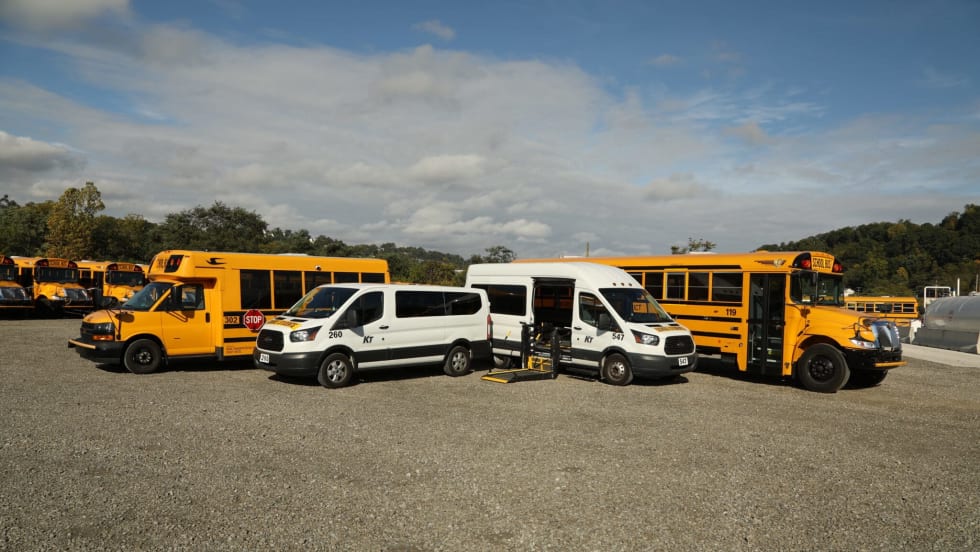
American Student Transportation Partners Acquires AJ Myers and Sons
A new deal brings a 75-year Pennsylvania student transportation provider into one of the nation’s largest private school bus contracting groups.
Read More →
What I Brought Home From SBFX: Relationships, Leadership, and Preparing What's Next
Who could lead your transportation operation tomorrow if you couldn't? Bernando Brown explores succession planning, mentorship, and preparing emerging leaders to step up.
Read More →
Inside School Bus Fleet ConneX 2026: Industry Leaders Connect in Scottsdale [Photos]
See highlights from SBFX 2026 in Arizona, where school bus operators and suppliers gathered for meetings, education, networking, awards, and more.
Read More →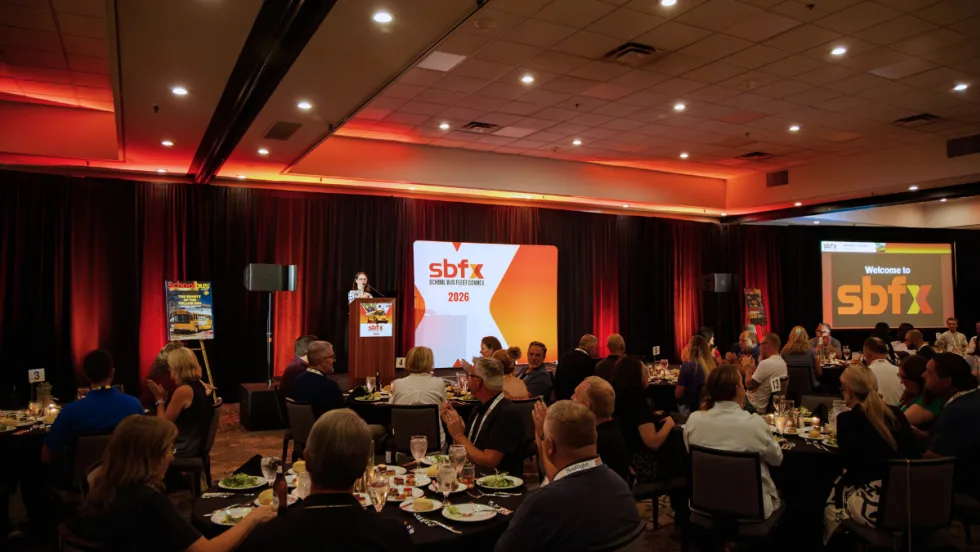
School Transportation’s Biggest Pressures and Opportunities: SBFX Attendees Weigh In
School bus operators point to rising costs, staffing, and vehicle prices as immediate pressures while identifying technology, training, and routing as opportunities for growth.
Read More →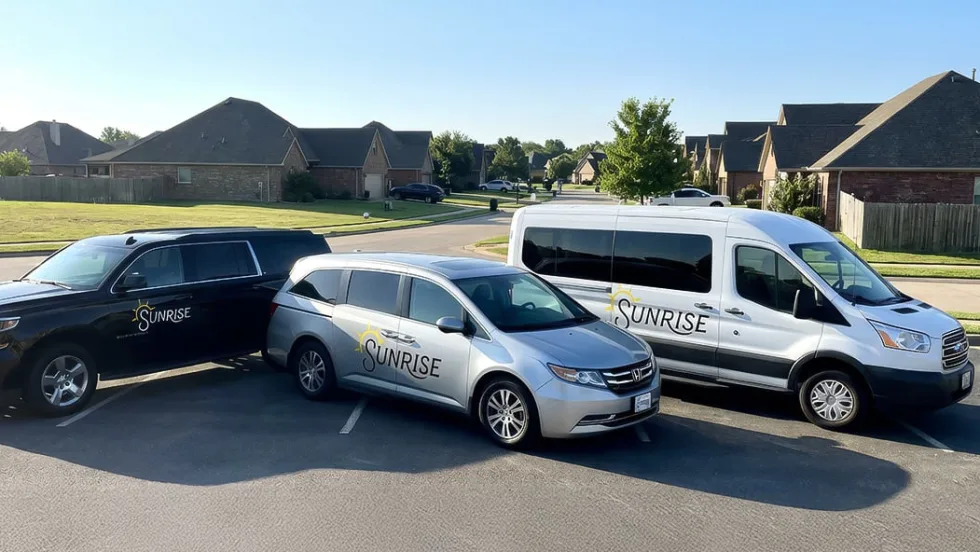
STA Acquires Sunrise Transportation
Student Transportation of America expands in Illinois and Connecticut through Sunrise's fleet of nearly 1,000 vehicles.
Read More →