




Getting the facts straight can be a tough assignment
Ever notice how the mainstream media has a hard time accurately reporting about school transportation issues? I read dozens of articles each week, mai...
Ever notice how the mainstream media has a hard time accurately reporting about school transportation issues? I read dozens of articles each week, mainly newspaper stories over the Internet, about school bus crashes, bus driver strikes and the like, and more often than you might expect, the reporter gets some basic fact wrong. Usually, it’s an insignificant matter. A passing reference to the approximate number of school buses in the United States might be off by a factor of 10 (45,000 instead of 450,000). Or the name of one of the industry’s major bus manufacturers might be misspelled (Bluebird instead of Blue Bird). But sometimes the factual errors can be more momentous. Jumping the gun
In its Jan. 9, 2002, edition, the Los Angeles Times published a story titled "Bound and Determined" that provided light-hearted commentary about the potential problems of equipping school buses with seat belts. Unfortunately, it contained the following statement: "As of Jan. 1, all new school buses bought or leased by the state of California are required to have combination seat and lap belts." There are two problems here: First, it’s absolutely untrue. Although a seat belt law passed in 1999 was to have taken effect on Jan. 1, Times staff writer Mary McNamara apparently was unaware that state legislators recently postponed the implementation of the law until mid-2004 for small buses and mid-2005 for large buses. Second, her description of the restraint system - seat and lap belts - is sorely confusing. What she really meant was pelvic and upper torso restraints, at least that’s what the original legislation called for. Despite these blunders, McNamara doesn’t deserve all the blame. Her editors should have been aware of the legislation that postponed the Jan. 1 implementation. When all is said and done, it’s the editors who must take responsibility for what goes into a newspaper, magazine or TV segment. That’s why it’s so important for editors to stay informed of as much as they can that affects their readers and the world at large. The big problem, of course, with McNamara’s goof is that it’s difficult to put the genie back in the bottle. Except for the small number of readers who keep up with regulatory issues affecting school transportation, everyone else who read the article is going to believe that all new school buses in California will be equipped with pelvic-upper torso restraints (let’s assume that the readers understood her intent) as of Jan. 1. The effect of inaccuracy
Why is that a problem? I think you know. Parents who read the article will be calling their school districts to find out if they’ve ordered any new buses and, if so, is there any way that their children can ride those buses? (Although it sounds outrageous, I’m sure many parents believe that a school bus can be ordered and delivered in a couple of weeks.) Fielding those calls, a transportation manager has to investigate the article and its accuracy and explain why large school buses aren’t equipped with seat belts (for the 943rd time). Patience is a great virtue in those situations. Factual errors are, well, a fact of life in the publishing business. In highlighting the errors in McNamara’s article, I’m in no way implying that I have avoided similar miscues in this magazine and other publications I’ve been involved with. I’m sure McNamara was mortified to learn of her gaffe, as I am every time I discover an error, no matter how small, in these pages. We do our best to correct our errors, but, like I said, getting the genie back in the bottle is a tough assignment. It’s our obligation to try, however, so send us a line when you spot an error and we’ll do our best to make amends.
More Safety
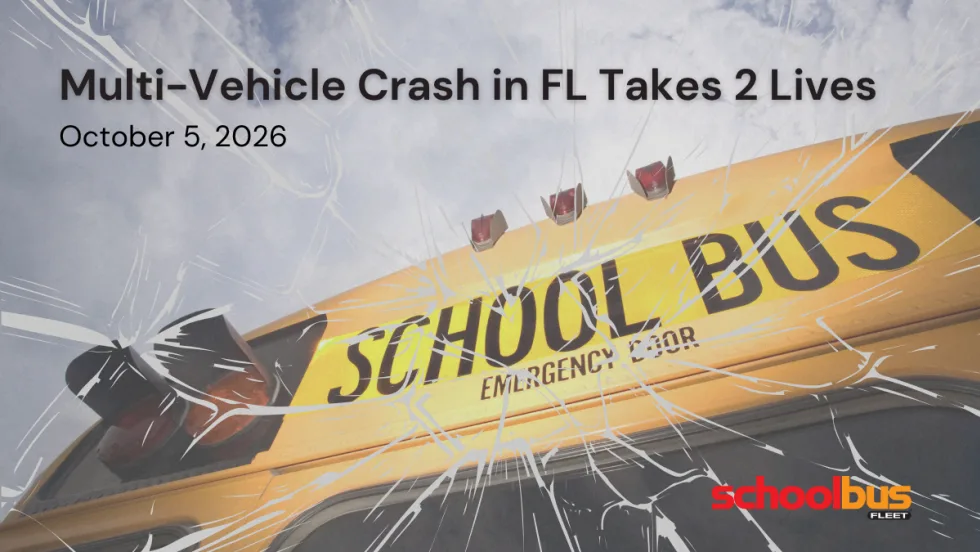
2 Killed, Dozens Injured in Florida School Bus Crash
A multi-vehicle collision caused a Polk County school bus carrying 37 students to overturn on its way to Winter Haven High School.
Read More →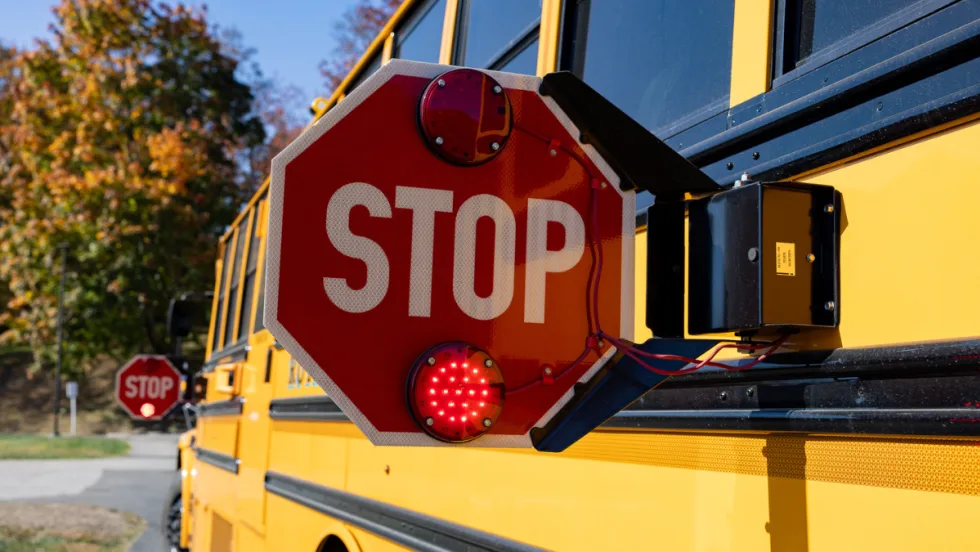
Illegal School Bus Passing Drops 24% in New York Districts
With fewer than 5% of citations involving repeat offenders, Westchester County officials said enforcement, education, and community partnerships are helping change driver behavior.
Read More →
School's Back. Here's What Happened to Traffic, Speeding & Distraction
What happens to traffic when school resumes? New data analysis examines changes in distracted driving, congestion, and speeding around schools.
Read More →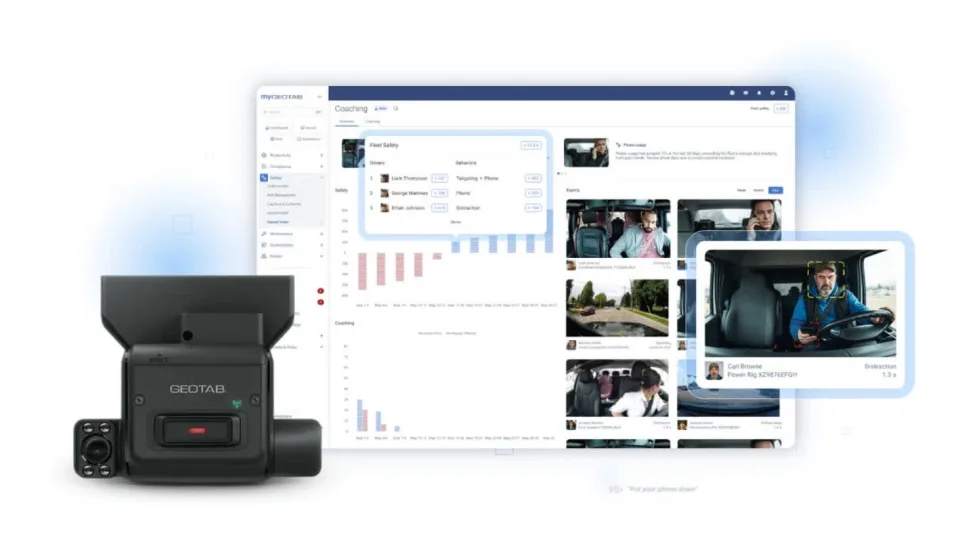
Geotab Expands Fleet Safety Tools With Video Coaching, Risk Insights
New safety and video capabilities aim to help fleet managers assess risk, support drivers, and take targeted action through video coaching, red-light violation detection, and more.
Read More →
How to Build a Better School Bus Driver Training Program
Is it time to strengthen your driver training? Here’s how to pick the right talent and improve recruitment, retention, and safety. This video is brought to you by IC Bus.
Read More →
Recent School Bus Accidents Leave 2 Dead, 2 Injured
Four school bus crashes in Florida, Illinois, and Georgia highlight risks in transportation lots, at bus stops, and during student loading and unloading.
Read More →
When Every Second Matters, Clarity Keeps Routes Moving
From routine delays to urgent incidents, strong communication practices help drivers, dispatchers, schools, and families respond with confidence.
Read More →
What Happens When a School Bus Catches Fire — and What Can Help
School bus fires are rare but can be devastating. Learn how advances in fire suppression and asset protection help fleets detect fires earlier, reduce damage, and improve safety.
Read More →
Geotab Launches Tool to Help Fleets Investigate Road Incidents
Geotab Investigations combines telematics data, video, documents, and other evidence to help fleets reconstruct incidents, resolve claims, and determine what happened.
Read More →
Texas Sixth Grader Wins 2026 National School Bus Safety Poster Contest
Sai Darshana Yekolu of Moseley Middle School in Prosper, Texas, was named the newest winner for her artwork, bringing the theme of “Safe Rides, Everyday Heroes” to life.
Read More →