




FMCSA proposes new mandates for entry-level CDL drivers
WASHINGTON, D.C. — The Federal Motor Carrier Safety Administration (FMCSA) issued a proposed rule that would enact mandatory training requireme...

WASHINGTON, D.C. — The Federal Motor Carrier Safety Administration (FMCSA) issued a proposed rule that would enact mandatory training requirements for entry-level commercial motor vehicle operators who must have a CDL, including school bus drivers.
Under the new rule, drivers with two or fewer years of experience operating commercial motor vehicles would have to go through training in four specific categories. These four key training areas include:
Driver qualification — Qualification of hearing, vision, hypertension, monitoring of hypertension and other health issues.
Hours of service — Training in fatigue and prevention, log maintenance and accuracy rules.
Driver wellness — Training in weight control, diet, physical fitness level, exercise habits and other health.
Whistle blower protection — Employee protection and right to refuse to operate in unsafe conditions.
The FMCSA estimates that the training under the proposed rule should take 4.5 hours for school bus drivers. Training must be offered to all prospective drivers, and it would serve as a minimum standard that drivers must meet before they would be able to operate a truck or bus on public roads.
Existing rules only address testing and licensing. Currently, new and prospective drivers must prepare for CDL testing by studying such topics as vehicle inspection procedures, off-road vehicle maneuvering and operation of a commercial vehicle in traffic. The proposed rule expands the essential information that commercial drivers must be trained in, but does not add the new information to the CDL testing program.
Notably, the proposal gives employers 90 days from the passing of the rule to ensure that all currently employed entry-level drivers receive the mandatory training. Evidence of training completion must be maintained in a qualification file. Some entry-level drivers can be "grandfathered," or exempted, from the training if they have a good driving record and one to two years' experience.
The proposed action responds to a study mandated by the Intermodal Surface Transportation Efficiency Act of 1991 that found the training of entry-level commercial motor vehicle drivers insufficient.
Blue Bird reduces workforce at Georgia facilities
FORT VALLEY, GA. — Blue Bird Corp. plans to lay off 400 to 450 employees at its two Fort Valley plants and about 300 workers at its LaFayette, Ga., plant.
According to Rick Hudson, human resources director, 300 to 350 of the Fort Valley layoffs will be at the company’s bus and chassis production facility, and 100 will occur at the motor home production plant.
Blue Bird plans to reduce its LaFayette workforce of 600 to 700 to about 300 to 400 between fall 2003 and spring 2004. The LaFayette plant, in northwest Georgia, makes school buses.
Hudson said the layoffs have already started and, ultimately, will include semi-skilled, skilled and white-collar workers.
Hudson said employment at the Fort Valley Blue Bird plants should return to its current level of 1,500 to 1,600 by April next year as a new production line begins operating at full capacity. It is unclear how many employees who are idled will be rehired.
Blue Bird included the layoff announcement in a company statement that outlined a $12 million investment in new assembly lines at its Fort Valley and LaFayette facilities.
"In 2002, we introduced too much model complexity and volume into the LaFayette facility, causing productivity and delivery issues," said Blue Bird CEO Jeff Bust in the company release. "Not only are we addressing these aggressively, we are moving Blue Bird's school bus manufacturing process to the next level." Two hundred company employees were also laid off in 2001 and another 90 in late 2002.
At press time, Hudson indicated that the company changes would not affect any executive level employees. "This reduction did not reflect any upper management positions," he said.
More Safety
Illegal School Bus Passing Drops 24% in New York Districts
With fewer than 5% of citations involving repeat offenders, Westchester County officials said enforcement, education, and community partnerships are helping change driver behavior.
Read More →
School's Back. Here's What Happened to Traffic, Speeding & Distraction
What happens to traffic when school resumes? New data analysis examines changes in distracted driving, congestion, and speeding around schools.
Read More →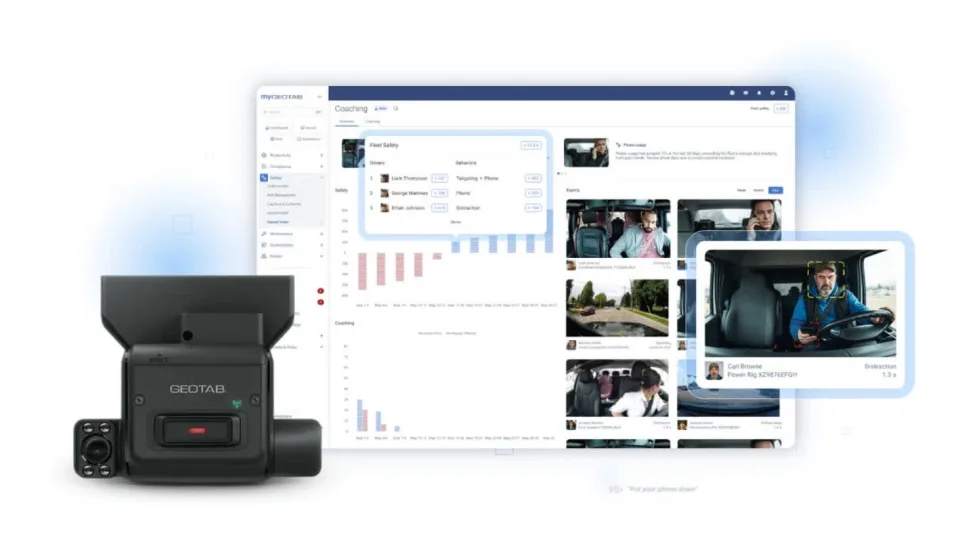
Geotab Expands Fleet Safety Tools With Video Coaching, Risk Insights
New safety and video capabilities aim to help fleet managers assess risk, support drivers, and take targeted action through video coaching, red-light violation detection, and more.
Read More →
How to Build a Better School Bus Driver Training Program
Is it time to strengthen your driver training? Here’s how to pick the right talent and improve recruitment, retention, and safety. This video is brought to you by IC Bus.
Read More →
Recent School Bus Accidents Leave 2 Dead, 2 Injured
Four school bus crashes in Florida, Illinois, and Georgia highlight risks in transportation lots, at bus stops, and during student loading and unloading.
Read More →
When Every Second Matters, Clarity Keeps Routes Moving
From routine delays to urgent incidents, strong communication practices help drivers, dispatchers, schools, and families respond with confidence.
Read More →
What Happens When a School Bus Catches Fire — and What Can Help
School bus fires are rare but can be devastating. Learn how advances in fire suppression and asset protection help fleets detect fires earlier, reduce damage, and improve safety.
Read More →
Geotab Launches Tool to Help Fleets Investigate Road Incidents
Geotab Investigations combines telematics data, video, documents, and other evidence to help fleets reconstruct incidents, resolve claims, and determine what happened.
Read More →
Texas Sixth Grader Wins 2026 National School Bus Safety Poster Contest
Sai Darshana Yekolu of Moseley Middle School in Prosper, Texas, was named the newest winner for her artwork, bringing the theme of “Safe Rides, Everyday Heroes” to life.
Read More →
Doing More With Less: How Transportation Directors Can Prioritize Safety Amid Budget Uncertainty
With diesel prices soaring and nearly one-third of transportation directors expecting budget cuts, maintaining student safety has never been more challenging. Download this guide to learn how leading districts are prioritizing risk, funding critical safety technology, and building stronger budget cases with data.
Read More →