



In an SBX roundtable on driver shortage, participants identified the key reasons that school bus
drivers leave the job:
• Salary/benefits.
• Schedule/desire for more
hours.
• Don’t feel supported or appreciated
by management/
district administration.
• Student behavior.
• Dispatcher.
• Added responsibility.
• Technology.
• Other jobs.
• Education (CDL knowledge).
Directors Weigh Pros and Cons of Alt-Fuels, Clean Diesel
Analyzing fuel choices for school buses, assessing the impact of school reform on transportation, and dealing with the ongoing driver shortage were hot topics at SBX 2017.

Thomas McMahon・Executive Editor

Kevin Kilner (left) of National Express shares
his experience with alternative fuels.
6 min to read

The NCAA Final Four wasn’t the only hot topic in the Phoenix area in early April. Fuel choices, school reform, and the ongoing driver shortage made for spirited discussions at the 2017 edition of School Bus eXchange in Scottsdale, Arizona.
While college basketball fans flocked to the University of Phoenix Stadium for the championship tournament, about 30 school transportation officials and dozens of supplier representatives came to town for the third annual SBX educational networking event, which is held by the National Association for Pupil Transportation (NAPT) and School Bus Fleet.
This year’s SBX took place April 3 to 5 at the Embassy Suites Scottsdale Resort. The agenda included a keynote speech, roundtable discussions, one-on-one meetings, and group presentations.
Analyzing fuel factors
The SBX roundtables covered a variety of timely topics, one of which was alternative fuels in school transportation. John Gonzales, a senior engineer with the National Renewable Energy Laboratory, facilitated the discussion. He asked attendees to identify the top issues that come into play when analyzing the use of alternative fuels.
Some participants pointed to infrastructure and availability as key factors, including Harry Davis, director of transportation for High Prairie (Alberta) School Division No. 48.
“If I was going to go to an alternative fuel such as propane, are the tanks there to provide the refueling capability?” Davis said. “Onsite, offsite for field trips, whatever the case may be.”
High Prairie School Division is currently operating one propane school bus and is considering whether to acquire more.
“I’m testing it out to make a better decision and seeing what peers are finding out on their units,” Davis said.

Financial factors — bus purchase price, fuel and maintenance costs, availability of grants, etc. — are other top considerations for those looking at alt-fuel buses.
“The cost of the bus … is more than diesel. Is that going to be offset by fuel savings?” said Debra Weissman, director of transportation for Warwick Valley Central School District in Greenwood Lake, New York.
Weissman’s district has acquired five propane school buses, and they are planning to buy more propane as well as gasoline buses. She said the main reason for the switch was the challenge of maintaining the emission systems on recent diesel engines.
“We’re moving away from diesel because of the issues we’ve had with [filter regeneration] to make them clean,” Weissman said. “Going to a cleaner fuel was very attractive to me.”
While those emission systems have led to maintenance issues, they have also significantly cleaned up diesel buses, bringing particulate matter and oxides of nitrogen (NOx) to near-zero levels. That means that “clean diesel,” as advocates call it, is comparable to propane and compressed natural gas (CNG) when it comes to tailpipe emissions.
“The exhaust on all of these is very similar,” said David Wilson, transportation director for Wentzville (Mo.) School District. That aspect doesn’t support a move away from diesel, Wilson added. “I’m trying to identify what is that compelling reason” to embrace alternative fuels.
Gonzales noted that alternative fuels typically fare better than diesel in a “well to wheels” analysis, which takes into account the energy use and emissions of a fuel from production to vehicle operation.
Wilson said that he is taking a “wait and see” approach to propane and CNG, “letting some others get out there and test them a bit.”
Other factors that roundtable participants cited in the analysis of alternative fuels included training for drivers and mechanics, vehicle reliability, community perception and concerns, potential risks, and the challenges of switching.
Participants also identified several advantages of alt-fuels. That list included:
• Less oil.
• Less hardware.
• Quieter (“I can hear the kids,” as Weissman said her drivers have put it).
• Cold starts (“You’re not dealing with auxiliary heaters,” Davis said).
School choice and the school bus
The potential impact of school reform on pupil transportation was the subject of an SBX keynote speech by Linda Bluth, a special-needs transportation expert and past NAPT president.
In her presentation — titled “Is the school bus industry idling while education reform is on the move?” — Bluth discussed the policies of new U.S. Education Secretary Betsy DeVos, who is a proponent of school choice, charter schools, and vouchers to enable students to attend private schools with public funding.
Bluth noted that transportation has been found to be a barrier to school choice — for example, charter and magnet schools often don’t provide school bus service. If more parents choose to send their children to those types of nontraditional schools, one of the side effects could be that fewer students will ride school buses.
While there is still much uncertainty on the practical effects of DeVos’ policies on pupil transportation, Bluth exhorted SBX attendees — and the industry in general — to find ways to contribute their expertise to the school reform efforts.
“Safe transportation must be a part of the agenda with respect to schoolchildren under school reform,” Bluth said, adding that the pupil transportation community “cannot afford to take a position of waiting
to see.”
Bluth suggested that the industry consider developing a unified position on the school reform issues. She noted that there was a lack of pupil transportation input in a recent joint letter that 40 groups — including the National PTA and the National Association of State Directors of Special Education — sent to a Senate committee with “numerous questions regarding [DeVos’] views on policies that impact students with disabilities” (read the letter here).
“I can only stress how important it is for us to be proactive,” Bluth told the SBX audience. “This is the time to impact the secretary’s knowledge about transportation positively.”
Bluth also moderated a roundtable in which attendees conferred on the school reform issues that she presented in her keynote speech. Some roundtable participants expressed concerns about a potential decrease in the number of school buses they run, as well as the possibility of having to transport some
students farther.
When asked what they will do “to get your voices heard,” ideas included bringing concerns to the attention of the school board, the district superintendent, and the state superintendent.
Retaining drivers, replacing buses
In another SBX roundtable that was moderated by NAPT board member John Hazelette, attendees discussed issues related to school bus driver shortage, including why drivers leave the job (see sidebar above).
Another NAPT board member, Theresa Anderson, led a discussion on school bus maintenance and replacement. Participants compiled lists of creative ways to replace buses and the top components of a maintenance program (see sidebar below.)
Dave McDonald of Rosco Vision Systems facilitated a roundtable on the effects of technology in pupil transportation, including GPS and video surveillance systems. They also discussed the use of technologies for communicating with parents, such as robo calls, social media, websites, and apps.
In 2018, School Bus eXchange will return to Scottsdale. The fourth edition of the event will be held April 16 to 18 at the Scottsdale Resort at McCormick Ranch.
Subscribe to Our Newsletter
More Management

Why Emotional Intelligence Matters in Student Transportation
Learn the five key elements that bus drivers and transportation directors can use to stay calm in any situation.
Read More →
Sponsored•July 23, 2026
2026 Back-To-School Readiness Report
Staffing gaps, flat budgets, and the distance between “mostly prepared” and ready for the 2026-2027 school year.
Read More →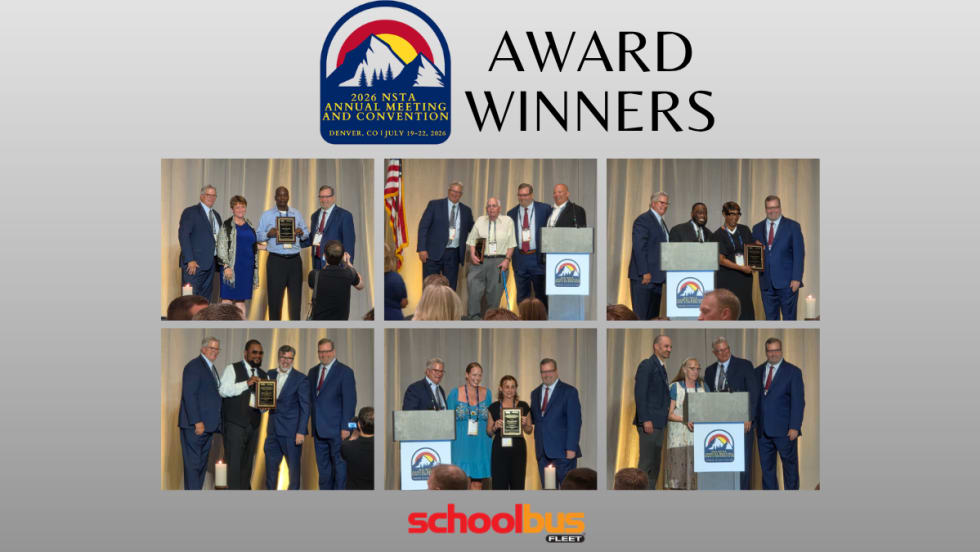
National School Transportation Association Presents 2026 Award Winners
Twenty-one individuals and contractor companies were recognized for excellence in student transportation at NSTA's annual meeting and convention in Denver.
Read More →

School Transportation Data Is Only as Powerful as the Story It Tells
Leaders say turning operational metrics into student-centered narratives can help districts justify investments and improve service.
Read More →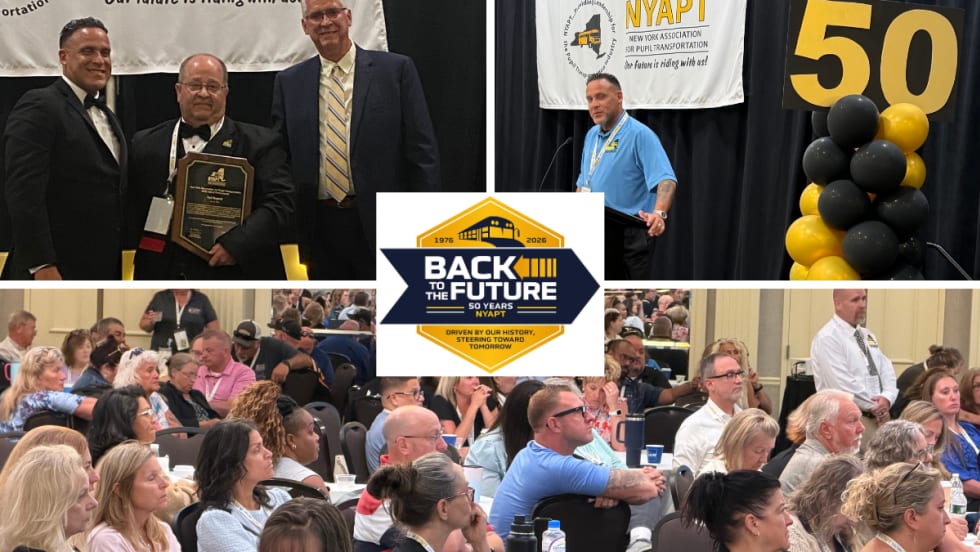
Photos: NYAPT Celebrates 50 Years at 2026 Conference & Trade Show
See highlights from NYAPT's 50th anniversary conference in Saratoga Springs, featuring educational sessions, awards, a trade show, networking, and more.
Read More →
Ohio Transportation Workgroup Calls for End to 'Impractical to Transport' Payments
A final report from Ohio's Pupil Transportation Workgroup proposes ending "impractical to transport" payments and expanding transportation options through regional partnerships, but not all industry pros agree on the approach.
Read More →
Transfinder Expands California Footprint with Multiple School District Wins
Six California school districts selected the company's routing platform and related transportation technology as Transfinder continues expanding its presence across the state.
Read More →
NSTA's Curt Macysyn on Student Transportation History and What's Next
Hear from NSTA's executive director as we discuss student transportation's role in American history, federal regulation, driver recruitment, illegal passing, AI, and what might be next, in this Route interview.
Read More →
NSTA on 250 Years of America and the Road Ahead for Student Transportation
Curt Macysyn joins The Route to discuss student transportation's role in American history, federal regulation, driver recruitment, illegal passing, AI, and the industry’s future. Sponsored by IC Bus.
Read More →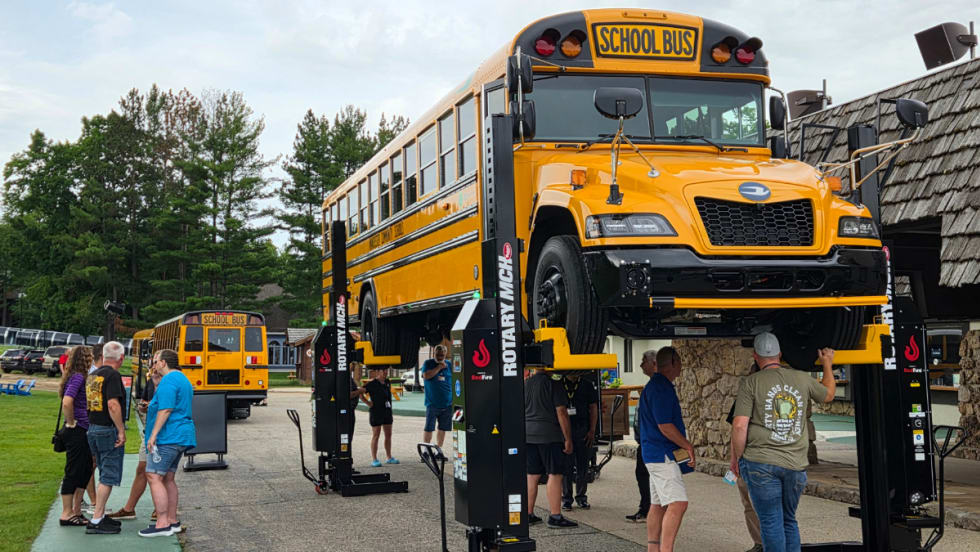
Photo Highlights: Inside the 2026 Michigan Association for Pupil Transportation Conference
Snapshots from the 2026 MAPT conference, where Michigan's school transportation professionals gathered for training, technology updates, awards, networking, and more.
Read More →