




Department Boosts Behavior Training, Improves Bus Environment
Raytown (Mo.) Quality Schools practices Positive Behavior Support, which drastically reduced write-ups for minor infractions and bullying. The approach refocuses the spotlight on students who follow the bus rules instead of those who cause trouble to get attention, and emphasizes teaching students how to meet behavior expectations.

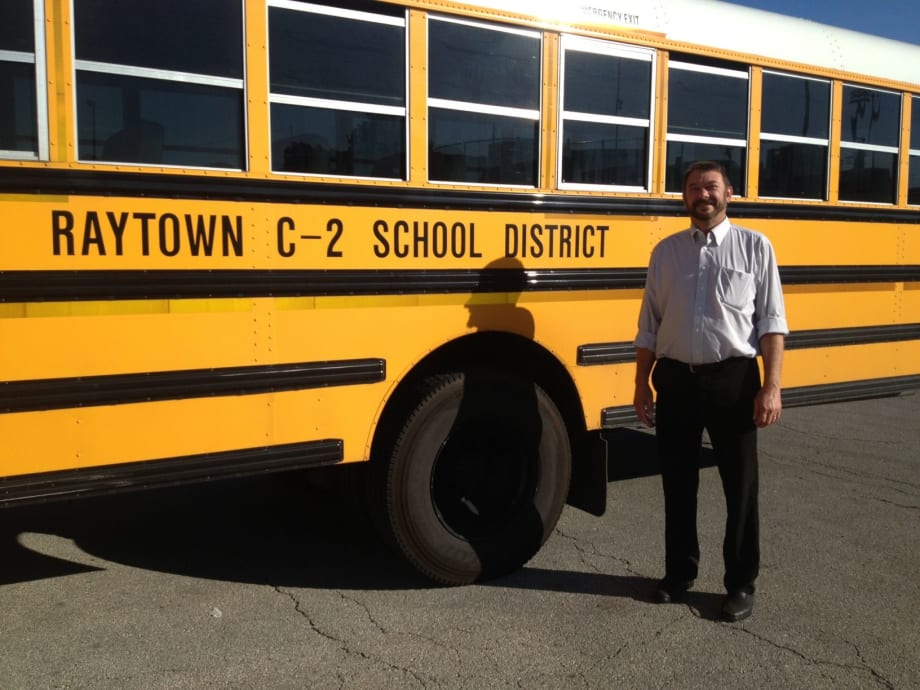
Set in an urban area, the Raytown Quality Schools transportation department buses approximately 5,750 students. It recently adopted an approach to student behavior management that has drastically reduced poor conduct and bullying incidents.
Raytown (Mo.) Quality Schools’ transportation team has overcome student conduct challenges and honed its skills in behavior management with impressive results.
Set in an urban area just outside of Kansas City, the district is what Dennis Robertson, the director of transportation for Raytown, calls, “one of the smaller large metro districts,” serving approximately 9,000 students, of which nearly 6,000 are transported by school bus on a daily basis. Managing so many students can be a challenge and has driven the district to use a unique approach to help drivers make their jobs easier by improving students’ bus etiquette.
“If you ask any of my drivers what their challenges are as far as driving, the majority of them would say student management,” Robertson says.
Enhancing behavior management
For the last three years, the district has put a strong emphasis on a program called Positive Behavior Support (PBS). For the transportation department, the idea is to get the students to meet the same behavior expectations in the school bus that they do in the classroom.
The approach focuses on positive acknowledgment of students who are following the rules; often these students are not nearly as visible as the kids who are constantly acting out to seek attention and getting in trouble. The drivers and aides are working to change the mindset of those students who cause trouble, especially at the elementary level.
“You learn [those kids’] names first,” Robertson says. “The kids who are doing the right thing so often go unnoticed. We’re trying to balance that with telling the students [who follow the rules] that they are doing a good job.”
When students see that they can get attention by following the rules, then a lot of bad behavior won’t be repeated, Robertson says. For example, telling a student, “You’re doing a good job, sitting in your seat,” will get the students who grab the spotlight by behaving badly to change their behavior to also get positive attention from the driver.
One bus route in particular is the transportation department’s poster child for the approach. The route serves elementary school students and had been without a regular driver for several weeks. After driving the route, substitute drivers would ask not to drive it again due to the poor student behavior.
As the department interviewed prospective drivers, it added questions that would identify who would buy into the PBS approach.
One driver did, and when he was assigned the route that had posed a problem for so many drivers before him, within a few weeks of applying PBS, there was a drastic reduction in write-ups for minor infractions and bullying incidents. Additionally, the transportation department’s behavioral coach reports the number of conduct slips written has gone down each consecutive year over the four years the district has employed PBS practices, Robertson says.
That was in part because students got the structure they needed, another part of the PBS approach, Robertson says.
He adds that PBS stresses not assuming that kids know the rules and expected behavior.
“You’ve got to teach them. Behavior is learned. We expect the driver to explain the rules to the kids. Maybe just pick out one thing a week, how to load and unload in an orderly fashion or [how to behave] at the bus stop.
“Some drivers will say, ‘They should have known better.’ Should they? Have you told them?” Robertson says.
The transportation department’s behavioral coach, who was formerly an interventionist for the district, also supports the drivers’ PBS efforts, training them in student management skills, working closely with each driver on student discipline issues, and acting as a liaison between the transportation department and the schools on behavior incidents.
[PAGEBREAK]
The Raytown Quality Schools transportation department fleet is comprised of 68 buses and covers a service area of 37 square miles.
Keeping fleet efficient
Despite the fact that Raytown’s 68-bus fleet may not be as large as some others in the urban Kansas City area, the district invested in garages to house all of its buses, protecting them from the elements, which helps them run more efficiently, and was especially helpful in early January of this year during some exceptionally cold days.
“When we have had some pretty cold temperatures, [the garages] had been a real plus for us, because a lot of the other districts have had to send starting crews out there at 4:30 in the morning to get them started,” Robertson says. “[The weather] hasn’t really affected us. We just come in at the normal time, start up and go.”
Having the garages is somewhat unusual for a district of its size, Robertson adds.
Districts nearby in the cities of Lee’s Summit, Kansas City and Independence serve anywhere from 14,000 to 17,000 students.
Active association member
Being a longtime member of the Missouri Association for Pupil Transportation (MAPT) helped Robertson enhance his career, and he now encourages his staff to use it to do the same for theirs.
Previous to Robertson’s past eight years with Raytown, he got started in school transportation in a fairly different environment. In 1993, he took on a position at a small K-12 school system in a rural area of northeast Missouri with a service area of about 550 square miles and 20 buses in its fleet. He was, as he put it, a one-man show: the director, mechanic and dispatcher.
Soon after taking that job, he got involved with MAPT, met more people in the industry and got the job he currently holds at Raytown. Since then, he has served on the MAPT board of directors for the past 10 years, including a term as president in 2008-2009, and is now a director at large.
Additionally, as members of MAPT, his transportation team takes advantage of the association’s training meetings.
Fleet Facts
School buses: 68
Transportation staff: 95
Students transported: 5,750
Schools served: 18
Area of service: 37 square miles
More Management
STA Acquires Sunrise Transportation
Student Transportation of America expands in Illinois and Connecticut through Sunrise's fleet of nearly 1,000 vehicles.
Read More →
EPA Opens $180M DERA Funding Round for Diesel Upgrades
The 2026 Diesel Emissions Reduction Act program seeks applications from eligible organizations to accelerate the retirement of legacy diesel vehicles.
Read More →
HopSkipDrive’s CareEngine Targets the ‘Exceptions’ in Student Transportation
The new platform works alongside districts’ existing transportation management systems to coordinate specialized rides, automate last-minute changes, and turn ride data into operational improvements.
Read More →


The Right Ride for Every Student: Navigating the New Student Transportation Ecosystem
How should districts blend school buses with small-vehicle transportation and other options? EverDriven CEO Mitch Bowling discusses safety, costs, partnerships, and strategy.
Read More →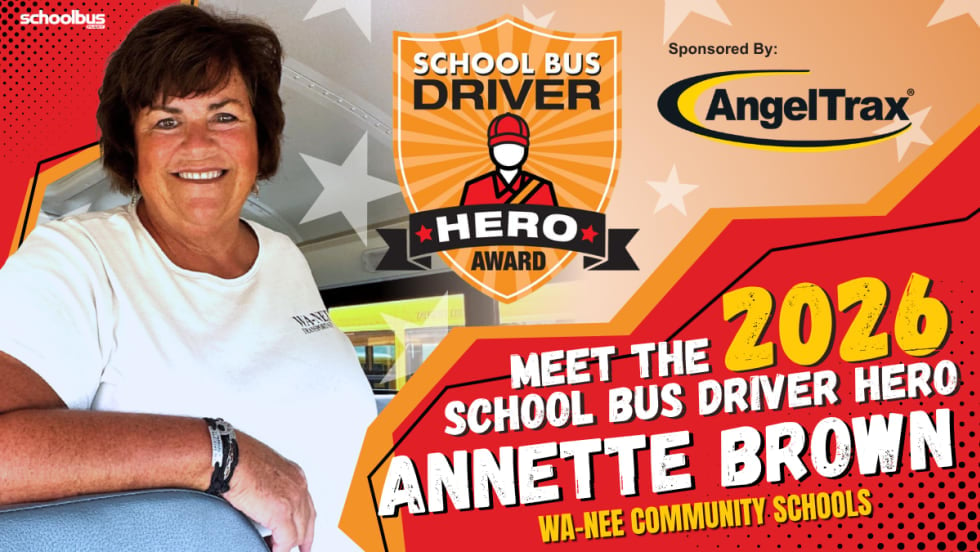
Annette Brown Always Takes the Extra Time: Meet Our 2026 School Bus Driver Hero
For more than 30 years, the Wa-Nee Community Schools driver has treated students like family, combining safety, compassion, and servant leadership to make a lasting difference on and beyond the school bus.
Read More →
How to Build a Better Driver Training Program
Ready to boost up your school bus instructor training? Here’s how to pick the right talent and improve recruitment, retention, and safety.
Read More →
CALSTART and Forth Combine to Form Catalyst Mobility
The new name represents a renewed vision for the nonprofit focused on advancing clean, equitable, and affordable transportation solutions that move people and goods.
Read More →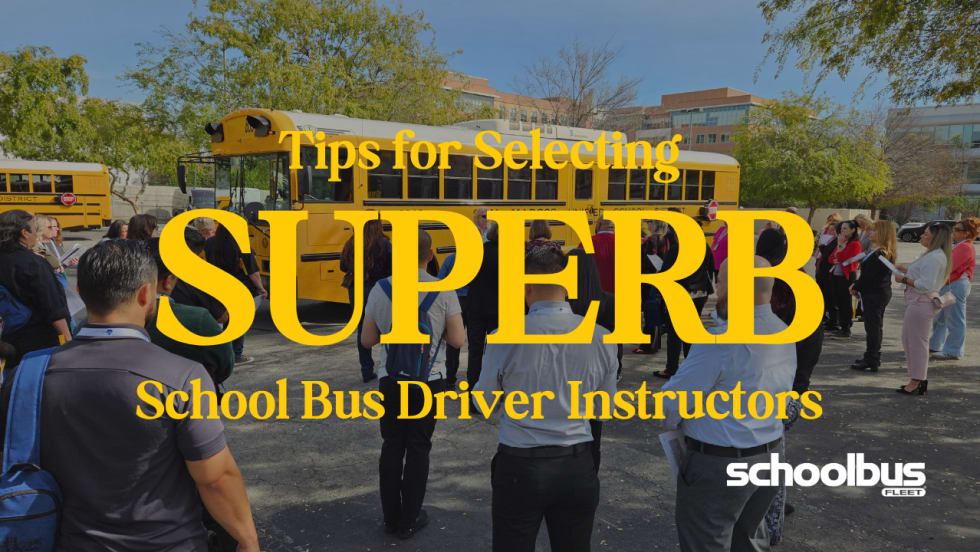
What Makes a Great School Bus Driver Trainer?
Choosing the right school bus driver trainer takes more than experience. Learn six keys to selecting and developing trainers and evaluating program effectiveness.
Read More →
School Bus Contractors Expand Through New Deals, Acquisitions & Partnerships
STA's Canadian division acquires Ontario-based G&L Stevenson Transport; Durham School Services adds a new district in California; First Student expands in New Jersey; and Minnesota Coaches rebrands and acquires Halo Transportation.
Read More →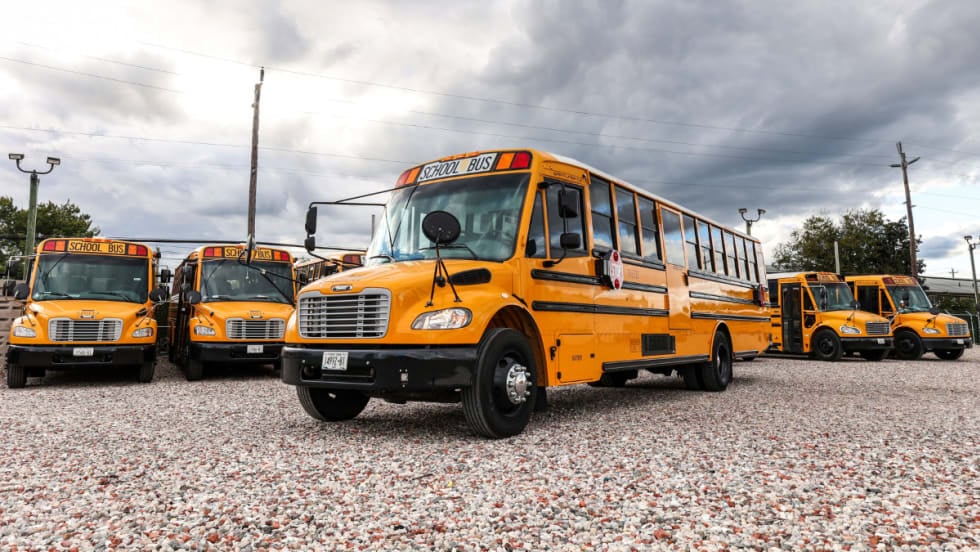
Logan Bus Company Rolls Out AI Phone System for NYC School Bus Families
A summer pilot found that AI agents could handle most routine calls, freeing up time for customer service staff to focus on emergencies and complex family concerns.
Read More →