




Contractors target top issues for 2014
NSTA President Tim Flood points to the challenges of a regulatory environment that he says could hinder the efficiency of contractors’ operations and increase driver shortages.
As school bus contractors gather in San Antonio in January for the National School Transportation Association (NSTA)’s Midwinter Meeting, they will discuss a plethora of pressing issues.
With that in mind, we asked several contractor executives what they see as the top issues for 2014.
NSTA President Tim Flood, executive vice president of The Trans Group in Spring Valley, N.Y., points to the challenges of a regulatory environment that he says could hinder the efficiency of contractors’ operations and increase driver shortages.
“One example of these regulations involves the certified medical examiners that must be used for driver physicals as of May 21, 2014,” Flood says. “Some contractors have already seen an increase in the cost of driver physicals, and a great number are distressed because there currently aren’t any certified medical examiners within 100 miles or more of their operation.”
NSTA Past President Magda Dimmendaal, CEO of Dousman (Wis.) Transport, says that the Affordable Care Act (aka Obamacare) “is at the top of my list of concerns. We’ve already been told to expect increases of 50% or more” in healthcare costs.
Another concern for Dimmendaal is seat belt legislation. In Wisconsin, a senator recently introduced a bill that would require lap-shoulder belts on new large school buses.
“It’s an issue that I feel is best left to the local school districts,” Dimmendaal says.
Donald Fowler, president of Fowler Bus Co. in Richmond, Mo., says that a key challenge in 2014 will be the new regulations on driver physicals, as Flood mentioned.
“Here in rural Ray County, Mo., we don’t have a lot of doctor’s offices to pick from,” Fowler explains, “and the two that my company has used in the past have already told me, ‘If we take the DOT [U.S. Department of Transportation] medical examiners test, the cost of a DOT physical will increase by $40 each and the doctor has a lot more liability, so some drivers might not pass.’”
Roger Moore, senior vice president of commercial development at Cincinnati-based First Student, points to technology as the top issue.
“Integrating and fully implementing all available technologies into one seamless, interactive system is an important issue and necessary undertaking for anyone involved in student transportation,” Moore says. “Complete integration of all components of the transportation model is imperative to increasing student safety, operating efficiencies and transparency.”
Blake Krapf, CEO of Krapf Bus Companies in West Chester, Pa., says that he sees increasing challenges in school bus driver staffing. He cites several factors on that front.
“First, I think we will see certain areas start to experience driver shortages,” Krapf says. “Second, ongoing regulatory burdens … will create additional challenges. Lastly, I think … labor costs — primarily caused by the effects of Obamacare — will continue to rise and create additional challenges in attracting and retaining quality drivers.”
David Duke, CEO of Warrenville, Ill.-based National Express Corp., cites technology as a core issue, particularly to foster data-driven decisions and to ensure safety.
“How to capitalize on these technologies will pose a challenge,” Duke says, “but when achieved, the benefits will be seen by the students, the customers, the employees and the company as a whole.”
More Management
Samsara Launches Free Driver Rewards Program
The new Driver Perks program gives eligible professional drivers access to discounts and offers without adding a cost for participating fleets.
Read More →
How Tax-Exempt Municipal Leases Can Help Finance School Buses
Let’s explore school bus financing options, including municipal leases, vendor payable accounts, and balloon payments, and how they can help stretch fleet budgets.
Read More →
Nominate Rising School Transportation Pros Under 40!
We’re searching for the next generation of leaders making an impact across the K-12 student transportation industry to recognize as SBF’s 2027 Trailblazers. Nominations are open now!
Read More →
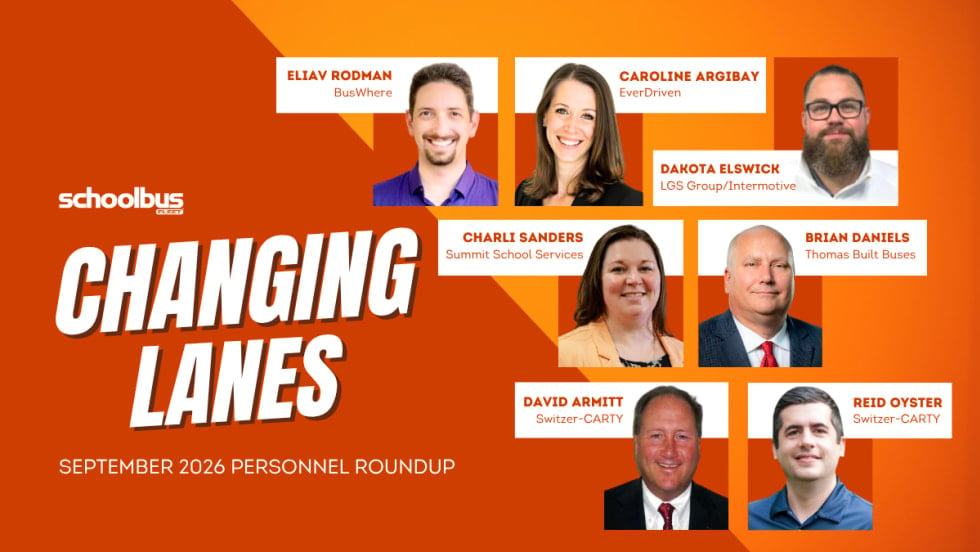
Changing Lanes: BusWhere, EverDriven, InterMotive, Summit School Services, Switzer-Carty & Thomas Built Buses
Check out who's been hired, promoted, and appointed to leadership positions at various school transportation suppliers, contractors, and manufacturers.
Read More →
The Most Expensive Thing You Do Before Selling a School Bus: Wait
When should you sell an aging school bus? Learn how maintenance, mileage, corrosion, specifications, and timing can affect resale value long before the auction.
Read More →
American Student Transportation Partners Acquires AJ Myers and Sons
A new deal brings a 75-year Pennsylvania student transportation provider into one of the nation’s largest private school bus contracting groups.
Read More →
What I Brought Home From SBFX: Relationships, Leadership, and Preparing What's Next
Who could lead your transportation operation tomorrow if you couldn't? Bernando Brown explores succession planning, mentorship, and preparing emerging leaders to step up.
Read More →
Inside School Bus Fleet ConneX 2026: Industry Leaders Connect in Scottsdale [Photos]
See highlights from SBFX 2026 in Arizona, where school bus operators and suppliers gathered for meetings, education, networking, awards, and more.
Read More →
School Transportation’s Biggest Pressures and Opportunities: SBFX Attendees Weigh In
School bus operators point to rising costs, staffing, and vehicle prices as immediate pressures while identifying technology, training, and routing as opportunities for growth.
Read More →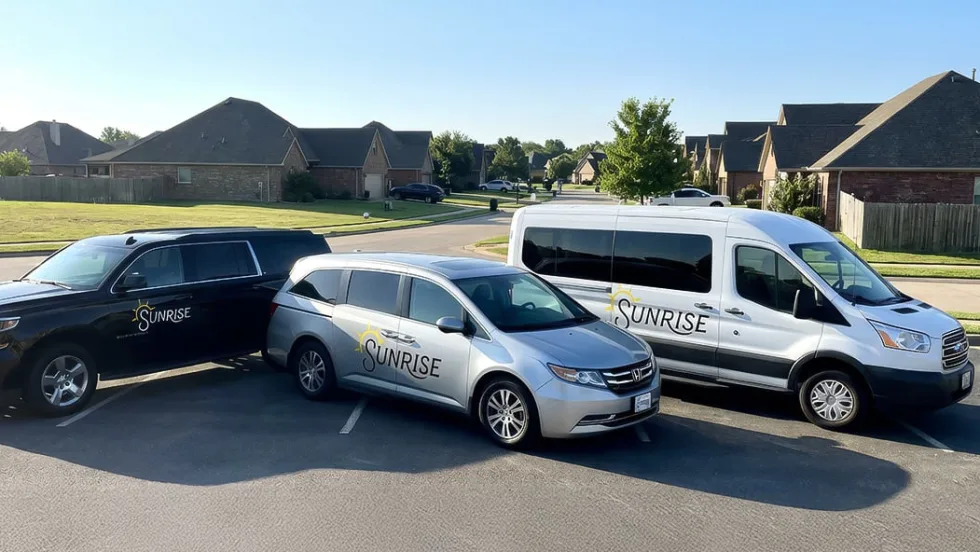
STA Acquires Sunrise Transportation
Student Transportation of America expands in Illinois and Connecticut through Sunrise's fleet of nearly 1,000 vehicles.
Read More →