




Continued Signs of Uncertainty for School Bus Contractors
Contractors big and small are vertically challenged these days. No, it’s not that they’re short in stature. It’s that they’re pressured by factors up ...

Contractors big and small are vertically challenged these days. No, it’s not that they’re short in stature. It’s that they’re pressured by factors up and down their profit-and-loss statements.
Whether it’s rising fuel and insurance costs or school district cutbacks on transportation, contractors are being squeezed from top to bottom. That’s the bad news.
The good news is that most contractors are surviving this onslaught of higher expenses and reduced revenue. In addition, opportunities for converting public fleets to private operations seem to be growing.
To get a fuller picture of what’s happening in the world of privatized school transportation, we interviewed more than 20 contractors about their concerns. These private operators represent a wide range of sizes and geographic regions. Undoubtedly, their views mirror those of their counterparts across North America.
A hard place to be
In Isanti, Minn., Cora Peterson, president of C&E Transportation, says her small contractor business is barely surviving. Her local school district has cut one of her two routes for the 2003-04 school year and could ask her to take a rate decrease on the other. “This is going to put me between a rock and a hard place,” she says. “They expect me to take a cut, but I won’t be able to.”
Peterson lost one of her routes because the school district extended its walking distance to two miles, cutting transportation to about 1,000 students. “They’re thinking that about 300 children will pay to ride, but that still won’t cover the loss of routes,” she says.
Peterson and her husband started the school bus company in 1970 as an additional source of income. “We farmed and had school buses,” Peterson says. “It worked out real well.” She used to drive one of the buses herself, but had to stop about three years ago because of deteriorating vision. “If I were able, I’d still be driving,” she says.
The school district’s budget crisis has caught Peterson at a vulnerable time. “I just got caught up paying my bills after my husband’s death,” she says. “I guess it’s a sign of the times. There’s nothing you can do about it.”
Big challenges
Unlike Cora Peterson, Laidlaw Education Services doesn’t have to bank its survival on a single bus route. But it faces many of the same challenges on a larger scale.
At press time, its parent company, Laidlaw Inc., was expected to emerge from Chapter 11 bankruptcy protection. Its school transportation subsidiary has been one of Laidlaw Inc.’s most successful divisions. Even with a fleet of 42,500 buses, however, Laidlaw Education Services is not bulletproof.
“With reduced tax revenue that most school districts rely on to fund education, we started hearing last year and more this year that things are tight and that everybody’s struggling to find the funds necessary to pay the bills,” says John Grainger, president of Laidlaw Education Services.
To control costs, some school districts have reduced ridership by eliminating routes for older students, increasing walking distances and cutting back on “courtesy busing.” “We don’t believe that’s the right choice,” Grainger says. “They’re making an economic choice rather than a safety choice.”
On the brighter side, school districts are looking more closely at privatizing their transportation programs because of possible budget savings, Grainger says.
Bruce Lyskawa, president of First Student Inc., agrees that school districts are at least taking a more honest look at the contracting alternative.
“We’re starting to see districts critique their own systems to the same standards of an outside contractor,” Lyskawa says. In the past, many school districts merely went through the motions of comparing the existing public operation to a privatized program. “Only because there was some MBA on the school board who was asking for it,” says Lyskawa. Often, the result was a one-sided assessment that favored the existing program.
Lyskawa believes that school districts need a “critical event” to take a serious look at outsourcing. “Now they’re up against the wall because of financial problems,” he says. “I think this is a critical event time.”
Denis Gallagher, chairman/CEO of Student Transportation of America, says he’s seeing “a bit more” opportunity for conversions, especially in Texas and the Southeast. Competition for this new business has varied. Gallagher says bidding for contracts in which the school district wants a new bus fleet has been less competitive because of the intensive capital requirements. On the other hand, bidding for contracts without the new-bus requirement have been more competitive.
Rising premiums
Contractors are nearly unanimous in their dismay over rising insurance costs. Laidlaw’s Grainger blames highly publicized settlements and judgments, not necessarily related to transportation, for the escalation of costs. “We’re seeing claims that previously settled for a lot less, settle for a lot more,” he says. “Both with mediation and jury trials, settlements have gone higher and higher.” The result has been an increase in risk management costs for operators of school bus fleets.
“Our insurance rates have been going up, up and up,” says Todd Edwards, owner of Edwards Transportation in Orleans, Ind. On a per-bus basis, Edwards says the cost of insurance has increased 20 to 30 percent in the past year.
“Rising insurance costs are a never-ending battle,” agrees Phil Vallone, president of Rolling V Bus Co. in South Fallsburg, N.Y. His company operates 140 buses in southern New York.
Alberta Witiuk, president of Simcoe Coach Lines in Sutton, Ontario, says insurance hikes are also causing pain in Canada. “We’re looking at a 30 percent increase next year,” she says. With a fleet of more than 100 buses operating for the York Region School Board, she’s facing a $20,000 increase in premiums.
John A. Goodhart, president of Treasure State Transit in Helena, Mont., says he’s also having problems with rising insurance costs, but faces another dilemma. “The insurance company is refusing to insure drivers who are 73 years of age or older,” he says. To make matters worse, the Human Rights Commission has found the company guilty of age discrimination, even though the insurance company refused to insure the individual.
Michael Montgomery, president of Curtis Transportation Services in Seattle, says he’s seen a doubling of insurance premiums over the past 10 years. The largest increases have come recently, especially after the terrorist attacks of Sept. 11, 2001.
Getting tougher
Curtis Transportation, which operates 25 school buses in a subcontract with First Student Inc., works for two school districts. One, in particular, Montgomery says, is trying to find ways to ease its budget pain. He expects the district to target transportation. “I think they’ll be more aggressive in enforcing liquidated damages,” he says, adding that he also expects the district to ask for give-backs for contracted routes. “Districts are looking at every way they can to cut costs,” Montgomery says.
Patricia Durham, chief marketing officer of Durham School Services, says the financial crunch is prompting some school districts to go out to bid rather than negotiate extensions with existing contractors. “The competitive environment out there is pretty tough,” she says. “School districts are looking at every dime they’re spending,” she says.
Edwards of Edwards Transportation says one of the two school districts he contracts with is steadily reducing the number of routes available to contractors. “It seems like each contract round they take a couple of buses back,” he says. Instead of six contractors each running one bus, the district recently reduced the private side to four contractors with one bus each.
A similar problem is plaguing Anderson Colon, president of ACR Bus Service in Humacao, Puerto Rico. Colon recently had to lay off six drivers because of budget cuts and route reductions at the five school districts he contracts with. “The economy is not good here,” he says. “I don’t know what I’m going to do. I have to keep the business going because I have too many bills to pay.”
Fueling the problem
In addition to rising insurance costs and district budget cuts, contractors have also seen a significant increase in fuel costs over the past year.
“Fuel is always a concern,” says Kelly Johnson, president of Johnson Bus Co. in Carlsbad, N.M. “Prices have gone down somewhat in the past several weeks, but in the long term, everything goes up — but the money we get goes down or stays the same. And with less money, they want you to do more.”
Johnson runs 25 buses for Carlsbad Municipal Schools. Because of population decline, the school district has been reducing its transportation coverage. Johnson says he’s lost two buses and could see more reductions if people continue to move out of town.
“Fuel costs in Montana are astronomical with the depressed economy,” adds Goodhart. “Luckily, we have a fuel clause in our contract to help cover some of this loss.”
Partially offsetting increases in fuel prices and insurance premiums is a general easing of the driver shortage due to the high rate of unemployment.
“The good news is that we’re able to get a higher quality of drivers,” says Durham. This is important, she says, because some school districts are expanding service, even in the face of the protracted economic downturn.
Edwards, who operates six buses for two school districts in southern Indiana, says he’s no longer straining to keep drivers behind the wheel. With the economy roiling, drivers like the security of having a steady job for the life of the contract. “They know that for four years they have a job,” Edwards says. “For them, that’s four years of stable income.”
Optimism revealed
Despite the challenges facing contractors, most are optimistic about the business. Lyskawa of First Student believes the economy will rebound in the next couple of years. An economic recovery, coupled with anticipated growth in the K-12 population over the next several years, bodes well for contractors who are prepared to partner with school districts and put safety and service at the top of their lists.
“Schools are in tight financial shape. Contractors need to be much more involved in ways to help them save money,” says Michael Perry, president of Positive Connections in Homewood, Ill. “Ultimately, that will benefit both sides and make more money available for the classroom.”
“It forces us to tighten our belts and work harder to get new business,” says Jim Shafer, general manager of School Bus Inc. in Sioux Falls, S.D. To win more field trip work, Shafer has ordered new school buses equipped with air conditioning, luggage racks and video systems.
“These are challenging times, and it’s interesting to watch,” says Lyskawa. “But this is still a great business.”
More Management
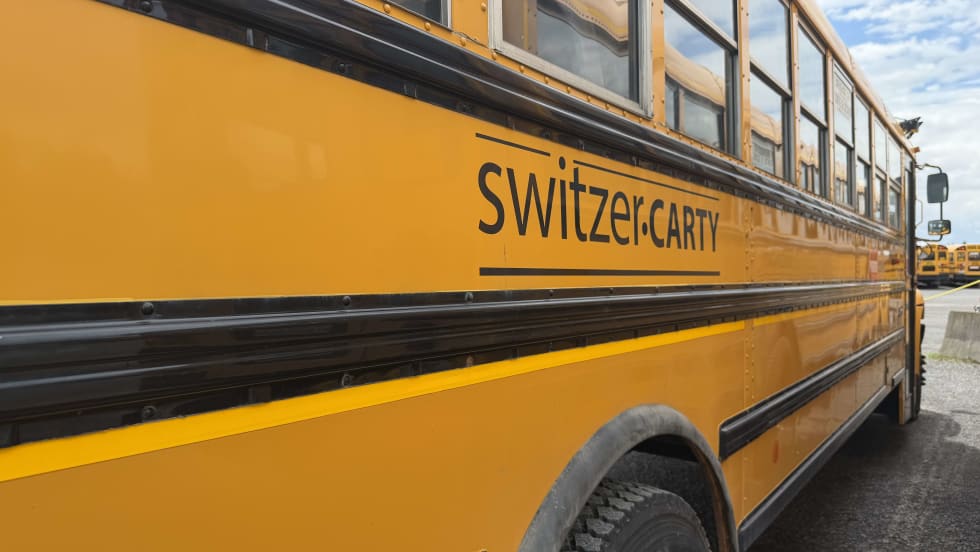
Switzer-CARTY Enters the U.S. with New Acquisition
The Canadian contractor’s acquisition of Minnesota-based Agnes Corporation marks its first cross-border expansion into the United States and adds 350 vehicles.
Read More →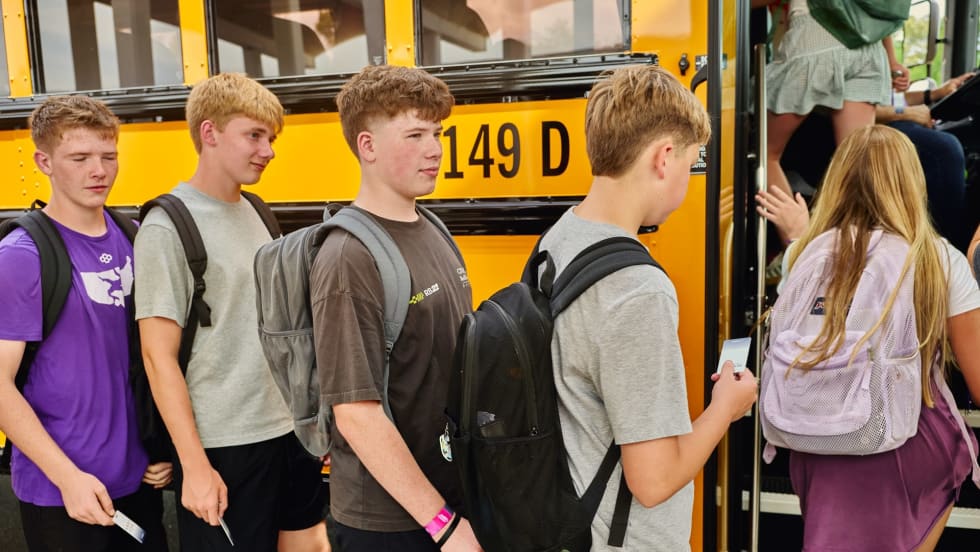
BusRight Adds New Rider Tracking Technology
Safety Pass is an NFC-based student ridership tracking solution that provides real-time boarding and drop-off data to improve school bus safety and family communication.
Read More →
EverDriven Launches RideAware App With Real-Time Student Ride Visibility
The updated platform’s new features improve communication among caregivers, districts, and drivers while streamlining trip updates.
Read More →

How School Transportation Departments Can Help Acclimate New Riders to the Bus
Here's how transportation departments can turn first-day jitters into confidence for students and parents alike.
Read More →
Neighbors Helping Neighbors: Nearly 90 Years of Safely Transporting Wisconsin Students
From one farmer's act of service to a fourth-generation family business, Kobussen Buses reflects on nearly 90 years of earning the trust of Wisconsin families.
Read More →
Changing Lanes: AMF Bruns, Pro-Vision, CALSTART, HopSkipDrive, & Kooner
Check out who's been hired, promoted, and appointed to leadership positions at various school transportation industry suppliers and nonprofits.
Read More →
NCST Announces 18th Congress Event Dates, New Committees
The National Congress on School Transportation moves to St. Louis in May 2029, convening delegates and industry representatives to discuss new best practice recommendations. Now, the new committee chairs have been named.
Read More →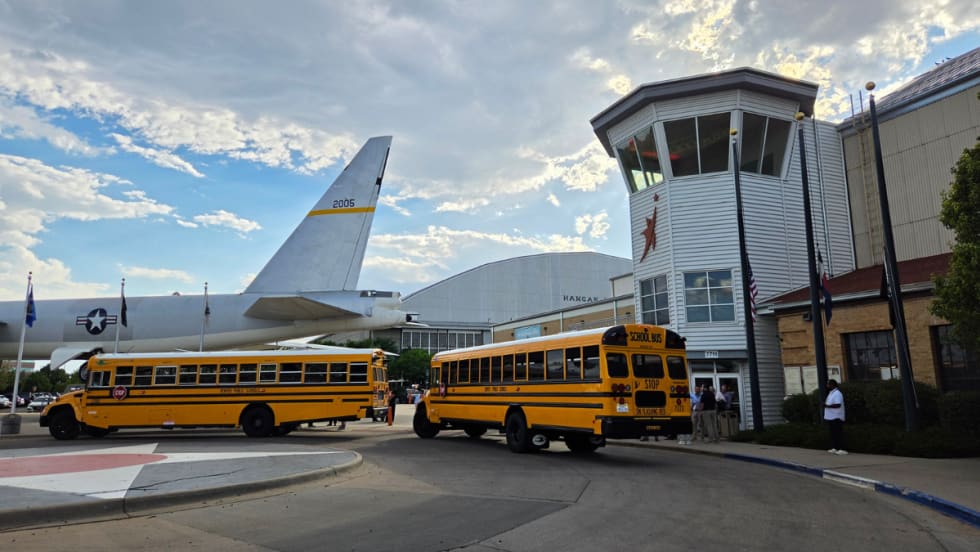
Key Moments from the 2026 NSTA Annual Meeting in the Mile High City
From federal policy updates and OEM presentations to speed networking and industry awards, see photos and highlights from the contractor association’s summer conference in Denver.
Read More →
HopSkipDrive Launches Spanish-Language App Update, Plans Additional Language Support
The update aims to improve communication with multilingual families by offering ride tracking, notifications, and support in Spanish, with more languages planned for the 2026-2027 school year.
Read More →
Where the Yellow Bus Takes Us: School Bus Fleet's 2026 Photo of the Year Winners
See the winning photos from School Bus Fleet's 2026 Photo of the Year contest, featuring stunning school bus images from across the U.S., from scenic landscapes to everyday moments.
Read More →