




Compartmentalization plus
We need to be clear that the debate is not compartmentalization vs. lap-shoulder belts. These three-point restraint systems can work together with compartmentalization to enhance its effectiveness.
In the pupil transportation industry, we often remind the public and ourselves that the school bus is the safest way for students to get to and from school.
Federal statistics show that school buses are far safer than other forms of transportation to school, such as walking, biking or riding in a car. That record is important, and it is imperative that we continue to promote it.
But rather than resting on the fact that the yellow bus is the long-established safest form of school transportation, we need to be constantly asking ourselves this question: Could school buses be safer?
When we ask that question, we have to consider lap-shoulder belts, which has long been a contentious issue in the industry.
Not one or the other
One fundamental element in the safety design of the school bus is compartmentalization — the closely spaced, impact-absorbing, high-back, padded seats. Compartmentalization works very well most of the time, but, as the National Transportation Safety Board has confirmed, its protection is limited in side impact and rollover crashes.
That said, we need to be clear that the debate is not compartmentalization vs. lap-shoulder belts. These three-point restraint systems can work together with compartmentalization to enhance its effectiveness.
Lap-shoulder belts can help keep kids in the seating compartments — where they need to be — during a crash. Also, any passengers who don’t buckle up will still be protected to the extent possible by compartmentalization.
Equipping a school bus with lap-shoulder belt seating systems is, in my opinion, “compartmentalization plus.” It is a crash test-approved way to make the bus even safer.
More support
In February, the National Association of State Directors of Pupil Transportation Services (NASDPTS) released a new position paper that makes excellent points in support of lap-shoulder belts for school buses. I encourage you to read the paper for yourself, but here’s one quote from it that I want to highlight:
“The addition of lap-shoulder belts to a school bus is a proactive measure by a school district to further enhance the safety of the students it is responsible for transporting. This measure goes beyond the minimum level of expectation for safe student transportation.”
Yes, the cost that lap-shoulder belt seating adds when buying new buses is a hurdle that has to be cleared. But we should treat that cost as a worthy investment to “further enhance the safety of the students,” as NASDPTS put it, and not as a reason to oppose lap-shoulder belts for school buses.
We as an industry have been debating this topic for a long time, and the debate will probably continue until lap-shoulder belts are mandated on large school buses (and I believe that they eventually will be).
I’ve given you my perspective on the issue. Now I’d like to hear yours. We want to provide a forum for anyone interested to discuss the pros and cons of lap-shoulder belts on school buses. Post a comment on our blog, and see what other readers have to say.
More Safety
School's Back. Here's What Happened to Traffic, Speeding & Distraction
What happens to traffic when school resumes? New data analysis examines changes in distracted driving, congestion, and speeding around schools.
Read More →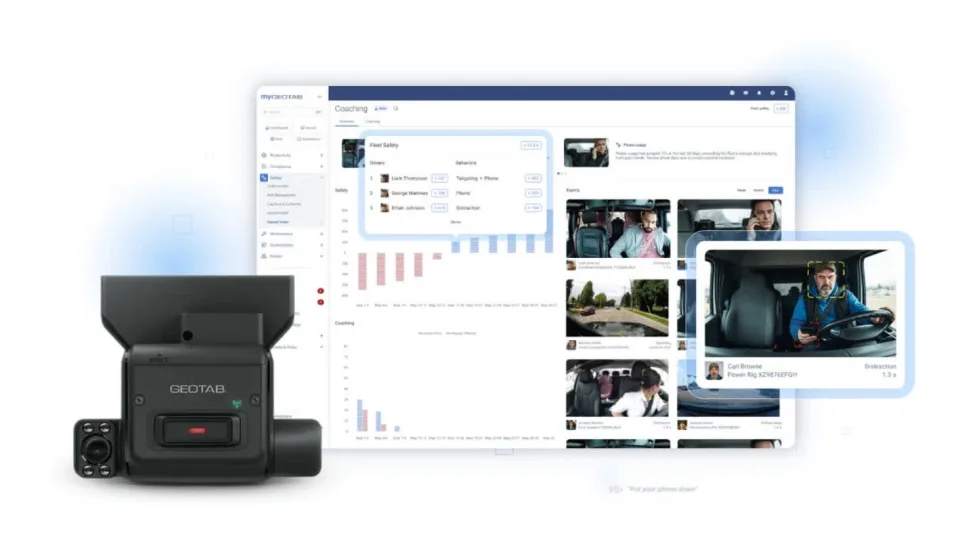
Geotab Expands Fleet Safety Tools With Video Coaching, Risk Insights
New safety and video capabilities aim to help fleet managers assess risk, support drivers, and take targeted action through video coaching, red-light violation detection, and more.
Read More →
How to Build a Better School Bus Driver Training Program
Is it time to strengthen your driver training? Here’s how to pick the right talent and improve recruitment, retention, and safety. This video is brought to you by IC Bus.
Read More →

Recent School Bus Accidents Leave 2 Dead, 2 Injured
Four school bus crashes in Florida, Illinois, and Georgia highlight risks in transportation lots, at bus stops, and during student loading and unloading.
Read More →
When Every Second Matters, Clarity Keeps Routes Moving
From routine delays to urgent incidents, strong communication practices help drivers, dispatchers, schools, and families respond with confidence.
Read More →
What Happens When a School Bus Catches Fire — and What Can Help
School bus fires are rare but can be devastating. Learn how advances in fire suppression and asset protection help fleets detect fires earlier, reduce damage, and improve safety.
Read More →
Geotab Launches Tool to Help Fleets Investigate Road Incidents
Geotab Investigations combines telematics data, video, documents, and other evidence to help fleets reconstruct incidents, resolve claims, and determine what happened.
Read More →
Texas Sixth Grader Wins 2026 National School Bus Safety Poster Contest
Sai Darshana Yekolu of Moseley Middle School in Prosper, Texas, was named the newest winner for her artwork, bringing the theme of “Safe Rides, Everyday Heroes” to life.
Read More →
Doing More With Less: How Transportation Directors Can Prioritize Safety Amid Budget Uncertainty
With diesel prices soaring and nearly one-third of transportation directors expecting budget cuts, maintaining student safety has never been more challenging. Download this guide to learn how leading districts are prioritizing risk, funding critical safety technology, and building stronger budget cases with data.
Read More →
Walton County Schools Adds Gatekeeper Stop-Arm Enforcement System
The Florida district will deploy Gatekeeper’s updated Student Protector technology, which now incorporates AI to improve video evidence.
Read More →