




Co-ops yield cost savings, boost efficiency for districts
Officials from transportation cooperatives around the country also say that they can lead to consistency in employee training and hiring, and managing and scheduling bus routes for districts. Officials discuss factors to consider when forming a cooperative, as well as potential challenges and ways to resolve them.

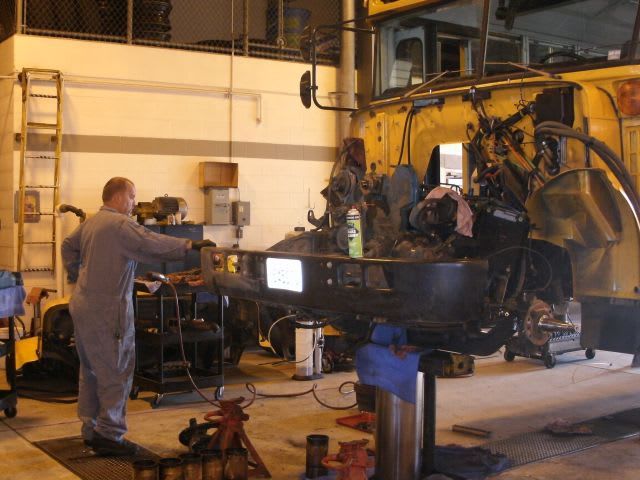
Officials at pupil transportation cooperatives say that the facility should be large enough to accommodate the maintenance needs of all member districts. Pictured is Centralia/Chehalis Pupil Transportation Cooperative’s facility in Centralia, Wash.
With school districts across the country continuing to feel the effects of a tough economic climate, transportation officials are frequently looking for ways to cut costs. One option to consider is joining a pupil transportation cooperative. Under a cooperative, one agency usually oversees all transportation services for its member districts, and members pay a fee to join.
The amount of cost savings for a member district will vary depending on its size and numerous other factors. Mike Rea, executive director of West County Transportation Agency (WCTA) in Sonoma County, Calif., says that his agency saved one of its 16 member school districts $775,000 in one year compared to what it would have cost to continue to provide transportation service on its own.
On the other side of the country, in Hopatcong, N.J., Sussex County Regional Transportation Cooperative saved several of its member districts almost $1.3 million last year by restructuring and re-bidding their routes, according to Coordinator Amanda Ferrington.
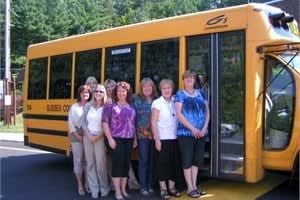
Amanda Ferrington (front row, second from left), coordinator for the Sussex County Regional Transportation Cooperative in Hopatcong, N.J., says the cooperative saved several of its member districts almost $1.3 million last year by restructuring and re-bidding their routes.
Districts will also save money due to economies of scale. For instance, Dan Ibarra, director of the Pupil Transportation Cooperative (PTC) in Whittier, Calif., says there’s increased efficiency because you have one set of employees serving multiple districts, eliminating redundant staffing.
“There’s one training group, one management group and one vehicle maintenance operation that serve all seven districts,” he explains of PTC.
Although Dallas County Schools (DCS) is not a pupil transportation cooperative by definition, it is similar, as it is an education agency that provides transportation services for 14 independent school districts.
DCS Assistant Superintendent/Chief Financial Officer Wesley Scott says districts will benefit from economies of scale in fuel purchasing.
“Because of the amount of fuel that we buy, our purchasing contract allows us to buy fuel for significantly less than what I see out there for other school districts,” he explains.
Lionel Pinn, director of transportation for the Centralia/Chehalis Pupil Transportation Cooperative in Centralia, Wash., says that cooperative programs create reduced employee medical and dental costs, and fees for federally mandated programs, such as random drug and alcohol testing, are lower.
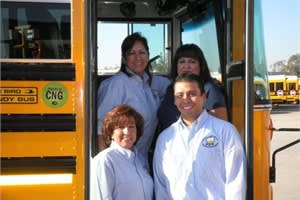
Drivers for the Pupil Transportation Cooperative in Whittier, Calif., are employed by the cooperative. Officials say a factor to consider when forming a cooperative is whether employees will be hired from the outside or hired from member districts’ transportation departments.
Benefits beyond cost savings
Ferrington and others note that there are benefits to joining a transportation cooperative beyond cost savings.
The cooperative can take on tasks that may have previously been handled by a superintendent or another non-transportation staff member, which can increase efficiency.
“We are willing to assume a district’s valuable time by researching school code and statutes for assistance in providing positive results,” Ferrington says.
In addition, Ibarra points to consistency among member districts in training and hiring, as well as in managing bus routing and scheduling.
Points to remember when forming a cooperative
A lot of work goes into forming a cooperative. Here are components to keep in mind:
• You must have a strong leader. Because there is so much involved in operating a cooperative, Rea says it’s important that the top official is someone “who understands transportation and can operate a separate government agency.”
• There must be communication, commitment and cooperation among member districts. All officials agree that member districts must also work toward the same goal for the cooperative to be successful.
• Consider the needs of all member districts. At Centralia/Chehalis Pupil Transportation Cooperative, Centralia School District is larger than Chehalis School District. Pinn says that even though Chehalis is the smaller district, there has to be a balance in terms of sharing resources and making the cooperative staff available to both districts.
• Proximity of member districts to cooperative’s facility. Ibarra says it’s important that the cooperative’s facility is in close proximity to its member districts, and that the facility is big enough to accommodate the districts’ maintenance needs. The farther the cooperative’s facility is from its member districts, he says, the more it will drive up costs.
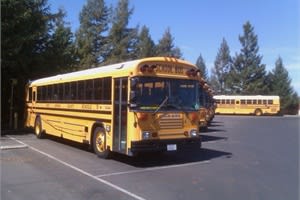
West County Transportation Agency in Sonoma County, Calif., serves 16 school districts. Executive Director Mike Rea says all districts must be members for home-to-school and special-education transportation.
• Billing and fleet. Rea says districts joining WCTA must be a member for both home-to-school and special-education transportation. New members must pay a $25,000 fee that is spread out over five years.
“We fold new members into any costs that we have, so it spreads out the base for other members, and they only gain ownership based on what they’ve contributed,” he adds.
Ibarra says PTC’s billing for member districts is derived from the usage percentage of the total budget, which is derived from the students transported and the number of miles operated.
In addition to billing, the composition of the cooperative’s fleet must be taken into account.
“Will you accept their [a member district’s] fleet and make it part of the cooperative’s fleet?” Ibarra asks. “If you have too many different parts and types of fuel, maintaining it becomes a nightmare.”
• What will you do with incumbent district staff? Officials say you have to think about whether you will incorporate employees from the member district’s transportation team or if you will hire from the outside.
Ibarra says that you will have to negotiate with a bargaining unit regarding wage scales, assuming that blending staff from member districts into the cooperative is a goal.
• Be prepared to lose some autonomy. Scott says this is important because district officials will be making decisions as a team.
Pinn agrees. “Detaching from the destructive ‘our territory’ mentality and realizing that your operation needs supportive bridges to survive is a logical step,” he says. “With the increasing budgetary reductions, transportation programs have been forced into a collaborative and cooperative existence.”
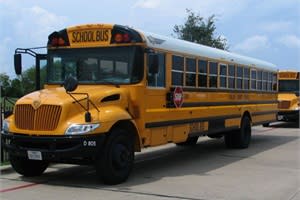
Although it is not a cooperative by definition, Dallas County Schools (DCS) is similar, as it is an education agency that provides transportation services for 14 school districts. Assistant Superintendent/Chief Financial Officer Wesley Scott says DCS has saved the districts money due to economies of scale in fuel purchasing.
Overcoming challenges
That said, Pinn acknowledges that a territorial attitude among employees joining the cooperative from a member district’s transportation department is one challenge those who form a cooperative may face.
Rea agrees, and he says one way to address this is by forming an identity for the cooperative that is separate from that of its member districts.
“We created our own logo and letterhead, had uniformed shirts, etc.,” Rea says of WCTA. “Also, the employees are employed by the agency [not by the school districts].”
For Rea, WCTA’s formula for assigning revenue and assessing districts’ costs has caused issues during very tough economic times because some districts can feel that one is getting more money than another.
“Those formulas are generally as objective as possible,” he explains, “but I don’t think you’re ever going to get away from that challenge completely.”
To address issues associated with assigning revenue, Rea says WCTA has adjusted its funding formula over the years to benefit member districts that are having a particularly difficult time financially.
Regular meetings with officials from each school district can also go a long way in keeping things peaceful.
WCTA has monthly board of directors meetings during the school year, and the superintendent from each member district serves on the board.
“I hand-deliver the board agenda packets, so if a superintendent wants to talk with me about any issue, I am right there,” Rea says.
While challenges may present themselves occasionally, Ibarra says PTC runs smoothly, and he says one advantage of his operation is the composition of its governing board.
“It’s comprised of assistant superintendents or the chief business officials of the districts we serve,” he explains. “They aren’t elected folks — they understand budget and management, dealing with labor unions, etc.”
Quick Answers
Transportation cooperatives can lead to cost savings, improved efficiency, and consistency in employee training and hiring for districts.
*Summarized by AI
More Management

EverDriven Launches Route Consolidation Calculator to Estimate Diesel Savings
As diesel prices hit record highs, the largest alternative transportation provider says a 10% route consolidation could save a 120-route district more than $78,000 a year in fuel alone.
Read More →
Zum Secures Continued Financing Support for School Bus Expansion
Generate Private Credit has financed approximately $75 million in school bus deployments across three states, supporting more than 500 buses as Zum expands across the county.
Read More →
Beyond Discipline: A Different Approach to Student Behavior on the Bus
After implementing a dean of students program in Oregon, North Clackamas is seeing positive improvements. Here’s how it worked. The Route is brought to you by IC Bus.
Read More →
A Dean of Transportation's Different Approach to Student Behavior on the School Bus
After implementing a dean of students program in Oregon, North Clackamas is seeing positive improvements on the bus. Here’s how it worked.
Read More →
Inside NAPT ACTS 2026: Highlights from Louisville
From federal updates and student behavior strategies to new school bus technology and industry awards, see highlights from NAPT ACTS 2026 in Louisville.
Read More →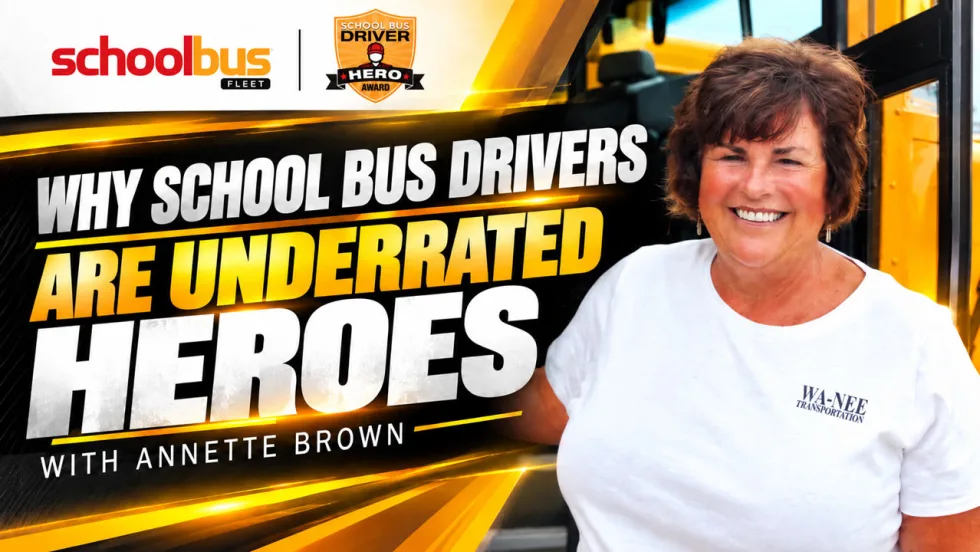
Meet the 2025 School Bus Driver Hero Winner: Annette Brown
We caught up with Wa-Nee Community Schools' Annette Brown on site at SBFX, where she was named the 2026 School Bus Driver Hero Award winner. Hear about her reaction, what she loves most about being a school bus driver, and more!
Read More →
Predictability Is Like Ketchup (According to 6-Year-Olds)
To students, a different school bus can feel like a full-blown crisis. One driver reflects on why familiar routines, showing up on time, and being reliably boring matter more than we think.
Read More →
Samsara Launches Free Driver Rewards Program
The new Driver Perks program gives eligible professional drivers access to discounts and offers without adding a cost for participating fleets.
Read More →
How Tax-Exempt Municipal Leases Can Help Finance School Buses
Let’s explore school bus financing options, including municipal leases, vendor payable accounts, and balloon payments, and how they can help stretch fleet budgets.
Read More →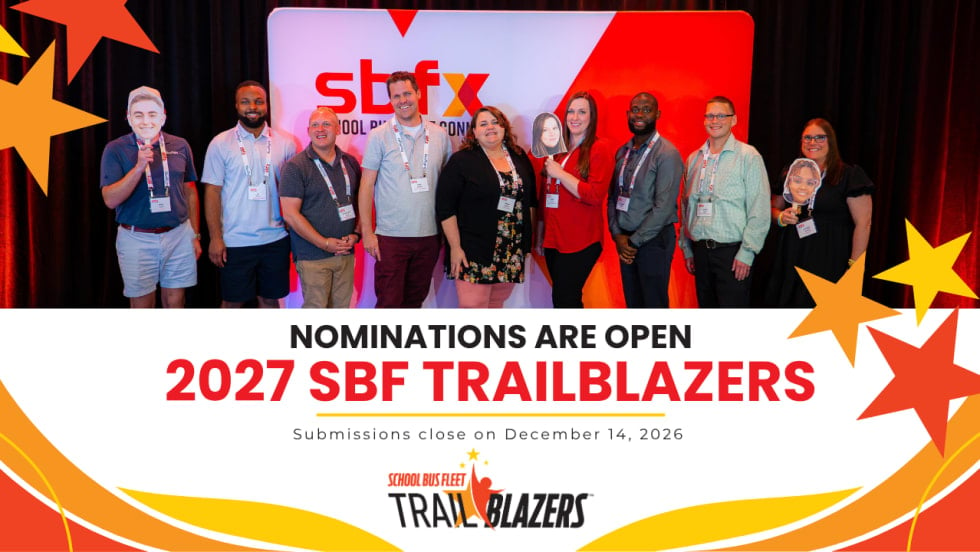
Nominate Rising School Transportation Pros Under 40!
We’re searching for the next generation of leaders making an impact across the K-12 student transportation industry to recognize as SBF’s 2027 Trailblazers. Nominations are open now!
Read More →