




Insight on pupil transportation cooperatives
In our November 2012 issue, I wrote about pupil transportation cooperatives. Here's what didn’t make it in.
In our November 2012 issue, I wrote a feature about pupil transportation cooperatives, where officials from cooperatives discussed not only ways that they can save money and increase efficiency for districts, but also factors to consider when forming a cooperative, as well as potential challenges and ways to resolve them.
The people I interviewed had a lot of interesting things to say about cooperatives. Here, I’ll share with you information that didn’t make it into the feature.
In discussing factors to consider when forming a cooperative, officials explained how districts are billed and how costs are spread among member districts. At West County Transportation Agency in Santa Rosa, Calif., for example, new members must pay a $25,000 fee that is spread out over five years.
“We fold new members into any costs that we have, so it spreads out the base for other members, and they only gain ownership based on what they’ve contributed,” explained Mike Rea, executive director of the operation.
Saving money for member districts
Rea also shared ways that West County Transportation Agency has worked to save money for member districts.
“We do maintenance for municipal vehicles, we’ve done diesel exhaust testing for some municipalities that don’t have the necessary equipment, we do diesel particulate filter cleanings and we charge for those services, which generates revenue to support members,” he said. “We also broadened our base, so we share our fixed cost with more members.”
Centralia/Chehalis Pupil Transportation Cooperative in Centralia, Wash., has two buy-in members: Centralia School District and Chehalis School District. There are also other districts, as well as county fire districts, Head Start programs, community colleges, and public works, public transportation and local law enforcement agencies that benefit from the cooperative’s services, but they aren’t buy-in members of the cooperative, according to Director of Transportation Lionel Pinn.
Pinn notes that if you have technicians maintaining public city vehicles, you must invest in the required training and tools/equipment necessary to meet those standards.
“We have hired additional mechanics to handle the additional workload, invested in the best training available and made the necessary purchases to meet all their mechanical needs,” he said. “Five of our six mechanics are ASE certified, and three of those mechanics have the higher emergency vehicle technician certification necessary to work on fire and ambulance apparatus.”
The Pupil Transportation Cooperative (PTC) in Whittier, Calif., will soon be running 49 of its 135 buses on compressed natural gas (CNG). Director Dan Ibarra has increased the number of buses running on the fuel since he joined the agency. When he joined the agency, the fueling system that the agency now uses was owned by Whittier Union High School District, but it was largely unused, so the district signed it over to PTC.
“I got grants, so we’ve upgraded the system: We’ve put in a new fuel dispenser and we’ve upgraded the compressor,” Ibarra said. “We also made safety improvements in the shop.”
He noted that an ongoing advantage of running buses powered by the fuel is the cost savings — CNG is cheaper than both gasoline and diesel.
“A Verizon facility in the area recently bought a fleet of CNG vans, and they buy their fuel from us,” Ibarra added. “We charge $2.40 per gallon. At one point, we were grossing about $20,000 a month in CNG sales. Going forward, we’ll be in a position also through grants to purchase every bus we’ll need from now on, and the districts won’t have to pay for them.”
Amanda Ferrington, coordinator of the Sussex County Regional Cooperative in Hopatcong, N.J., said that another way for cooperatives to save member districts money is to purchase/lease school buses and provide transportation services for contracted routes at a cost.
“This allows for a balance of contracted and district routes to attain the lowest cost possible,” she explained.
Create a “modified” cooperative
If creating a formal transportation cooperative isn’t feasible, Pinn encouraged smaller steps for school districts.
“Combine your annual in-service training or create an inter-local agreement that would support a shared drug and alcohol program — the more participants the less it costs,” he suggested. “Honestly look at those transition points, such as personnel retirements, to find a place where dialog can start. Or, rather than hire a new mechanic, contact an area shop to create that relationship and, hopefully, a successful cooperative arrangement in the future.”
Another way to approach the modified cooperative idea is to have a system where a group of districts each has their own transportation director, but one person could oversee the maintenance for all of those districts’ buses.
“Our 15 or 16 members are like that,” Pinn said. “They’re not buy-in members of the co-op, but they benefit from the better rates and not having to pay a mechanic to do their major work.”
Until next time,
Kelly Roher
Managing Editor
More Blog Posts
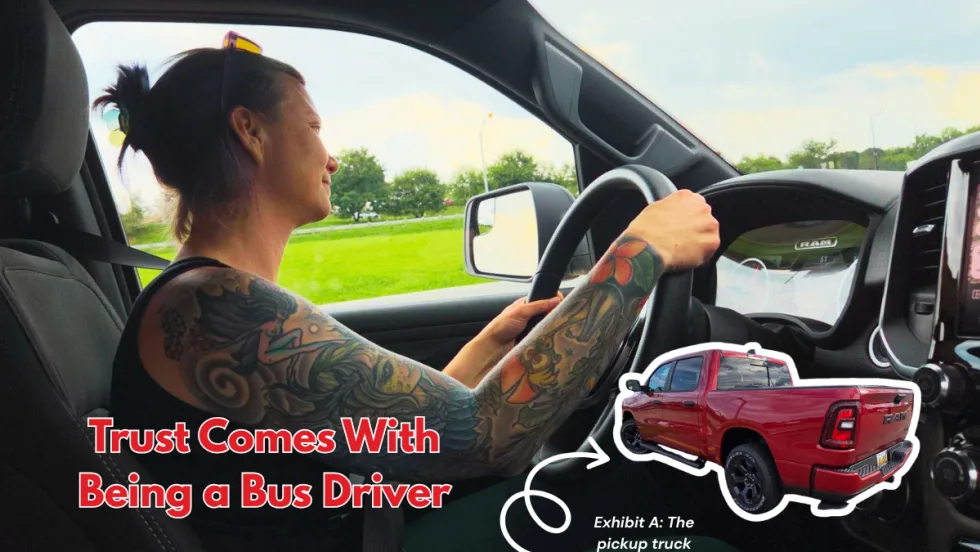
'I’m a School Bus Driver, You Can Trust Me'
A crowded Cleveland parking lot, a full-size pickup, and five unexpected words turned a stressful moment into a reminder of just how much trust we place in school bus drivers every day.
Read More →
The Sound of Summer Starting [Guest Editorial]
That unmistakable school bus rumble? It carries childhood memories, community routines, and a whole lot of unseen work behind the scenes.
Read More →
The Technology Power Combo That Enables EV Charging on Difficult Sites
As the pace of fleet electrification increases and charging infrastructure continues to pose challenges, many fleets find themselves puzzling over the question: how do I install charging infrastructure faster and more cost-efficiently?
Read More →
Trip Sheet: Farewell, Faithful Readers – Keep on Rolling
Executive Editor Wes Platt offers parting thoughts as he parks the School Bus Fleet bus to focus on ultra-local community journalism, making way for someone else to take the wheel as the pupil transportation industry continues to evolve.
Read More →
Trip Sheet: School Transportation Pros Can Champion Children's Mental Health
Children's Mental Health Awareness Day underscores the significance of school bus drivers in fostering supportive environments during students' journeys. SAMHSA's initiatives, including stigma reduction and access to resources, complement the Biden-Harris administration's funding efforts to enhance youth mental health services and workforce development.
Read More →
Trip Sheet: Is It Time for Daylight Saving Time to Clock Out?
How do you think the potential shift to permanent Daylight Saving Time or standard time would impact our daily lives and routines, especially considering the divided approach across various states?
Read More →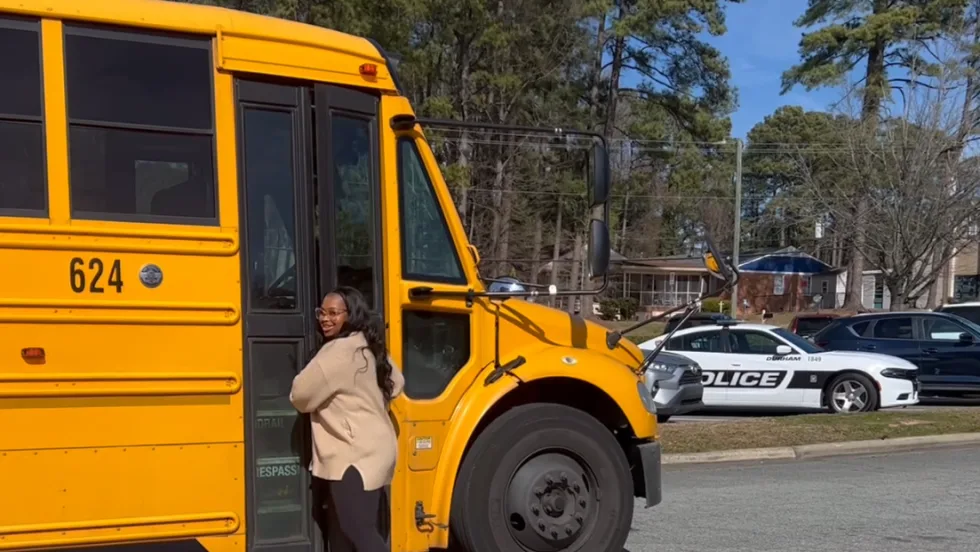
Trip Sheet: Meeting a Hero in My Own Back Yard
I remain impressed by the matter-of-fact heroism that’s often demonstrated by school bus drivers like Deona Washington who are caught in these situations where the best of us might lose our cool and panic. But, then again, bus drivers are a unique breed.
Read More →
Trip Sheet: 3 Takeaways from the EPA Clean School Bus Grant Program
Most applicants sought grant funding to acquire electric school buses, with propane coming in a distant second. No one indicated plans to purchase compressed natural gas (CNG) buses in this round. That’s not terribly surprising, I suppose, given how few school districts listed the inclusion of CNG buses in their fleets for our 2023 top district fleets survey.
Read More →
Trip Sheet: Let's Get Rolling: What's Coming in 2024?
Calendar pages keep flipping toward the mandates set in states like New York and California to transition their school bus fleets from diesel to zero-emission, but there’s plenty of reluctance and pushback.
Read More →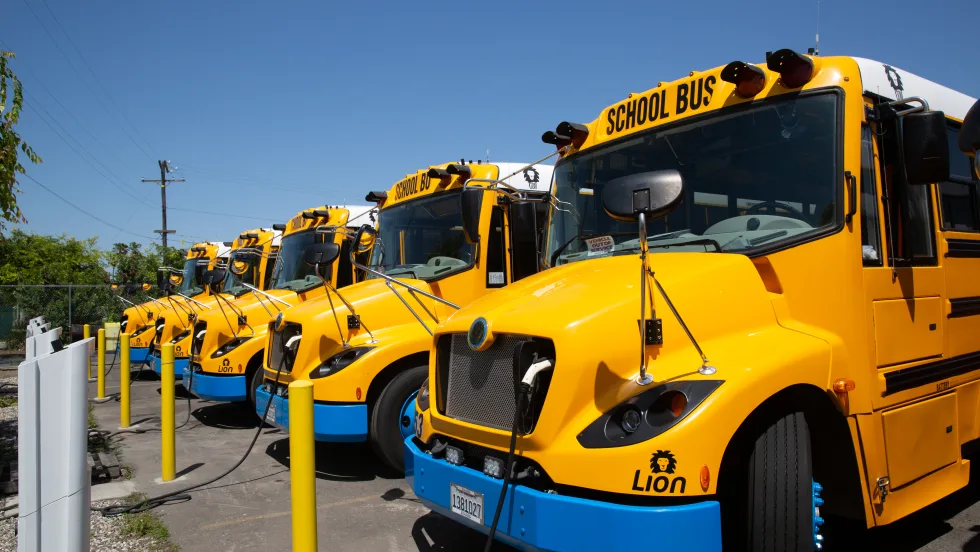
California School Children Ride in Green School Buses
Today, California prides itself on utilizing the most zero-emission (ZE) school buses in the country with over 1,689 being used by California school districts; and while the state is on a positive health trajectory thanks to a decree to eliminate gas and diesel vehicles, more work needs to be done to improve children’s well-being.
Read More →