




Clinging to the past?
For the two decades that I’ve been associated with pupil transportation through this magazine, our industry has fought against those who would have us equip large school buses with active passenger restraint systems, whether they’re lap belts, lap-shoulder belts or other devices.
For the two decades that I’ve been associated with pupil transportation through this magazine, our industry has fought against those who would have us equip large school buses with active passenger restraint systems, whether they’re lap belts, lap-shoulder belts or other devices (remember the roller coaster-style lap bar?).
We’ve stood our ground against continuing assaults from well-meaning but often misinformed proponents of seat belts, such as parents whose only frame of reference is their car or zealous seat-belt advocates.
We’ve cited the effectiveness and simplicity of compartmentalization in keeping passengers safe in a crash. The statistics are persuasive. On average, only 10 passengers are killed each year in school bus crashes. Only 10 are killed, out of 25 million transported daily. That’s truly amazing.
We’ve cited the loss of capacity that the installation of lap-shoulder belt systems would cause. Floor plans would have to be modified, possibly to a 3/2 or 2/2 seating scheme, with a loss of capacity.
We’ve cited scenarios in which young children struggle to free themselves from their seat belts after their bus has plunged into a lake or been engulfed in flames.
The streets are meaner
We’ve held our ground. We’ve fought the good fight. But maybe it’s time to look a little more closely at the possibility that we’re clinging to an outdated notion.
Ten years ago, how many people do you recall driving while talking on their cell phones? Now, how much more distracted is everyone on the road, whether they’re talking on a cell phone, monkeying with their iPods or checking e-mail with their BlackBerrys.
Ten years ago, we didn’t have lap-shoulder belt systems built expressly for school buses. Now, several suppliers offer three-point systems, including some of the bus OEMs. These systems are rigorously designed and tested.
Ten years ago, it was unthinkable that a state would require a three-point belt system on its buses. Only two states — New York and New Jersey — required any type of active restraint (lap belts, in those instances). Now, California, one of the nation’s most populous and influential states, requires all new school buses to be equipped with lap-shoulder belts. Other states will follow their lead.
Let’s embrace the future
I know my stance will be unpopular, but it’s time to address this polarizing issue from a long-term perspective. Ten years from now, I believe we’ll have shifted our paradigm, and three-point restraint systems will be mandatory on all our buses.
Thankfully, the number of deaths in school bus crashes is already low, but injuries are more common. Three-point belt systems will be helpful in minimizing the number and severity of injuries in crashes. Fatalities garner the biggest headlines, but injuries need to be considered as well.
I leave it up to you to fight for increased transportation funding to buy more buses to compensate for reduced capacity. Yes, I know, budgets are tight and school boards are focusing on the classroom. But safety is our mission and our responsibility.
More Management
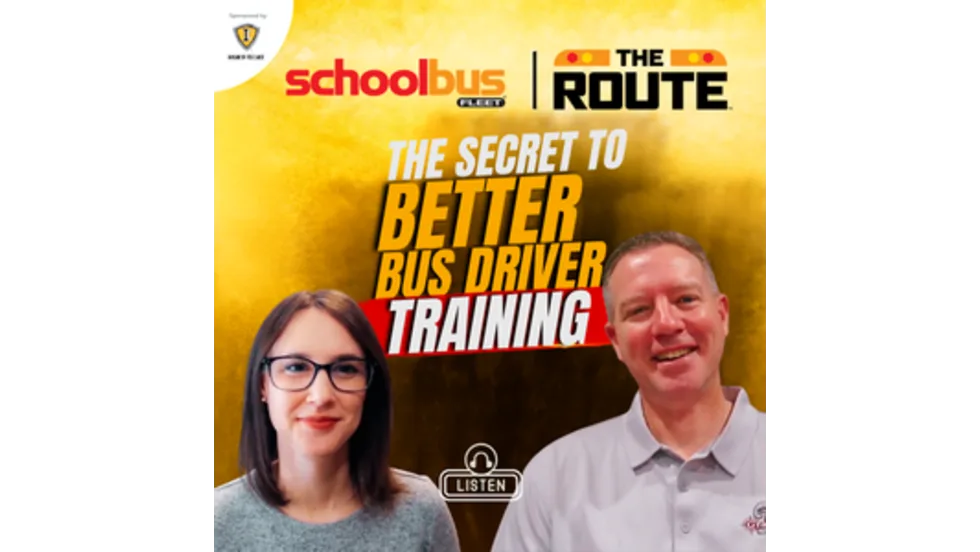
How to Build a Better Driver Training Program
Ready to boost up your school bus instructor training? Here’s how to pick the right talent and improve recruitment, retention, and safety.
Read More →
CALSTART and Forth Combine to Form Catalyst Mobility
The new name represents a renewed vision for the nonprofit focused on advancing clean, equitable, and affordable transportation solutions that move people and goods.
Read More →
What Makes a Great School Bus Driver Trainer?
Choosing the right school bus driver trainer takes more than experience. Learn six keys to selecting and developing trainers and evaluating program effectiveness.
Read More →

School Bus Contractors Expand Through New Deals, Acquisitions & Partnerships
STA's Canadian division acquires Ontario-based G&L Stevenson Transport while Durham School Services adds a new district contract in California, First Student adds a New Jersey contract, and Minnesota Coaches acquires Halo Transportation.
Read More →
Logan Bus Company Rolls Out AI Phone System for NYC School Bus Families
A summer pilot found that AI agents could handle most routine calls, freeing up time for customer service staff to focus on emergencies and complex family concerns.
Read More →
From Intent to Impact: What I Learned About Leadership from TAPT
A Texas transportation supervisor shares lessons on self-awareness, accountability, managing stress and building trust — and why investing in leadership development matters at every stage of your career.
Read More →
NAPT Names 2026 Award Recipients, Hall of Fame Inductee
Who earned national recognition for their work in student transportation? This year, NAPT named five recipients of its 2026 awards for service, safety, and leadership, plus its newest Hall of Famer.
Read More →
2026 State of Student Transportation Report
Driver shortages. Rising costs. Growing safety expectations. More data, but not enough time to act on it. The 2026 State of Student Transportation Report reveals what transportation leaders say is putting the most pressure on their operations—and where they’re investing next. See how your priorities compare.
Read More →
How to De-Escalate an Angry Person: 5 Steps for Handling Workplace Conflict
What makes emotions run high, and how should you handle an angry colleague or parent? Follow these steps for staying calm, listening, showing empathy, and resolving conflict.
Read More →
What Readiness Looks Like This School Year
Learn about the challenges shaping the 2026–2027 school year, from persistent driver shortages and budget pressure to technology and readiness gaps. See how school districts are responding and adapting in Zonar’s 2026 Back-to-School Readiness Report.
Read More →