




Boosting Bus Behavior With PBS
Driving under the influence of Positive Behavior Support (PBS) can reduce problematic student behavior by as much as 37 percent, according to Dr. Loui...

Driving under the influence of Positive Behavior Support (PBS) can reduce problematic student behavior by as much as 37 percent, according to Dr. Louise Bronaugh in her research at the University of Oregon.
Imagine more than a third of the most difficult confrontations on your buses being resolved. Your drivers’ jobs would be significantly easier. That’s the goal of Bus PBS training.
What is PBS? According to Dr. Laura Riffel, one of the leading advocates in this field, it is “a new way of thinking about behavior (based in research) … changing behavior by using multiple approaches: varying systems, altering environments and teaching skills.” In short, it’s new solutions to old problems.
I have received 18 hours of instruction in this program, and I’ve done considerable reading about Bus PBS and discovered several things:
1. You may have to wade through a certain amount of “educationalese” (the language and terminology of academics), but it’s worth it.
2. It is a flexible, user-friendly cafeteria of options, strategies, techniques and workable ideas that with even minimal application will improve behavior.
3. It has a long history, in the behavioral sciences, of research data substantiating the outcome of improved behavior. I even found references to student accountability that go clear back to the 1960s and the pioneering work of Dr. Hiam Ginott at New York University.
Most of the students on your buses are well behaved and compliant, and rarely, if ever, act out any issues they are experiencing, such as anger, rage and rejection. But there are those few who seem to demand an inordinate amount of attention. They are among the statistical 5 to 15 percent of students who are carrying more “baggage” of anger or emotional pain than any child should have to bear.
Yet, in a positive and safe environment, when they receive the kind of support they need, they’re less likely to be the Vesuvius of emotional debris that causes problems for your drivers and other students. This can be accomplished over a period of time with the right words — a couple of key sentences or a key question or two.
Using the right words
For example, the “one-sentence intervention,” as presented by the Love and Logic Institute, can reach even the toughest kids. Although they do want to be noticed, they’re not ready for compliments or praise, because their perception is that it is phony. In their minds, a school bus driver or teacher has to say that because it’s his or her job.
The one-sentence intervention is this, and you must stick to these rules: For three weeks, you speak to the student only twice a week. Say “I notice…” or “I noticed…” and recognize something about them objectively, such as a blue backpack or a black baseball cap. You must leave out any judgments about whether it looks “cool” or “neat,” because when you insert those judgments, they will misinterpret your intentions. Remember that they don’t want to be thought of as “cool” or “neat” by you. But they do want attention and recognition.
So when you say, “I notice you have a library book” (or something similar), don’t say anything more that judges or evaluates them. Even if they say, “What of it?” you can say, “I just noticed — that’s all.”
After three weeks of only saying these types of things twice each week, you should observe some small change in attitude and behavior. Above all, do it with sincerity. These students often have been so hurt, let down and disappointed that their senses are trained to react to insincerity immediately.
PBS in practice
PBS training and techniques have been put into practice in school districts throughout the country. A Guilford County (N.C.) Schools newsletter in May 2008 reported the following:
“As schools review their SWIS [School-Wide Information System] data, many are finding that a high percentage of their office discipline referrals come from the bus. The school bus is a common area for students, just like the cafeteria or the hallway, so some PBS teams are writing common area policies for the bus — as well as lesson plans for teaching their students these policies.”
The newsletter notes that implementing school bus policies may be more difficult than implementing cafeteria or hallway policies because bus drivers may be supervising students from multiple schools at the same time, and they must supervise students while driving.
The newsletter also stresses the importance of open communication between PBS teams and bus drivers. “Bus drivers may already be using county-set bus rules that can be incorporated into a school’s behavior matrix, and PBS teams may be able to incorporate a bus acknowledgement system into the existing school-wide encouragement procedures. Bus drivers must have input into the acknowledgement system that is chosen to ensure that they can use it efficiently without compromising students’ safety.”
Here in Douglas County (Colo.) School District, Director of Transportation Paul Balon says that there has been a dramatic reduction in the number of referrals on bus routes that are using the PBS system.
“I think it will show that fewer referrals means a savings to the transportation department because of the fewer man hours required to make sure a referral was processed properly,” Balon says. “Since the school bus is an extension of the classroom, it seems only proper that it would fit.”
Finally, perhaps Dr. Hiam Ginott said it best: “It is my personal approach that creates the climate. It is my daily mood that makes the weather. … I possess tremendous power to make a child’s life miserable or joyous. … In all situations, it is my response that decides whether a crisis will be escalated or de-escalated, and a child humanized or de-humanized.”
Driving under the influence of PBS can determine the weather or the “whether” on the school bus.
John Horton is a school bus operator for Douglas County School District.
More on PBS
Dr. Louise Bronaugh’s article on Bus PBS can be found at http://hdl.handle.net/1794/8161.
A manual on the subject by Dr. Laura Riffel can be found at www.behaviordoctor.org/files/books/0809busdrivertrainingbook.doc.
Further information can be found at www.loveandlogic.com and www.pbis.org.
More Management
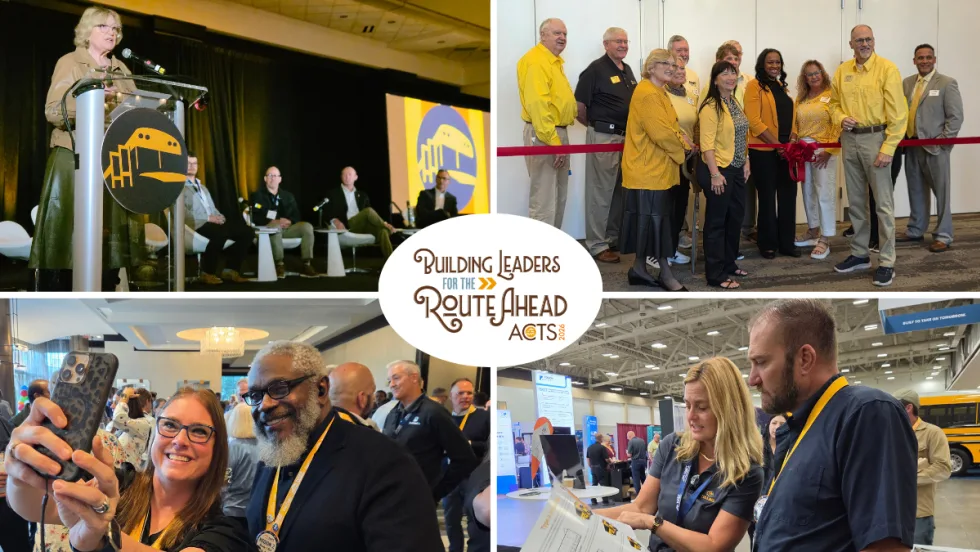
Inside NAPT ACTS 2026: Highlights from Louisville
From federal updates and student behavior strategies to new school bus technology and industry awards, see highlights from NAPT ACTS 2026 in Louisville.
Read More →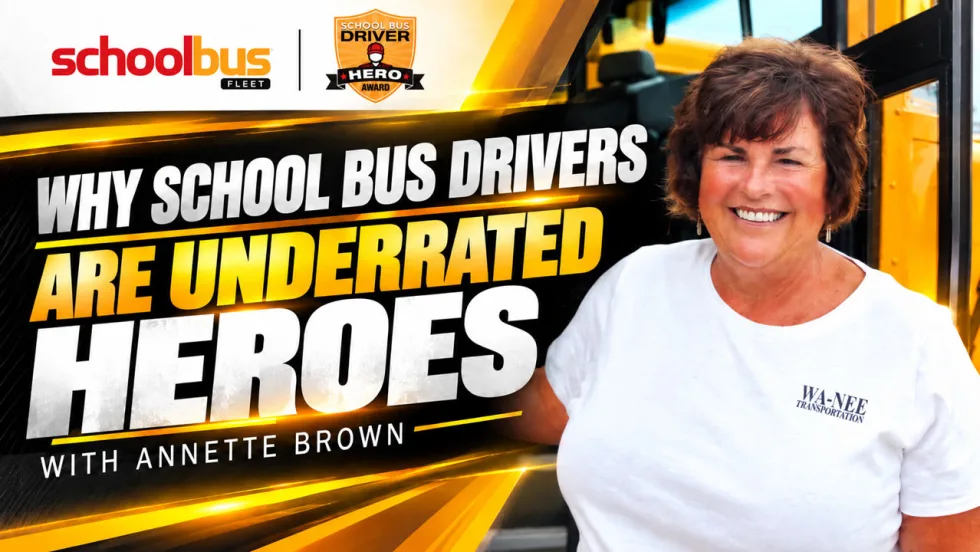
Meet the 2025 School Bus Driver Hero Winner: Annette Brown
We caught up with Wa-Nee Community Schools' Annette Brown on site at SBFX, where she was named the 2026 School Bus Driver Hero Award winner. Hear about her reaction, what she loves most about being a school bus driver, and more!
Read More →
Predictability Is Like Ketchup (According to 6-Year-Olds)
To students, a different school bus can feel like a full-blown crisis. One driver reflects on why familiar routines, showing up on time, and being reliably boring matter more than we think.
Read More →
Samsara Launches Free Driver Rewards Program
The new Driver Perks program gives eligible professional drivers access to discounts and offers without adding a cost for participating fleets.
Read More →
How Tax-Exempt Municipal Leases Can Help Finance School Buses
Let’s explore school bus financing options, including municipal leases, vendor payable accounts, and balloon payments, and how they can help stretch fleet budgets.
Read More →
Nominate Rising School Transportation Pros Under 40!
We’re searching for the next generation of leaders making an impact across the K-12 student transportation industry to recognize as SBF’s 2027 Trailblazers. Nominations are open now!
Read More →
Changing Lanes: BusWhere, EverDriven, InterMotive, Summit School Services, Switzer-Carty & Thomas Built Buses
Check out who's been hired, promoted, and appointed to leadership positions at various school transportation suppliers, contractors, and manufacturers.
Read More →
The Most Expensive Thing You Do Before Selling a School Bus: Wait
When should you sell an aging school bus? Learn how maintenance, mileage, corrosion, specifications, and timing can affect resale value long before the auction.
Read More →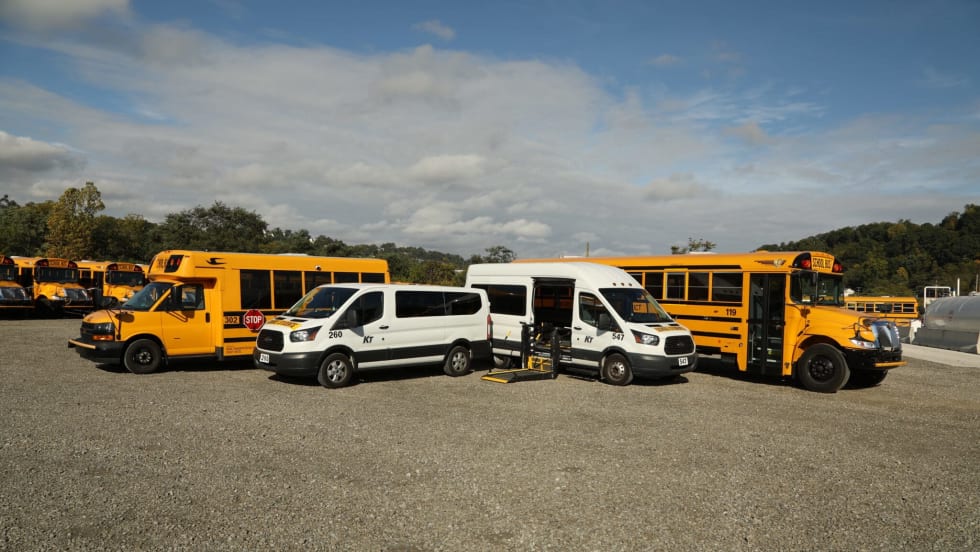
American Student Transportation Partners Acquires AJ Myers and Sons
A new deal brings a 75-year Pennsylvania student transportation provider into one of the nation’s largest private school bus contracting groups.
Read More →
What I Brought Home From SBFX: Relationships, Leadership, and Preparing What's Next
Who could lead your transportation operation tomorrow if you couldn't? Bernando Brown explores succession planning, mentorship, and preparing emerging leaders to step up.
Read More →