





School Bus Safety Week is October 20-24, 2025, a time for all to join forces and promote the importance of school bus safety. Bus drivers and transportation admins can use this time to buff up on their emergency response skills, since knowing how to handle the unexpected can literally save a life.
8 Tips for Threat Preparedness Aboard the School Bus
Do your drivers know how to handle armed threats on their school bus? Let’s talk about emergency preparedness and response, including active shooter situations, and a grant that can bring this training to your district.
October 17, 2025
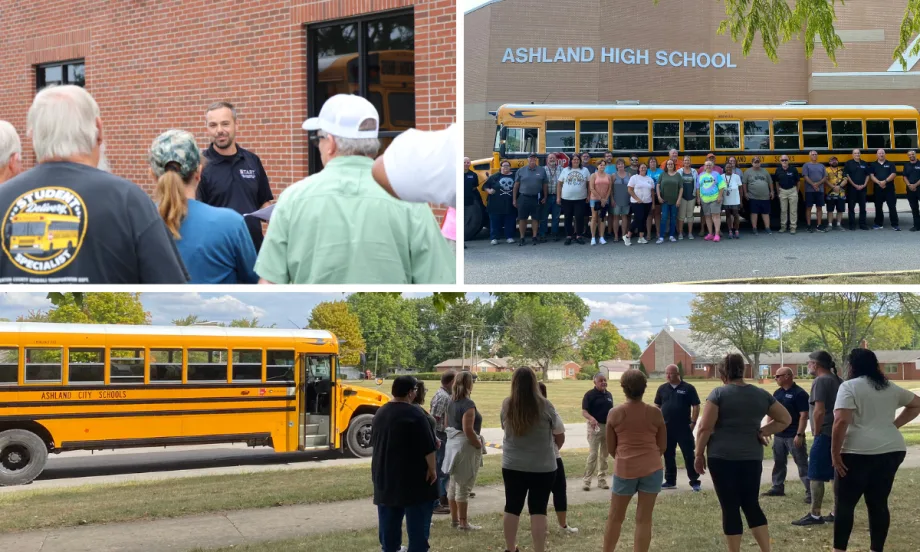
S.T.A.R.T. launched a national back-to-school effort earlier this year to equip drivers and transportation teams with the training they need to recognize, prevent, and respond to active threats before police arrive.
Photo: S.T.A.R.T.
6 min to read
- Drivers need comprehensive training to handle armed threats on school buses, including active shooter scenarios.
- Effective emergency preparedness and response strategies are essential for maintaining safety aboard school buses.
- School districts can access grants to facilitate threat preparedness training for bus drivers.
*Summarized by AI
School building personnel are often well-trained in how to protect themselves and students against potential threats within the school. But bus drivers are often left out, leaving a critical gap in knowledge about how drivers can safely transport their previous cargo.
Bus drivers are essentially first responders in their own right; because active threats often escalate before police arrive on the scene, they must know how to take control in a worst-case possible situation.
Make sure to tune in to October’s episode of The Route to hear more on this topic!
The Birth of a Threat Training Program for School Bus Drivers
S.T.A.R.T. CEO Jim Levine studied criminal justice and forensic science, and now boasts over 50 years in active duty law enforcement with SWAT experience. It was in a role as a school resource officer that Levine realized school bus drivers lacked the same support and training that district staff inside the buildings often receive.
“Our state police organization comes here, checks buses all the time, but they've never really given a program to our drivers on those topics,” he said. “So I thought to myself, ‘well, you know what? We really need to do that.’”
Cue the start of his company around 2015.
“I think probably the most important part of the program that we developed was a hands-on, scenario-based training module that would recreate what it would feel like and sound like to be in an active threat situation, especially a firearm on board the bus.”
S.T.A.R.T., which stands for School Transportation Active-Threat Response Training, now equips drivers and transportation teams with the training they need to recognize, prevent, and respond to active threats before police arrive. In it, participants go through threat detection and de-escalation training with a host of experts like Secret Service, mental health pros, and more.
3 Warning Signs to Watch For
Look for changes in patterns of a student’s behavior. That may mean something is amiss at home or they’re going through troubling times. “The bus driver is really in the best position to spot (changes in behavior) in many cases, because they see the kids all the time, more so maybe than a teacher, who only sees the student for one year.” This can also include knowing what bags or objects a student typically brings on the bus so you can spot if something dangerous may be brought on that usually isn’t.
Watch for bullying on the bus, which can be a precursor to someone who may become a threat to the school and to their peers, “especially if they feel like the peers are the ones who have caused them to have these bad feelings,” Levine encouraged.
Look for items left on that bus that could be key indicators a student is on a path of destruction. These could be a notebook or a crumpled-up piece of paper that reads “today is the day.”
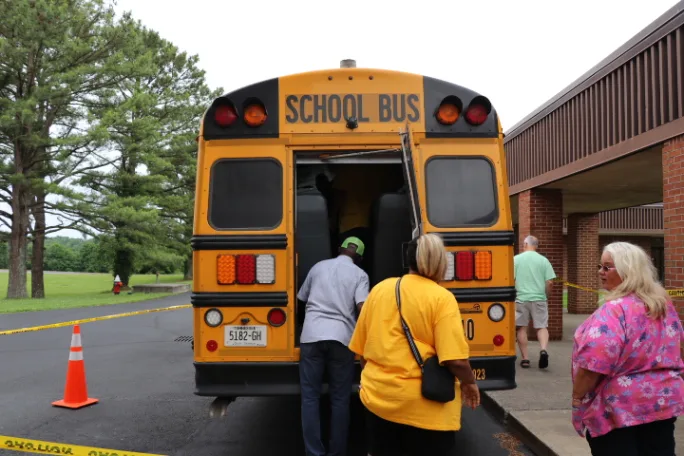
Law enforcement and other experts take participants through securing the bus and protecting students on board
Photo: S.T.A.R.T.
“We know that it's a very thin line between suicide and homicide,” Levine said, referencing a situation at a Northeastern Ohio school. There, a student became an active shooter after bringing a gun on the school bus, using it to kill three kids and wound three others once he was dropped off. That driver now has the worst case of PTSD Levine has seen.
Key Steps for Threat Preparedness
Be hypervigilant. Know the students on your bus (and parents at bus stops), as well as usual surroundings and scenes on your route, so you know when something is off. Keep a close eye out for the warning signs noted above to try and prevent violence before it happens.
Documentation: Administrators should have an emergency operations plan (which should cover both natural disasters and violence) that includes school bus response and share that with bus drivers. If a threat is on board the bus, drivers should know how to diffuse a situation, protect other students, and find safe alternate locations to drive to so they don’t bring the threat to the school.
Communication must include all. For instance, if there is an incident unfolding at the school and some buses have not yet completed drop off, drivers should be informed not to bring students on site until the threat has been handled.
Training: Transportation (and other district staff such as groundskeepers and janitors) should receive training on how to spot and respond to threats — often, these positions have a better ability to see something that teachers can miss. De-escalation skills are a must for anyone who could encounter violence. “Failure to train is a huge issue if something happens,” Levine said.
Think ahead. Drivers should be able to respond quickly to changing situations. This can come down to how and where they park in case a quick escape is needed.
Go with your gut. If something feels off, it’s always better to report it than not. Levine said he’d always rather respond to a false alarm than miss a real threat because someone was afraid to say something.
Get to know SROs. School resource officers can also be a resource to transportation. Develop a mutually beneficial relationship to help each other identify and respond to threats to safety.
Don’t forget field trips. Drivers should check their buses for sabotage from opposing teams or individuals anytime the bus lets all students off. Walk through for suspicious items that weren’t there before letting students back on board.
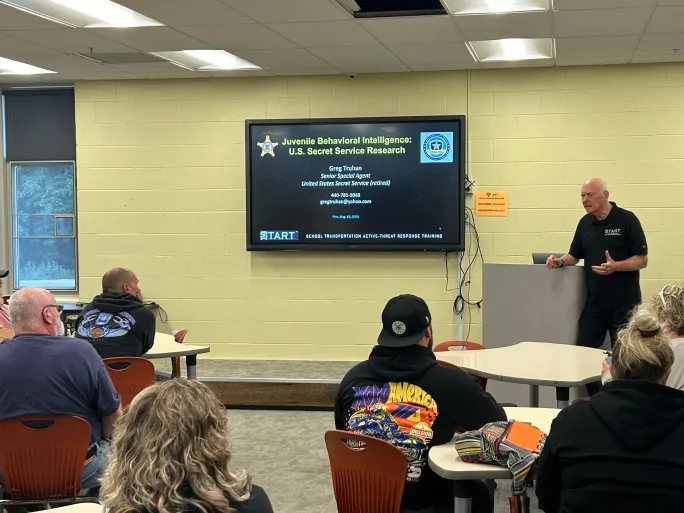
Jim Levine takes school bus drivers through the S.T.A.R.T. training program. It features about four hours of classroom education, followed by hands-on role-playing to teach drivers how to respond in a worst-case scenario.
Photo: S.T.A.R.T.
“We've been fortunate to this day that we haven't had a significant event (on the bus itself),” Levine said. “But we're a much more violent society now than we were.”
That's why it's so critical for bus drivers to recognize their importance and be acknowledged as a vital link in ensuring the safety of the school district and that child.
Another pro to equipping drivers with this training is it can help retain the drivers you have. “We have a national crisis of the retention of bus drivers,” he said, and “I absolutely believe that part of that is because the drivers don't know how to protect their kids, and that's a heavy burden to bear. Once they get the tools on their belt, they feel much more comfortable about going out there and transporting the kids.”
He added that administrators need to fall on their swords with this subject, because there are two courts to answer to should something happen: Civil court will bring substantial lawsuits if kids are killed or hurt on a bus, and the court of public opinion means you have to look parents in the eye and tell them you did everything you could to prevent that situation.
“I'm tired of trying to explain to superintendents, you have a responsibility to your bus drivers, and you have a responsibility to families and to the community to give bus drivers the training they need to keep these kids safe,” Levine said.
Grant Opportunity Alert
Levine calls out a grant from the Department of Justice available to support bus driver training. The FY 25 Student, Teachers, and Officers Preventing (STOP) School Violence Program is now open to provide funding to prevent violence in K-12 school settings by implementing behavioral threat assessments and/or intervention teams and technological solutions that assist in preventing school-based violence.
There are two categories for up to $1 million or $2 million per award for no-cost training and assistance.
Applications on grant.gov close Oct. 27, 2025, while JustGrants closes Nov. 3, 2025.
For more information on the grant, click here, and to book training with S.T.A.R.T, visit www.schoolbusstart.com.
Quick Answers
Threat preparedness is crucial for school bus drivers to ensure the safety and security of students in case of emergencies, including security threats and active shooter situations. Proper training equips drivers with the skills and knowledge to effectively respond and protect students during such incidents.
*Summarized by AI
Subscribe to Our Newsletter
More Safety

Geotab Expands Fleet Safety Tools With Video Coaching, Risk Insights
New safety and video capabilities aim to help fleet managers assess risk, support drivers, and take targeted action through video coaching, red-light violation detection, and more.
Read More →
How to Build a Better School Bus Driver Training Program
Is it time to strengthen your driver training? Here’s how to pick the right talent and improve recruitment, retention, and safety. This video is brought to you by IC Bus.
Read More →
Recent School Bus Accidents Leave 2 Dead, 2 Injured
Four school bus crashes in Florida, Illinois, and Georgia highlight risks in transportation lots, at bus stops, and during student loading and unloading.
Read More →

Sponsored•September 8, 2026
When Every Second Matters, Clarity Keeps Routes Moving
From routine delays to urgent incidents, strong communication practices help drivers, dispatchers, schools, and families respond with confidence.
Read More →
What Happens When a School Bus Catches Fire — and What Can Help
School bus fires are rare but can be devastating. Learn how advances in fire suppression and asset protection help fleets detect fires earlier, reduce damage, and improve safety.
Read More →
Geotab Launches Tool to Help Fleets Investigate Road Incidents
Geotab Investigations combines telematics data, video, documents, and other evidence to help fleets reconstruct incidents, resolve claims, and determine what happened.
Read More →
Texas Sixth Grader Wins 2026 National School Bus Safety Poster Contest
Sai Darshana Yekolu of Moseley Middle School in Prosper, Texas, was named the newest winner for her artwork, bringing the theme of “Safe Rides, Everyday Heroes” to life.
Read More →
Sponsored•August 27, 2026
Doing More With Less: How Transportation Directors Can Prioritize Safety Amid Budget Uncertainty
With diesel prices soaring and nearly one-third of transportation directors expecting budget cuts, maintaining student safety has never been more challenging. Download this guide to learn how leading districts are prioritizing risk, funding critical safety technology, and building stronger budget cases with data.
Read More →
Walton County Schools Adds Gatekeeper Stop-Arm Enforcement System
The Florida district will deploy Gatekeeper’s updated Student Protector technology, which now incorporates AI to improve video evidence.
Read More →
How To Build a More Secure School Bus Yard During and After Hours
As thefts and overnight security threats continue, school transportation leaders are combining stronger operational practices with AI-enabled surveillance to better protect buses, facilities, and staff.
Read More →