




From Minor Injuries to Major Events: Building a School Bus Medical Response Plan
When seconds count, preparation matters. Discover how to build a plan to help drivers manage medical emergencies with confidence.
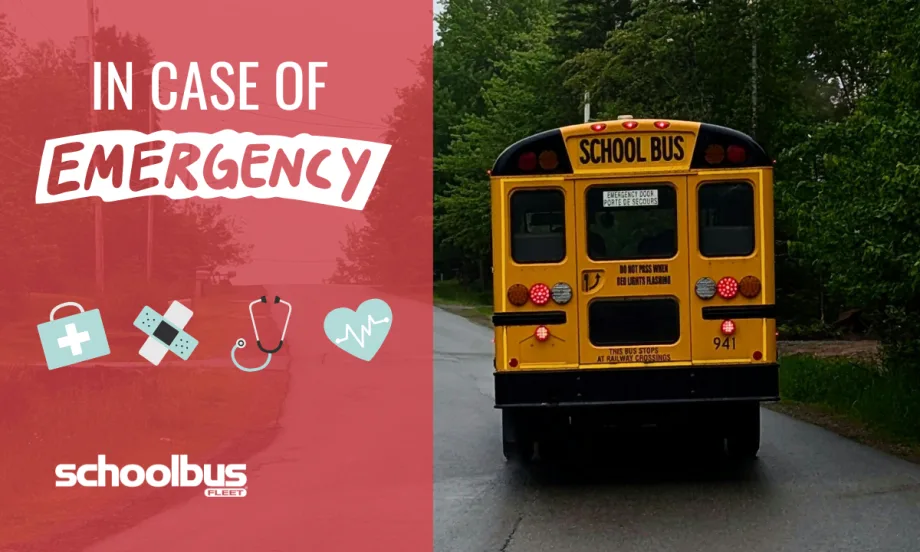
Preparation saves lives. A well-trained, well-equipped bus driver — backed by a clear medical response plan — can turn chaos into calm when every second counts.
Photo: School Bus Fleet
- Emphasizes the importance of having a well-prepared medical response plan for school bus drivers.
- Highlights the need for training drivers to manage medical emergencies effectively.
- Focuses on the significance of quick and confident responses during critical events.
*Summarized by AI
Dutiful school bus drivers take seriously the responsibility that comes with transporting students beyond getting them from point A to point B.
You’re not only steering the wheel; you’re also the person students rely on to make things right if anything goes amiss during the ride. It could be something as common as a scraped knee, as heart-wrenching as first-time fear, a serious matter where life and death is in the balance, or anything in between.
We know that this happens. In nominations for SBF’s School Bus Driver Hero Award, there were stories of drivers who helped a student choking on gum and another who found a student unconscious waiting for his bus.
If you drive a school bus long enough, your calm head and swift action will be called upon. Are you ready for the unexpected?
Planning Is Key
Make the unexpected expected. Planning for those moments when minor or major events need to be addressed is key to acting correctly in the best interests of everyone involved, including those who are indirectly affected.
This means, for example, that while you’re tending to an injured student who’s been knocked down by an irresponsible motorist while they were crossing the road, you must also manage the school kids who remain on your bus as bystanders. Add to that your responsibility for the bus itself and how it may impact the resulting traffic disruption, and you’ve got yourself an emergency situation that’s no less serious than a first responder facing situations on all fronts.
Planning is how you’re going to be able to successfully manage the situation until professional responders arrive on the scene or the student can be brought to an urgent care facility.
Start With Risk Awareness
Of course, you can’t plan for every scenario. The first trick to building a medical response plan is envisioning what kinds of incidents are most likely to occur. Drivers often must contend with minor issues, such as headaches, stomachaches, and cuts and scrapes from playground mishaps. These are relatively easy to manage.
But there are more serious possibilities that are still common. Asthma attacks, seizures, or allergic reactions require quick, confident action. There is no time to debate whether you should run and get help or if search through a backpack looking for an epipen.
Drivers must take decisive action that’s in line with state and district protocols in the given circumstances. In other words, you need to know what to do. Guessing puts lives needlessly at risk.
Training Is Called For
Bus drivers should be offered and required to take medical training. That doesn’t mean every school bus driver will also be a paramedic, but no first responders should be required to automatically know what to do when faced with a medical situation.
Sure, there are human instincts. If a person is bleeding, you know the bleeding needs to be stopped, but you may not know how exactly to achieve that. Or in what situations to keep someone still or their head or limbs elevated. This is where practical, hands-on training kicks in.
When bus drivers are taught and given the opportunity to practice responding to realistic scenarios — like a child having a seizure mid-route — they can reduce hesitation when the moment arrives. That calm, practiced response will make all the difference when every second counts.
The Importance of First Aid Kits
School buses usually have a first aid kit aboard. But there needs to be more than a variety pack of bandages in a range of comic book characters. A school bus should be stocked and maintained according to state or district requirements, with an emphasis on versatility. Essentials include gloves, gauze, antiseptic wipes, adhesive bandages, and instant cold and heat packs.
To up the ante, kits might also include specialized items approved by parents and doctors, for example, an epinephrine auto-injector. Having the right supplies ensures they can manage until emergency personnel arrive.
Editor’s Note: The updated 2025 NSTSP contains new guidance on emergency equipment that should be on-board buses, including first aid kits with suggested contents, as well as a body fluid clean-up kit. See pages 46-47 in the final October 2025 version for details.
Communication Is Critical
During any incident, communication can determine how smoothly things unfold. A solid plan outlines who needs to be contacted, in what order, and how information should be shared. For minor issues, it might mean alerting the school nurse upon arrival. For serious emergencies, drivers should know how and in what situations to radio dispatch, call 911, and notify school administrators, and in what order. Parents should also be informed promptly.
Clear communication also extends to students. Young riders can feel scared or overwhelmed if they see a peer injured. Simple, reassuring language from the driver — while delegating another adult or responsible student to keep order — helps maintain calm on the bus.
Major Emergencies Require Extra Layers
A major medical emergency on a bus is every driver’s nightmare, but preparation can make it manageable. Beyond first aid skills, drivers should be ready to:
Safely pull over in a controlled way.
Secure the bus and keep other students safe.
Assign roles, like asking a student to call for help if needed.
Stay on the line with emergency dispatchers while waiting for responders.
Learn prevention strategies to reduce the chance of further injury, for example, when not to move an injured person.
Keep Parents and Guardians in the Loop
Parents want reassurance that their children are safe when riding the bus. Part of that reassurance comes from knowing there’s a clear plan if something happens. Sharing an overview of the district’s medical response procedures shows transparency.
When incidents do occur, parents should be contacted quickly and respectfully. Consistency in how those calls are made avoids confusion and builds trust.
Documentation Protects Everyone
Documentation is essential. Drivers should complete an incident report detailing what happened, the actions taken, and who was contacted. These reports can be invaluable for accountability reasons, to communicate to professional medical staff what was done, for learning purposes for other bus drivers in the future, and yes, to protect liability for the driver.
Practice Makes Preparedness Real
Plans are only as strong as their execution. Schools should consider holding emergency drills that simulate both minor and major medical incidents on buses. These do well to make drivers more comfortable as far as what might be expected, how their training has paid off, and making a situation feel less unfamiliar when they are called upon to take action.
Drills also help reveal gaps in procedures, like unclear communication channels or missing supplies.
Updating the Plan Over Time
A medical response plan isn’t a set-it-and-forget-it document. It should be reviewed annually, with input from drivers, aides, administrators, school nurses, and local emergency responders. Regulations and best practices evolve, and so do the needs of student populations.
Regular updates ensure the plan stays relevant, effective, and responsive to current risks. They also provide opportunities to integrate new technology, such as digital communication tools or GPS systems and location sharing that speed up emergency response.
Building a Culture of Safety
Ultimately, the strength of a school bus medical response plan lies not only in its content, but in the culture that supports it. When everyone involved — drivers, aides, administrators, parents, and students — understands the value of preparation, safety becomes part of the daily routine.
Encouraging staff to speak up about concerns, providing refresher training, and treating every incident as a chance to learn helps build a stronger system overall.
A scraped knee may not seem like much, and a major emergency may feel rare, but both deserve a clear, confident response. By preparing for the full range of possibilities, school bus drivers are demonstrating their commitment to protecting every student who is temporarily in their care.
Sources
Quick Answers
A medical response plan is crucial for school bus drivers because it equips them with the necessary knowledge and procedures to efficiently handle emergencies, potentially saving lives when every second counts.
*Summarized by AI
More Safety
Five Students Died from School Bus Loading/Unloading in 2025-26
Fatalities are down by just one this year across the U.S. as four states reported five children struck and killed while getting on or off their school bus.
How a Texas District Built an Award-Winning Safety Culture
Rockwall ISD's Jennifer Gardella joins The Route to share lessons learned on accident prevention, driver training, coaching, technology, and team culture.
How Rockwall ISD Built an Award-Winning Safety Culture
How did one Texas transportation team strengthen bus and traffic safety? Jennifer Gardella shares lessons on driver training, coaching, technology, and team culture. The Route is brought to you by IC Bus.

North Carolina Student Killed While Boarding School Bus, Two Die in Utah Bus Crash
A Southern Nash High School student died after being struck by a pickup truck while approaching her school bus. In a separate incident, two people were killed after crashing into a school bus in Utah.
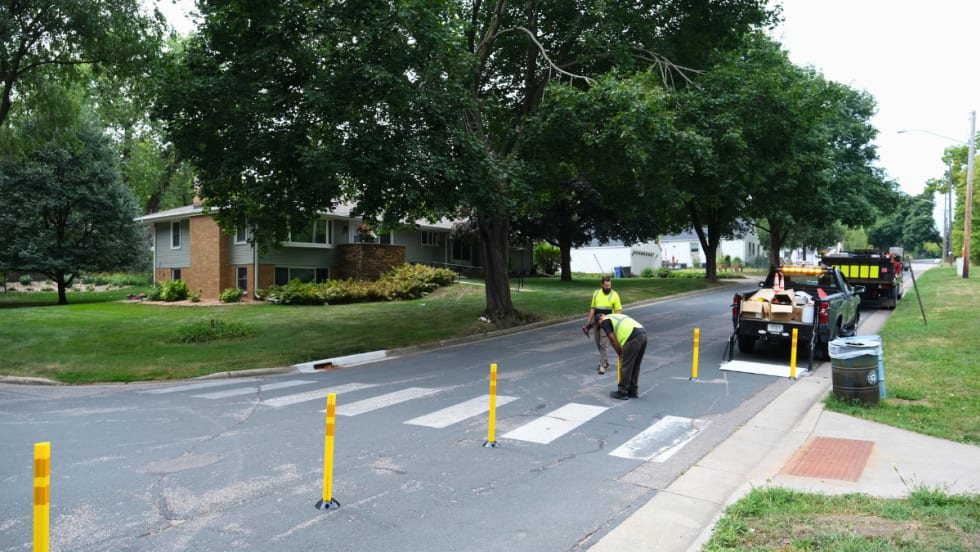
Minneapolis School Zone Pilot Cuts Speeding 41% with Low-Cost Street Design Changes
In a pilot project in Minnesota, two school-area intersections had low-cost, temporary road and traffic flow improvements made to measure the impact on roadway and student safety. Here's what they found.

Sitestream, Safety Vision Partner with Connecticut City to Launch School Bus Stop-Arm Camera Program
The new enforcement initiative combines camera technology and violation management software to document illegal school bus passing, encourage driver compliance, and enhance student safety.
From Reactive to Proactive: Making Every Ride Visible
Smart technology only delivers its full value when it works together. See how Catalyst connects proven industry platforms to move student transportation from reactive to proactive.
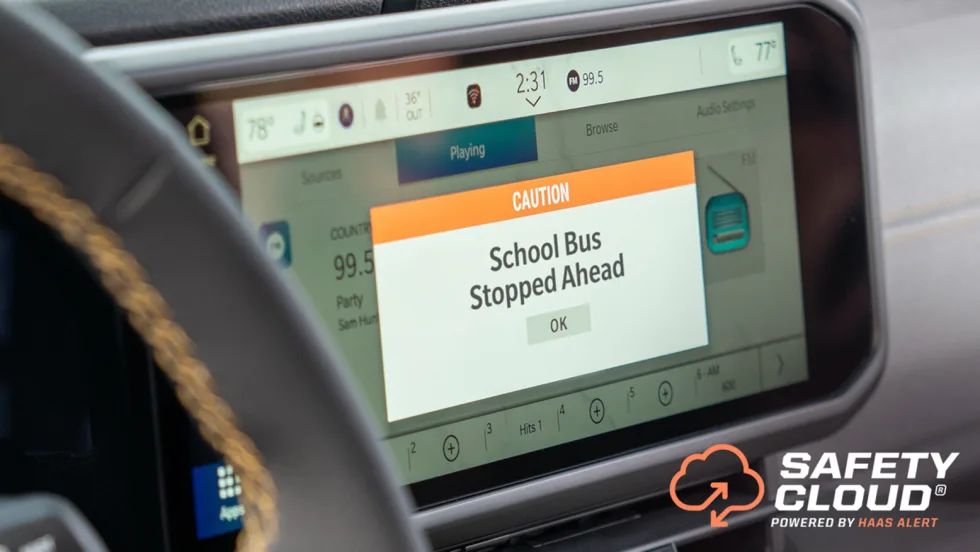
HAAS Alert’s Safety Cloud Warns Motorists of Stopped School Buses
Through a transponder or Samsara connection, the product lets school bus fleets send advance warnings to approaching drivers through in-vehicle alerts.

HopSkipDrive Reports Progress on Safety Advisory Council
More than a year after forming the council, independent safety experts have helped shape new rider-safety features and policy progress, with a new goal to address rider behavior.
What the 2026 National School Bus Safety Month Resolution Means for Student Transportation
The bipartisan resolution highlights illegal school bus passing, student safety during loading and unloading, and the need for driver training and public education.