





Meeting the Challenges of Transporting Special-Needs Students
5 Questions: Teena Mitchell on Tech, Training, and Transforming Special Needs Transportation
Meet Teena Mitchell, a dedicated advocate for special needs transportation. In this Q&A, the Greenville County Schools coordinator and NAPT president shares insights on industry advancements, behavior strategies, and bridging gaps in special education transportation.
January 29, 2025

Teena Mitchell, NAPT president, says that sometimes we do a disservice to special needs students by not giving them the opportunity to succeed.
Photo: Teena Mitchell/BF Canva
5 min to read
Teena Mitchell, CDPT, CSNT CPST, is a constant supporter of special needs children and a voice for them in the industry.
The special needs transportation coordinator at Greenville (S.C.) County Schools, she’s also a board member, committee member, and instructor for the South Carolina Association for Pupil Transportation, currently serves as president of the National Association of Pupil Transportation (NAPT), and is on SBF's editorial advisory board.
Let’s get to know her a little better and listen to her perspective on a range of issues.
1. SBF: How did you get started in school transportation and find your way to the special needs segment?
Mitchell: I started in school transportation so that I would have the same schedule as my five children. I started as a bus driver and then became a regular education bus supervisor. My district asked me to move to a special needs bus supervisor. Although I knew very little about transporting students with disabilities at that time, I accepted the position and endeavored to educate myself in this field so that I could support students with disabilities with their transportation needs.
I not only studied the laws that govern our industry, but I also reached out to national associations and mentors to help me navigate best practices. Twenty years later and a move to manager and then to coordinator, I realize how much the passion for supporting students with disabilities has enhanced my life and made me the person I am today.
2. What have we learned about special needs transportation over the years, and how has the industry changed to better accommodate students?
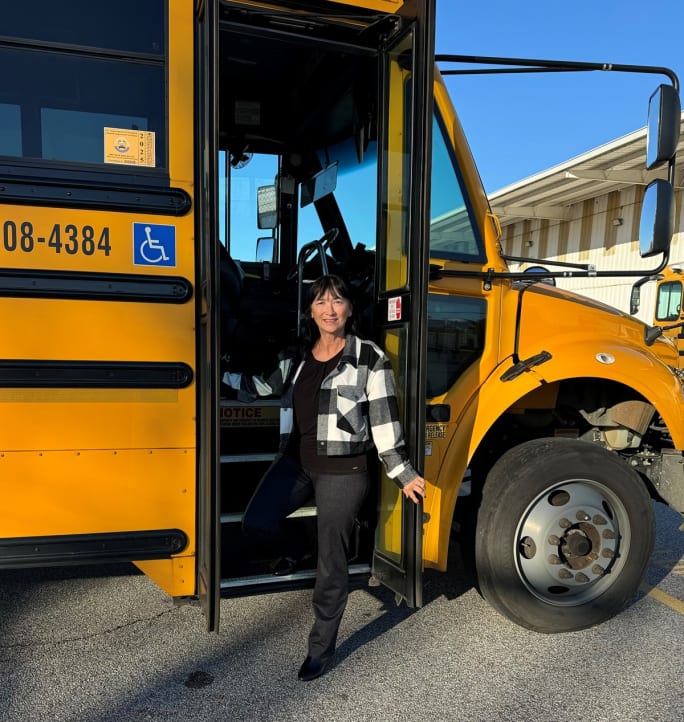
Collaboration is key! Mitchell emphasizes the importance of including transportation staff in IEP planning, as well as positive behavior supports, to ensure safe, goal-driven solutions for students with disabilities.
Photo: Teena Mitchell
Over the last few years, the industry has recognized that students with disabilities have individual transportation needs, and their accommodations can look different even for similar disabilities. This realization has opened the door for districts’ IEP teams to be creative in providing individualized-supported transportation.
Many of our students can be supported in the regular education school bus with supports in place, and more districts are opting to add lift buses to their general education fleets to support students with physical disabilities so that they can ride with their peers.
Not only do both of these accommodations follow the least restrictive environment for these students, but they also help us utilize our more specialized transportation for students who need additional transportation support.
3. What tech advancements have you seen in special needs transportation in recent years?
Advanced video systems are an amazing tool not only for training but also for supporting student’s needs. The old systems gave you a possible glance if the camera was pointing in the right direction, but the new technology allows us to view and hear the entire situation from many angles to assess the student's needs. I have used video to get assistance from our district’s physical therapist and behavioral specialist to aid us with student needs. I have also used the video for training our bus personnel.
Routing programs would be the next technology on my list of improvements. What has taken hours in the past to route, now is a matter of minutes. Also, the GPS portions of routing have made it safer for bus drivers to navigate new routes with turn-by-turn directions.
4. What strategies do you recommend for behavior management when it comes to special needs students?
The best strategies for behavior mitigation and de-escalation begin with the training of the bus driver and bus attendant. They are the key to creating a positive behavior school bus environment.
Unfortunately, many drivers and attendants are put on the school bus without disability training or any Positive Behavior Intervention Support (PBIS) training. This can lead to the bus driver or attendant becoming part of the problem or even escalating the situation. It is essential that the bus drivers and attendants be educated in these areas, and that districts adopt a positive bus environment to create a foundation for supporting students with disabilities.
The word “foundation” is significant because each student has individual needs, and PBIS can support each student. If the bus driver and attendant are already familiar with the concepts of PBIS, it will assist them in implementing the strategies from the IEP team and provide continuity between the classroom and the school bus.
5. What do you think is most misunderstood in special needs education and why?
Unfortunately, transportation is the most misunderstood in the special education environment. This could simply be because transportation staff are not included in the IEP process. The disconnect places barriers between the school and the school bus. My advice is for transportation staff to brush up on the laws and best practices that govern transporting students with disabilities and reach out to the special education department to let them know what you can bring to the table. By transportation and the special education departments working together, we can accomplish safe and supported transportation for our students with disabilities.
The second misunderstanding in specialized transportation is that IEP teams focus more on “all of the supports” that are available for a student when least restrictive environment tells us to focus only on the supports the student actually needs. Sometimes IEP meetings rely more on convenience or simply continuance when we should be goal-driven to the least restrictive environment. Sometimes we do a student a disservice by impeding their ability to progress by not giving them the opportunity to succeed.
Subscribe to Our Newsletter
More Special Needs Transportation
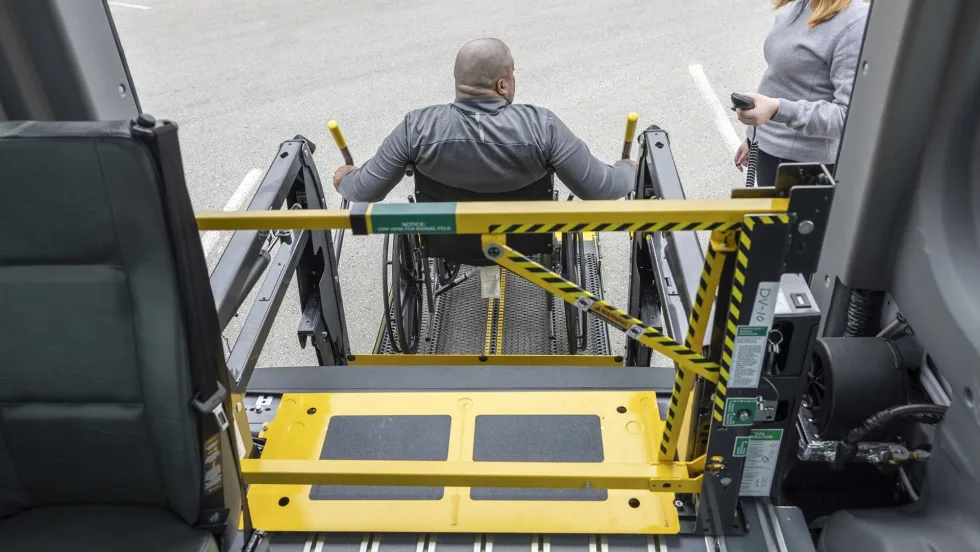
BraunAbility Introduces New Safety Barrier for Wheelchair Lifts
LiftSentinel is designed to add another layer of protection during wheelchair loading and unloading and can be retrofitted to many existing commercial lift installations.
Read More →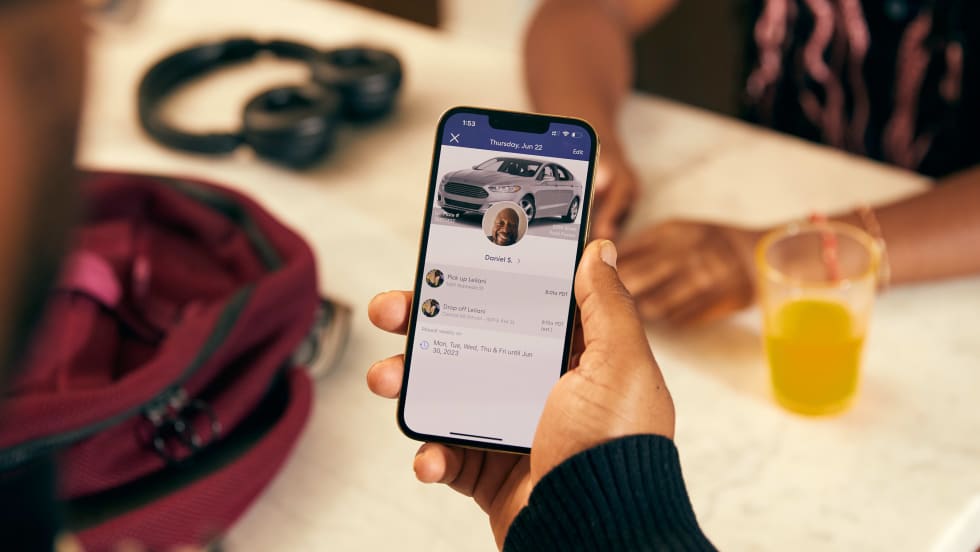
HopSkipDrive Launches New Safety, Driver Consistency Features for 2026-27 School Year
The company’s free ride recording, live ride tracking, and consistent driver assignments aim to improve safety and continuity for diverse student transportation needs.
Read More →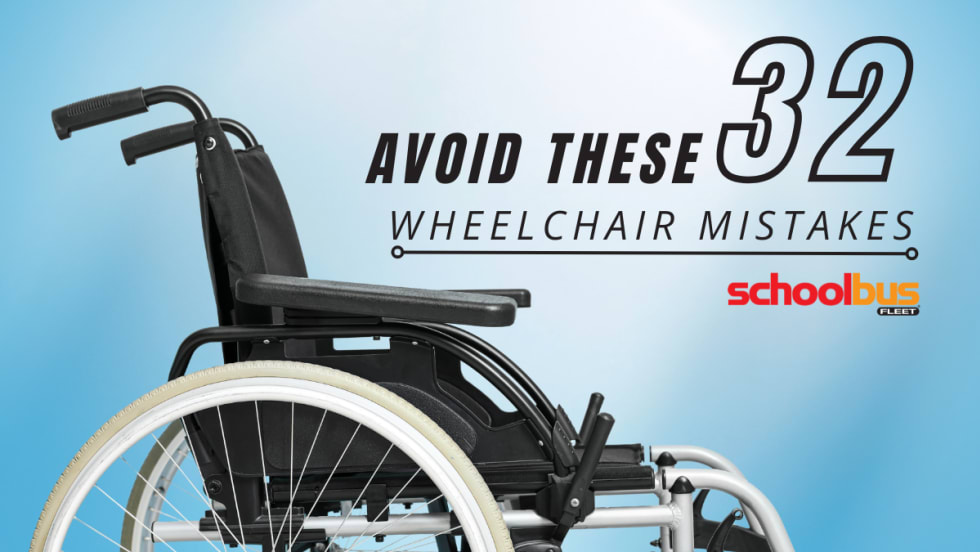
The Most Common Wheelchair Securement Mistakes on School Buses (and How to Fix Them)
Small missteps in wheelchair securement can have serious consequences. Here are 32 tips from experts to reduce risk and increase student safety on the bus.
Read More →
Inside AMF Bruns’ New Showroom: School Bus Securement Solutions Explained
Go inside AMF Bruns America’s new Ohio showroom with Maritza Valentin to see its FutureSafe technology, driver training tools, securement systems, and seating innovations.
Read More →
What AMF Bruns’ New Facility Means for Customers [Video]
Inside AMF Bruns’ new Stow, Ohio, operations: See how expanded space and innovation will enhance customer support and operations.
Read More →
AMF Bruns Expands in Ohio, Investing in Growth and Community
With expanded production space, local investment, and a growing workforce, AMF Bruns is scaling its U.S. presence. Here’s an exclusive first look inside the new Stow, Ohio, HQ.
Read More →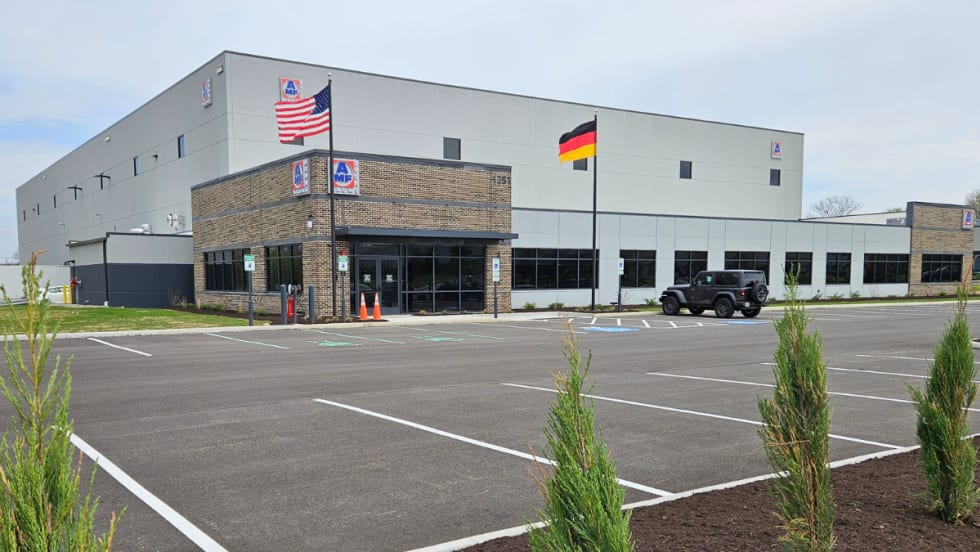
Inside AMF Bruns of America’s New Ohio Manufacturing Facility [Photos]
Take a behind-the-scenes look at AMF Bruns of America’s new 41,000-square-foot Stow, Ohio, headquarters, featuring advanced manufacturing, expanded space, and future-ready mobility solutions.
Read More →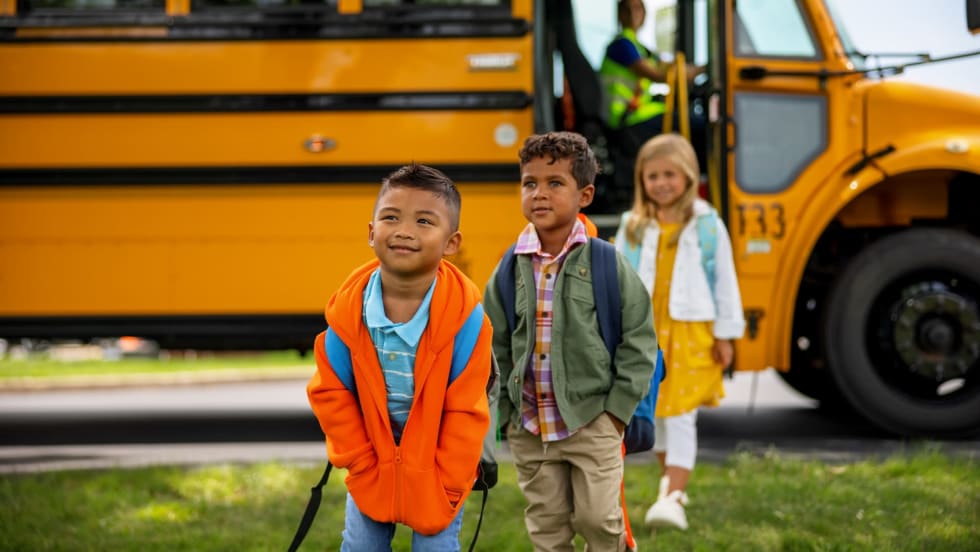
First Student Boosts Student Support in Wichita & Texas
First Student and Wichita Public Schools are using behavioral support strategies to improve student ride experiences, while a separate initiative expands access to after-school programs through a bus donation.
Read More →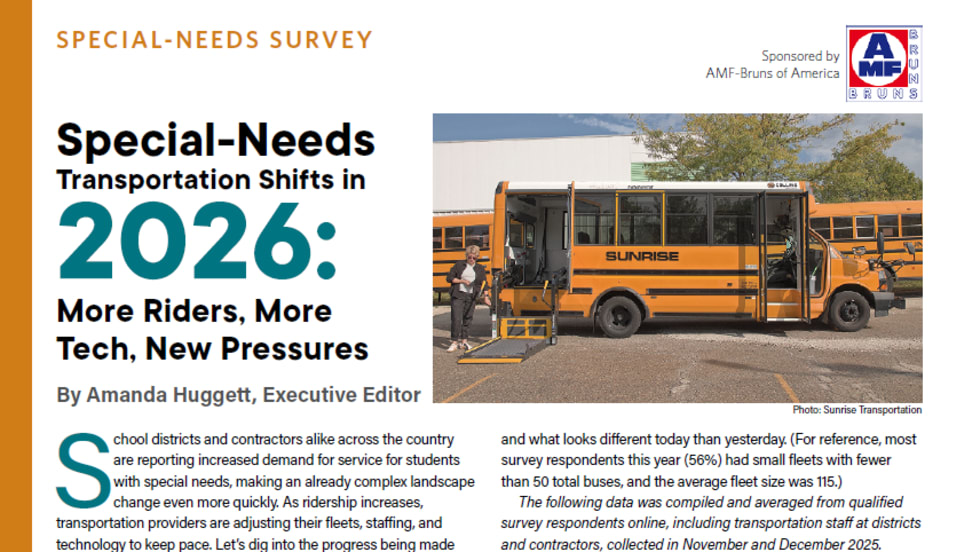
2026 Special-Needs Transportation Survey
What’s changing in special-needs transportation? This year, student transportation operators report a rising need, easing driver shortages, growing tech adoption, and evolving challenges. Sponsored by AMF Bruns of America.
Read More →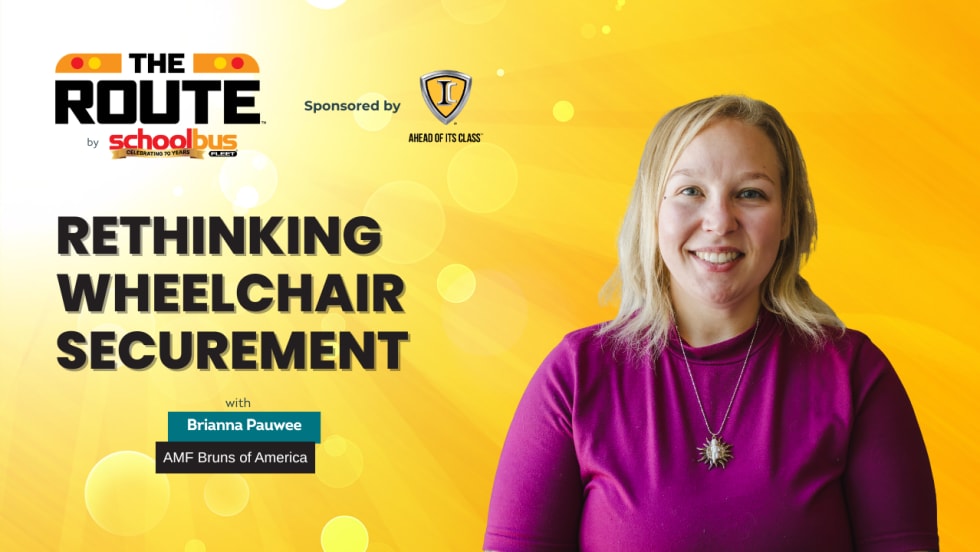
The Lived-Experience Gap in Mobility Tech: An Expert Take on Safe Student Transportation
Brianna Pauwee, a product application specialist at AMF Bruns of America and a wheelchair user, drops in to The Route to share practical securement and training insights, plus the story behind the new “Beyond Mobility” podcast. The Route is sponsored by IC Bus.
Read More →