SBF 70 years logo
MenuMENU
SearchSEARCH

Compartmentalization plus

We need to be clear that the debate is not compartmentalization vs. lap-shoulder belts. These three-point restraint systems can work together with compartmentalization to enhance its effectiveness.

by Frank Di Giacomo
April 28, 2014
3 min to read


In the pupil transportation industry, we often remind the public and ourselves that the school bus is the safest way for students to get to and from school.

Federal statistics show that school buses are far safer than other forms of transportation to school, such as walking, biking or riding in a car. That record is important, and it is imperative that we continue to promote it.  

Ad Loading...

But rather than resting on the fact that the yellow bus is the long-established safest form of school transportation, we need to be constantly asking ourselves this question: Could school buses be safer?

When we ask that question, we have to consider lap-shoulder belts, which has long been a contentious issue in the industry.

Not one or the other
One fundamental element in the safety design of the school bus is compartmentalization — the closely spaced, impact-absorbing, high-back, padded seats. Compartmentalization works very well most of the time, but, as the National Transportation Safety Board has confirmed, its protection is limited in side impact and rollover crashes.

That said, we need to be clear that the debate is not compartmentalization vs. lap-shoulder belts. These three-point restraint systems can work together with compartmentalization to enhance its effectiveness.

Lap-shoulder belts can help keep kids in the seating compartments — where they need to be — during a crash. Also, any passengers who don’t buckle up will still be protected to the extent possible by compartmentalization.

Equipping a school bus with lap-shoulder belt seating systems is, in my opinion, “compartmentalization plus.” It is a crash test-approved way to make the bus even safer.

More support
In February, the National Association of State Directors of Pupil Transportation Services (NASDPTS) released a new position paper that makes excellent points in support of lap-shoulder belts for school buses. I encourage you to read the paper for yourself, but here’s one quote from it that I want to highlight:

Ad Loading...

“The addition of lap-shoulder belts to a school bus is a proactive measure by a school district to further enhance the safety of the students it is responsible for transporting. This measure goes beyond the minimum level of expectation for safe student transportation.”

Yes, the cost that lap-shoulder belt seating adds when buying new buses is a hurdle that has to be cleared. But we should treat that cost as a worthy investment to “further enhance the safety of the students,” as NASDPTS put it, and not as a reason to oppose lap-shoulder belts for school buses.

We as an industry have been debating this topic for a long time, and the debate will probably continue until lap-shoulder belts are mandated on large school buses (and I believe that they eventually will be).

I’ve given you my perspective on the issue. Now I’d like to hear yours. We want to provide a forum for anyone interested to discuss the pros and cons of lap-shoulder belts on school buses. Post a comment on our blog, and see what other readers have to say.


Subscribe to Our Newsletter

More Safety

Graphic with part of a school bus and text reading "Fatal Accident in Brooklyn."
Safetyby StaffMay 5, 2026

9-Year-Old Boy Killed by School Bus at Busy Brooklyn Intersection

A Williamsburg community is mourning after a child was fatally struck by a private yeshiva bus, prompting calls for urgent safety improvements at the high-traffic crossing.

Read More →
A blue and white graphic with text reading "2026 Safety & Operations Report" with an image of the cover of the report.
Safetyby StaffMay 4, 2026

Does Reliable School Transportation Boost Attendance? EverDriven’s Data Says Yes

The new data shows 99.99% incident-free trips and strong on-time performance, reinforcing how dependable transportation, especially for vulnerable student populations, can help districts combat chronic absenteeism.

Read More →
zonar system image
SponsoredMay 1, 2026

What Data Shows About Student Transportation in 2026

Driver shortages, safety expectations, and staffing limits define student transportation in 2026. New survey data shows how fleet leaders are responding.

Read More →
Ad Loading...
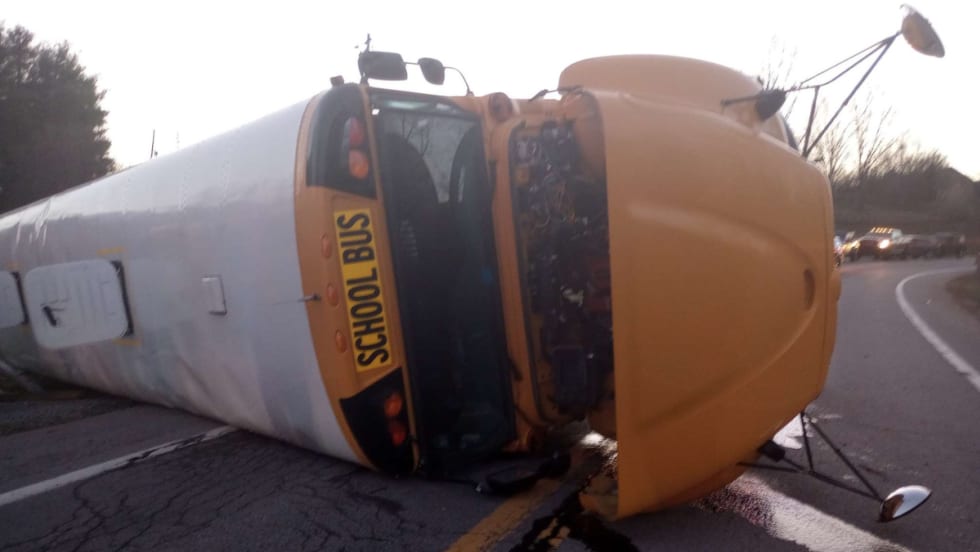
an overturned school bus on a roadway after an accident
Safetyby News/Media ReleaseApril 24, 2026

NTSB Calls for Alcohol Impairment Systems, Seat Belts After W.V. Crash Investigation

The federal agency's report asks NHTSA to require all new school buses to be equipped with vehicle-integrated alcohol detection systems and passenger lap-shoulder belts.

Read More →
zonar system image
SponsoredApril 20, 2026

2026 State of Student Transportation Report

Student transportation teams are being asked to do more with less, facing driver shortages, rising costs, and increasing safety expectations. This report uncovers how fleets are adapting, where technology is making the biggest impact, and why student ridership tracking is emerging as a top priority. Download the report to explore the key trends shaping 2026 and what they mean for your operation.

Read More →
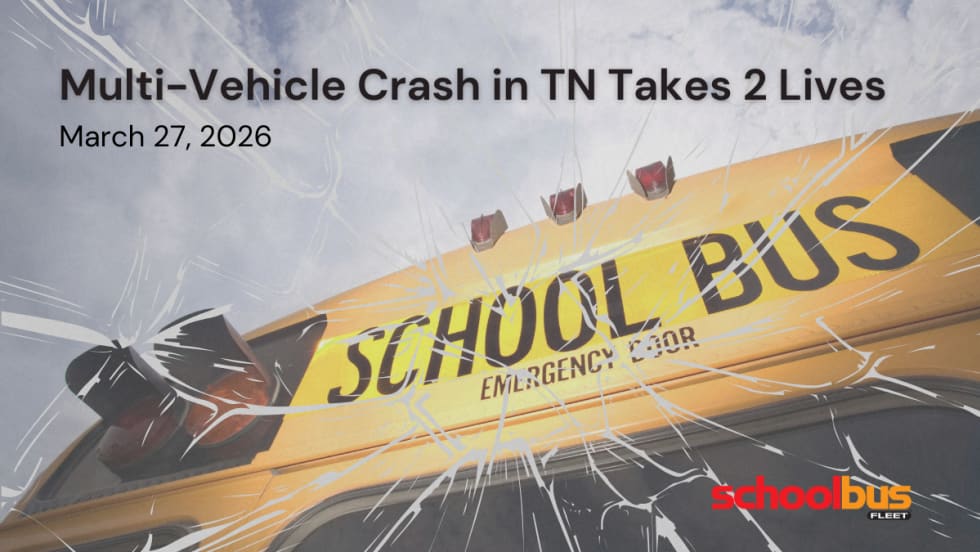
A close-up view of the top of a yellow school bus with “School Bus” signage and red lights, overlaid with a cracked-glass effect. Text on the image reads, “Multi-Vehicle Crash in TN Takes 2 Lives” and “March 27, 2026,” with the School Bus Fleet logo in the corner.
Safetyby Staff and News ReportsApril 17, 2026

2 Students Die in Tennessee School Bus Crash with Dump Truck

A Carroll County accident claimed the lives of two students and injured over a dozen others on a March 27 field trip for eighth graders at Clarksville-Montgomery County. A preliminary report adds new information to the story.

Read More →
Ad Loading...
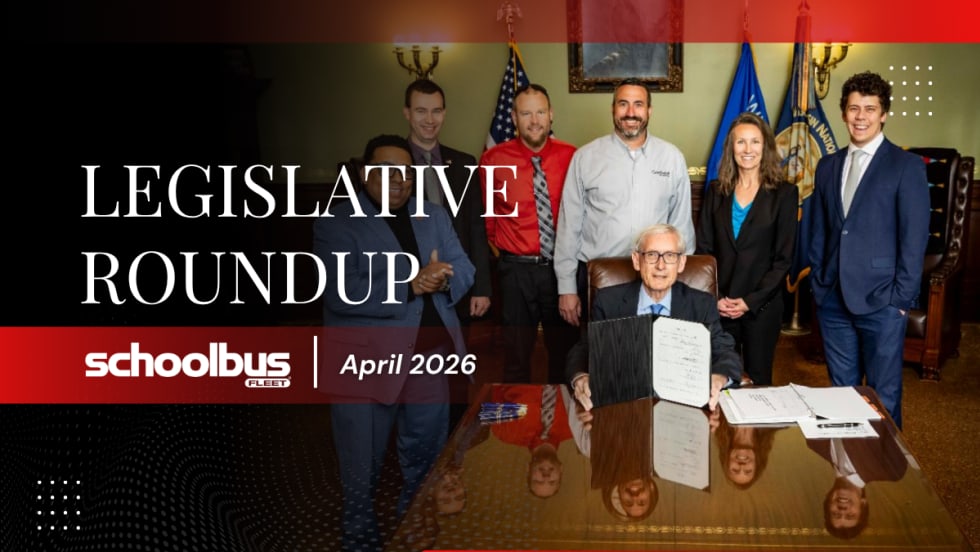
A black, white, and red graphic with an image of Wisconsin political figures by a table and text reading "Legislative Roundup April 2026."
Safetyby Elora HaynesApril 17, 2026

School Bus Laws to Watch: Driver Shortages, EV Debates & Safety Upgrades

From driver shortage solutions in Tennessee and rural connectivity debates in Utah to new safety laws in Wisconsin and ongoing electric bus mandate discussions in New York and Connecticut, here’s the latest in school bus legislation across the U.S.

Read More →
A rendering of the 6th-generation Waymo Driver on Hyundai’s all-electric IONIQ 5 SUV
Safetyby Staff and News ReportsApril 9, 2026

Senate Report: Autonomous Car Companies Hiding Reliance on Remote Operators

Waymo’s self-driving vehicles are under fire again after repeated school bus passing violations, raising questions about safety, remote operators, and regulation.

Read More →
Children cross in front of a stopped school bus with its stop arm extended while a nearby vehicle waits, illustrating school zone safety and risks of illegal passing.
Safetyby News/Media ReleaseApril 9, 2026

Industry Suppliers Offer Distracted Driving Awareness Month Reminders

Distracted driving continues to pose serious risks in school zones, with new data and driver insights highlighting ongoing concerns and potential solutions to improve student and roadway safety.

Read More →
Ad Loading...
Graphic featuring a headshot of Michael Graham, Vice Chairman of the National Transportation Safety Board, wearing a dark suit and red tie against an orange gradient background, with “Leadership Update” and School Bus Fleet branding on the left.
Safetyby StaffApril 8, 2026

NTSB Names Michael Graham Vice Chair: Where He Stands on School Bus Safety

A former airline pilot has stepped into a new role at the independent federal agency, but where does he stand on issues like seat belts on school buses? Here’s what he’s said.

Read More →