



Cary Hartwig had a problem. The transportation supervisor at Northwood-Kensett Community Schools in Northwood, Iowa, needed to replace two buses in his 12-bus fleet that would no longer pass state inspection. “We stretched things as far as we could,” Hartwig says. The problem: His school district didn’t have the necessary funding to purchase two school buses. “It seems like when money gets tight, transportation is targeted,” says Hartwig. “One of the first things the school board looks at is to cut transportation funding.” But a solution that allowed the district to procure two new buses without writing a six-figure check was found. Instead of buying the buses, the school district went for a five-year lease-purchase deal with Hoglund Bus Co., an International Truck and Engine Corp. dealer in Marshalltown, Iowa. “Up to that point, we had always purchased buses outright,” says Hartwig. Northwood-Kensett’s solution - to finance the buses rather than buy them - is one that many school districts have embraced over the past few years and especially since the downturn of the U.S. economy. “Our fleets are getting older, and it’s tougher to find the money,” Hartwig says. “It’s kinda borrowing against the future, but when you need something, you need it.” “It’s a no-brainer for schools,” says John August, general manager of the Hoglund dealership that sold the buses to Northwood-Kensett. “With a municipal lease, interest rates are very low, from 4 to 5 percent,” he says. “Even if they take a five-year lease-purchase, they can pay the buses off early with no penalty.” Growth in financing
“There is definitely a trend toward financing buses, whether through leasing or lease purchasing,” says Tony Sellier, director of financial services for Blue Bird Corp. in Fort Valley, Ga. “With state education budgets being cut at an alarming rate and smaller budgets being stretched by higher enrollment rates, money for school bus purchases is usually the first to go.” “The lease-purchase has been on the rise,” agrees Harry Bartling, school bus sales coordinator at H.A. Dehart & Son Inc., a Thomas Built Buses dealer in Thorofare, N.J. “It’s been growing gradually, but noticeably, for the past five years.” Bartling estimates that 75 percent of the school districts and contractors in New Jersey now use lease-purchase programs to procure their school buses. August of Hoglund Bus says he’s seen a four- to five-fold increase in the number of districts interested in lease-purchase, mainly because of tax revenue shortfalls. “Our state legislature cut 4.5 percent from the education budget, so anyone paying for buses from the general fund took a big hit,” he explains. “That’s why lease-purchase is going to become more and more popular.” What makes the lease-purchase program so attractive to school boards is the preservation of cash, which reduces the fiscal pain that many schools are feeling. “A political advantage of financing is that the board of education is only being asked to approve annual payments for that particular year,” says John Farr, transportation director at Oceanside (Calif.) Unified School District. “For example, it is more palatable for a board to consider this year’s commitment of $150,000 versus the overall loan value of $500,000.” Farr adds, however, that his preference is to pay cash for new buses. “Financing bus replacement and additional buses has its place, but purchasing buses outright with the budgeted funds eliminates the costs of financing,” he says. Joe Reed, assistant transportation director at Palm Beach County (Fla.) Schools, agrees. “Even in light of tightened budgets and reduced capital expenditures, our district has managed to fund buses every year,” he says. “Although we have had to reduce quantities, we are still buying a first-class bus with a lot of equipment. For any district capable of funding its own buses, I have to believe that leasing is a loser in the long run.” One advantage that Palm Beach County has over school districts in many other states is that Florida has a state bid purchasing process that allows its school boards to buy buses at a volume discount. “This allows us to buy a lot of bus for less money,” Reed says. “Maybe others will see the advantage of buying as a state and follow suit one day.” Costs of deferral
Some school boards have taken a more flinty approach to tight budgets by deferring the procurement of new buses. But it’s not always a cost-effective decision, especially with older fleets. “You have to balance the savings against the cost of waiting,” says Peter Crossan, president of Coastal Bus and Equipment Sales in Rowley, Mass. “It may look good in this year’s budget, but what’s the cost of running that old fleet for another year? And what are you giving up in terms of the enhanced safety equipment and reduced emissions of new buses? One way or another, it also seems to cost more in the end.” School districts that are entrenched in their procurement habits may not consider lease or lease-purchase as viable alternatives. A lack of familiarity with these options is often the culprit. “It’s an education process,” says Floyd Merryman, president and CEO of Sonny Merryman Inc., a Thomas dealer in Evington, Va. “They need to be made aware that there is an alternative to purchasing buses outright.” Merryman says some of his customers have ruled out bus procurement altogether because the state is so strapped for funds. “School buses are a big line item, and they’re one of the first items that get cut when things get tight. And believe me, here in Virginia, things are tight,” he says. Leasing on the rise
While lease-purchase programs are attracting more interest among school districts and contractors, leasing programs are also getting a boost. “Straight leases are becoming more and more popular,” says David Tinsley, sales manager at Midwest Bus Sales in El Reno, Okla. “We’re probably leasing 25 to 30 percent of our units and that’s growing.” The advantages of leases over lease-purchase deals, Tinsley says, are lower annual payments, tax incentives and the ability to tailor the program to the customer. Several factors, he adds, are critical to the success of any lease: properly spec’d equipment, knowledge of lifecycles, environmental considerations, maintenance costs and mileage management. “One of the most important factors is to understand the fair market value of the vehicles at the end of the lease,” Tinsley says, adding that a good dealer should be able to explain the importance of these factors to a school bus customer. Lease programs have other advantages. “We find that one of the real advantages to leasing is last-minute procurements or short-run procurements,” says Crossan of Coastal Bus. For example, if a population of disabled students should unexpectedly enroll in the district in mid-year, the transportation department can lease a couple of special-needs buses and have them by the following week. “It allows them to adjust their equipment to the population,” Crossan says. August of Hoglund Bus says many districts that have deferred bus replacement for several years have no choice but to lease. “There’s a point down the road where there is no return,” he says. As an example, August describes a school district with a fleet of 80 buses, of which half are reaching retirement age and will need to be replaced. “They just don’t have the money to replace that many buses in a short amount of time. They’re so far behind the game that they have no alternative but to lease,” he says. Tinsley believes the momentum to move from a straight purchase program to a lease or lease-purchase program is going to pick up, mainly because of the weakness of the economy. “Over the next three to five years, we’re going to see a lot of leases and lease-purchases by school districts and contractors because the cash flow just isn’t there,” he says. Basics of tax-exempt leases
Most public school districts and other tax-exempt organizations qualify for municipal lease financing, which currently offers interest rates in the range of 4 to 5 percent. Here is some basic information about these lease programs: A tax-exempt lease is a contract that allows a public entity to purchase equipment and related services* by making periodic payments over the useful life of the asset (i.e., an installment purchase contract).
Included as a line item in the lessee's operating budget and not considered debt
Interest income is tax-exempt because the customer is a government entity
Interest rates are lower than commercial rates due to the tax-exempt treatment
Lease payments are subject to annual budgetary appropriations by the municipality
Unlike debt financing, voter referendum is generally not required
*subject to IRS rules
Tight Budgets Force Fleets to Look at Bus Purchase Options
Cary Hartwig had a problem. The transportation supervisor at Northwood-Kensett Community Schools in Northwood, Iowa, needed to replace two buses in hi...
More Management
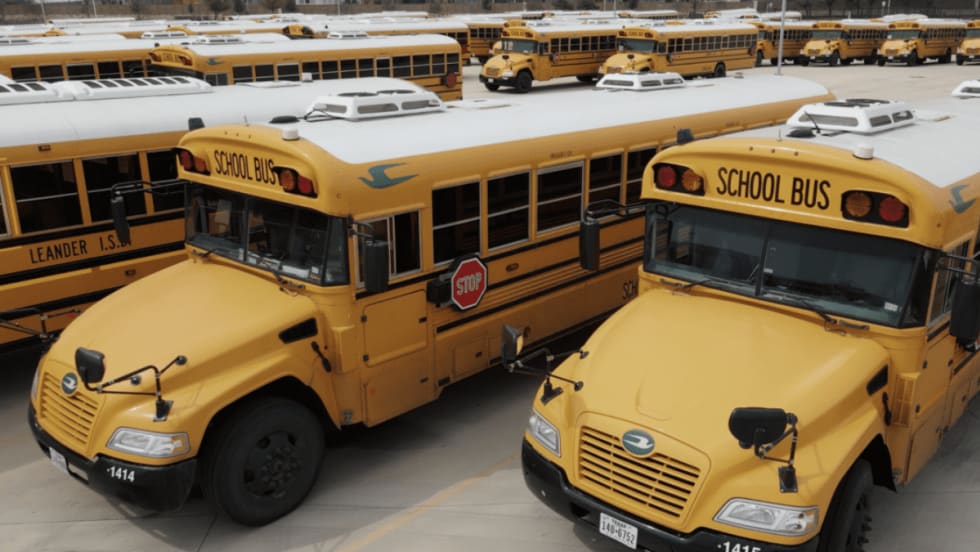
Leander ISD Saves $1M Through Route Optimization
Leander ISD identified more than $1 million in projected annual savings after using AlphaRoute to optimize bus routes without changing schedules or stops.
Read More →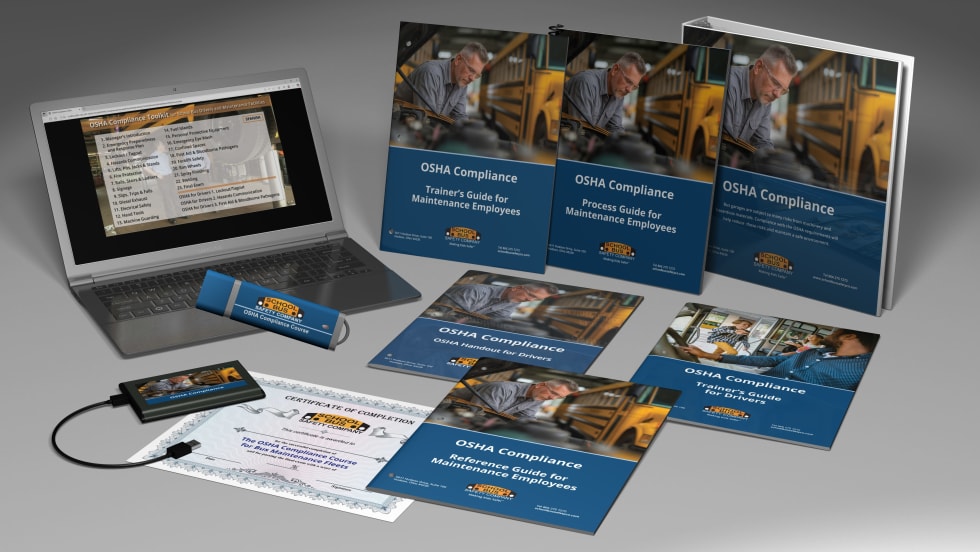
The School Bus Safety Company Updates OSHA Compliance Course
The updated training course offers school bus operations a structured program covering 29 safety standards for technicians and drivers.
Read More →
What Happens When Battle-Tested Leadership Meets Student Transportation?
See how Thomas Gray brings Marine Corps discipline and logistics expertise to Dayton Public Schools in this article celebrating National Military Appreciation Month.
Read More →From Our Partners
What Data Shows About Student Transportation in 2026
Sponsored by Zonar Systems

Transportation Drives Student Outcomes and Access
Sponsored by EverDriven

Honoring Heroes Behind the Wheel: Award Nominations Open
Sponsored by AngelTrax

Announcing the 2025 School Bus Driver Hero: Jackie Wilkerson Brown
Sponsored by AngelTrax


Diesel Prices Spike: Tips to Cut Fuel Costs with Data and New Geotab Tools
With diesel prices up 46%, new Geotab analysis points to tools that help fleets reduce idling, detect fuel anomalies, and recover hidden fuel costs across operations.
Read More →
What Data Shows About Student Transportation in 2026
Driver shortages, safety expectations, and staffing limits define student transportation in 2026. New survey data shows how fleet leaders are responding.
Read More →
Transit Technologies Announces New Executive Appointments
The Bytecurve and busHive parent company has multiple new faces on its executive team as the company focuses on AI platform growth.
Read More →
IC Bus Introduces ‘My International’ to Connect Fleet Vehicles, Data, and Service
Available on desktop or mobile, the digital ecosystem brings fleet monitoring, service management, vehicle insights, and dealer communication into a single interface.
Read More →
More Districts Tap Transfinder for Routing, Tracking, and Communication Tools
See which users in Illinois, New York, Ohio, and Pennsylvania are adopting Transfinder’s routing, tracking, and parent apps.
Read More →
AT&T, Sonim Launch XP5plus 5G LMR Device for School Bus Fleets
The new radio combines durability, push-to-talk, and FirstNet connectivity, offering a cost-effective communication solution for fleets.
Read More →
EverDriven Celebrates Milestones in Washington; Caregiver Trust Tops 80%
EverDriven marks 18 years and 17 million miles in the Evergreen state while new data shows 8 in 10 caregivers would recommend its student transportation solution.
Read More →