




Fun, Memorable Ways to Teach School Bus Safety
Classroom safety programs that feature safe and dangerous puppets, safety-challenged Oz characters and an old friend (Buster the Bus) help to engage and educate young riders.
As the school year draws near, you have probably already dusted off that old student training manual and contemplated the annual trek into the classroom to remind students how to properly ride the school bus. You have once again racked your brain for a way to present the same material in a new way — a way that will grab the attention of those squirming youngsters and somehow forge a path into their memory banks. Take heart. There are new and interesting ways to tackle classroom instruction. However, they will require effort, organization and quite a bit of ingenuity on your part. Here’s what three school districts are doing to educate their riders.
Put on a puppet show
For the past eight years, drivers at Centennial School District in Portland, Ore., have been playing with dolls. Every fall they bring Dangerous Dave and Safe Sally to kindergarten through third-grade classrooms, where they put on puppet shows about school bus safety. In the interactive, 25-minute skits, Dave breaks each of the school bus rules, eliciting a synchronized “Follow the rules Dave” from the audience. Rules covered include danger zone safety, proper seating, safe crossing in front of the bus, using the handrail and keeping the aisles clear. Safety terms used in the skit, such as “back to back and seat to seat” and “danger zone,” are also used by the district’s drivers. Presentations are accompanied by coloring books, worksheets and other learning aids targeted at particular grade levels. The combination of different teaching techniques and the universal use of safety terms helps the students more quickly learn the safety rules. The program at this 38-driver district started with a cardboard bus taken from a grocery store display and a doll borrowed from a driver’s child. With 60 performances the first year, the training has been a big success. “The program has taught our riders the value of bus safety at a very young age, in a way that is fun and memorable,” say Donna Rees and Sabrena Cargill, the two driver-trainers who perform in the skit. The kids’ favorite part of the performance, says Rees, is when Dave starts dancing on the seat, only to be knocked down as the bus comes to an abrupt stop. By the end of the skit, Dave has learned the bus rules and stops behaving dangerously. The kids then help think of a new name for Dangerous Dave. Usually, says Rees, the kids settle on Safe Dave. Like Dave, the students come away smarter and safer. “They’ll help correct each other,” says Rees, who has overheard kids on the bus saying, “Dave would do that, but you shouldn’t.” The new and improved Dave and Sally dolls and the miniature wooden school bus they ride in were all hand-made by drivers who volunteered their time. The model bus, complete with reflectors, flashing stop sign and reds and yellows, is small enough to fit nicely on the wheelchair lift of a school bus for transporting. Rees and Cargill wear black pants, yellow shirts and school bus-themed vests as they perform in the skits, which typically run September through November. Plans are in the works, says Rees, for a second tier of school bus safety courses for students in fourth through sixth grade, to begin around December. Using big felt boards and felt pieces, flip boards with statistics and training cards, these courses will focus on rail crossing safety and emergency evacuations.
Off to see the Wizard
What child doesn’t love the story “The Wizard of Oz”? That was the thought drivers at Auburn (Wash.) School District had when it came time to plan school bus safety instruction for their 9,000 passengers. Why not put on a safety play using recognizable characters in an attention-grabbing setting? And so was born a decidedly different version of the classic tale, in which Dorothy tries to find her way back to school, with the help of a few lovable characters and an audience full of excited kindergarten through third-grade students. As she walks down the yellow brick road (yellow paper bricks), she is accosted by the wicked witch, who urges everyone to break the rules. “Let’s be late!” she shouts. “Let’s hit each other and talk real loud!” Along the way, Dorothy gets support from three familiar characters, with unfamiliar problems. The Lion needs to learn to stop pushing and shoving when waiting for the bus. The Tin Man was too early at the bus stop and learned his lesson the hard way — by rusting over in the rain. The Scarecrow, who doesn’t have a brain, can’t learn to watch for the driver to signal him across the street. Each of the characters hopes to find a solution to his problem by visiting the Wizard — an expert on school bus safety. After the play, the Wizard interacts with the audience, quizzing the students on school bus safety rules and bringing one child up to demonstrate proper rider behavior. Seven drivers were involved in the performances this year and more will be used for next year’s performances, says Transportation Director Jim Denton. District drivers wrote the script, built the props, made the costumes and rehearsed — all on their own time. In addition, drivers raised more than $600 for the program, through various fundraisers. As a testament to the program’s success, Denton says one of his drivers overheard a student on her route say to a fellow passenger, “Don’t you remember what the Wizard said? There’s no pushing on the bus.” The success of the program has inspired him to expand it for next year. “The reception we got from the little guys was exceptional,” he says. “Now I’m working on something with the principals for the older kids.”
Have Buster, will travel
Most people in the pupil transportation industry have heard of, and perhaps even used, a robotic teaching aid such as Buster the Bus. However, the use of this tool has been so effective for so many that it’s worth examining one more time. At Harford County Public Schools in Bel Air, Md., Buster the Bus has been an invaluable find. Not only do district drivers produce educational shows at all 31 public elementary schools and several private schools, they also teach at the county fair and other community events. “We make it available to the community at large,” says Norman Seidel, director of transportation. “That makes it more of a joint venture — safety for everyone.” Six drivers divide into two-person teams to make the 30-minute safety presentations. One driver hides in a closet and acts as Buster’s voice by speaking through a microphone that disguises her voice. She also controls Buster’s eye activity and movement. The other driver stands next to Buster and asks him questions. Though they follow a script written by driver instructors several years ago, the dialogue changes regularly based on new safety procedures and different audiences. The driver will ask Buster questions about appropriate rider behavior, such as “Do you watch the cross arm?” and “Do you make sure you don’t get in the way of the bus tires?” Eventually, the students begin asking Buster questions as well, or simply chiming in with their own knowledge of school bus safety. As driver instructor Joyce Levee explained, “The show changes every time, as long as the same pertinent information is covered.” Buster, a miniature robotic school bus manufactured by Robotronics in Springville, Utah, cost the district $6,500 in 1995. The cost was funded by a combination of district training money and a grant from the Harford County Highway Safety Commission. Seidel planned to add a crossing arm and a strobe light to Buster in order to help him look more like the buses the children ride each day. In addition, new handout materials, such as coloring books and stickers, are provided to the children each year through district training funds and a grant from the Highway Safety Commission.
More Safety
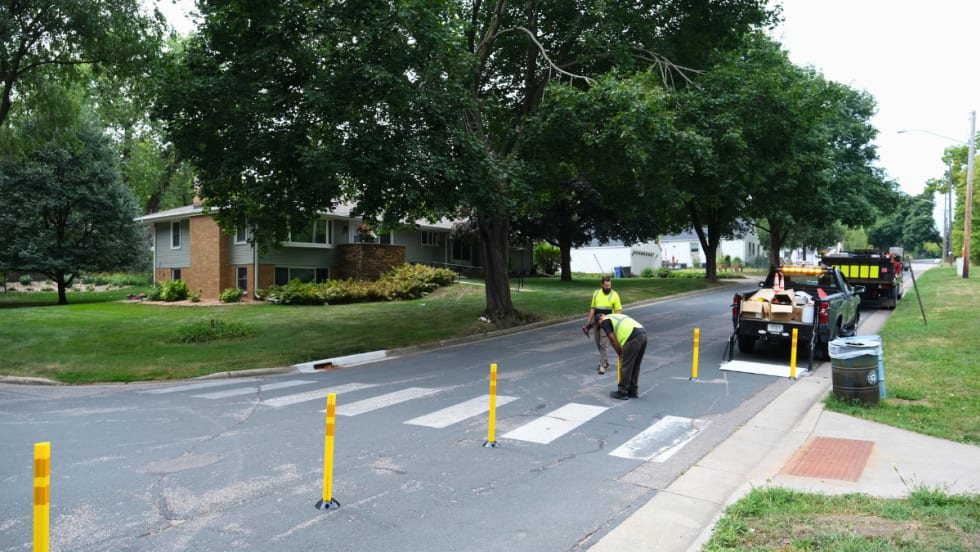
Minneapolis School Zone Pilot Cuts Speeding 41% with Low-Cost Street Design Changes
In a pilot project in Minnesota, two school-area intersections had low-cost, temporary road and traffic flow improvements made to measure the impact on roadway and student safety. Here's what they found.
Read More →
Sitestream, Safety Vision Partner with Connecticut City to Launch School Bus Stop-Arm Camera Program
The new enforcement initiative combines camera technology and violation management software to document illegal school bus passing, encourage driver compliance, and enhance student safety.
Read More →
From Reactive to Proactive: Making Every Ride Visible
Smart technology only delivers its full value when it works together. See how Catalyst connects proven industry platforms to move student transportation from reactive to proactive.
Read More →
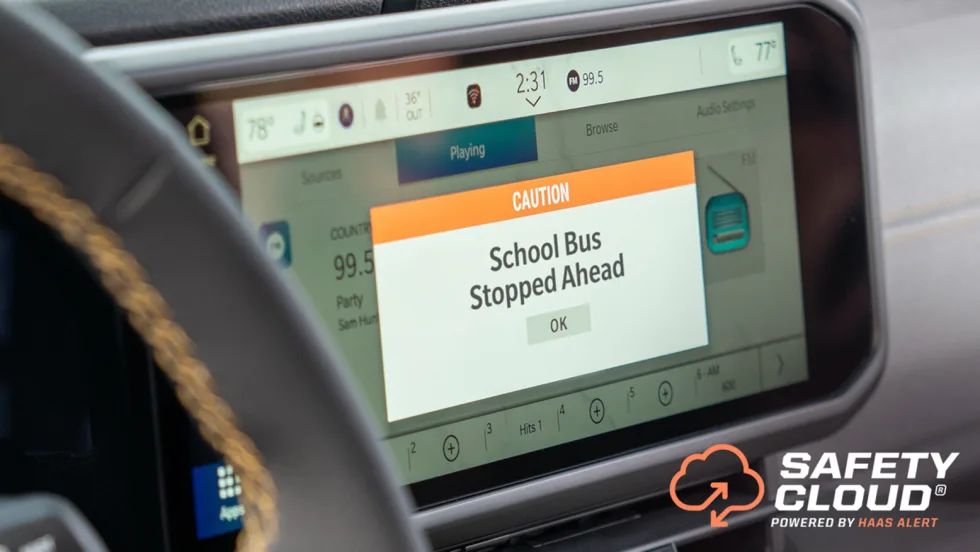
HAAS Alert’s Safety Cloud Warns Motorists of Stopped School Buses
Through a transponder or Samsara connection, the product lets school bus fleets send advance warnings to approaching drivers through in-vehicle alerts.
Read More →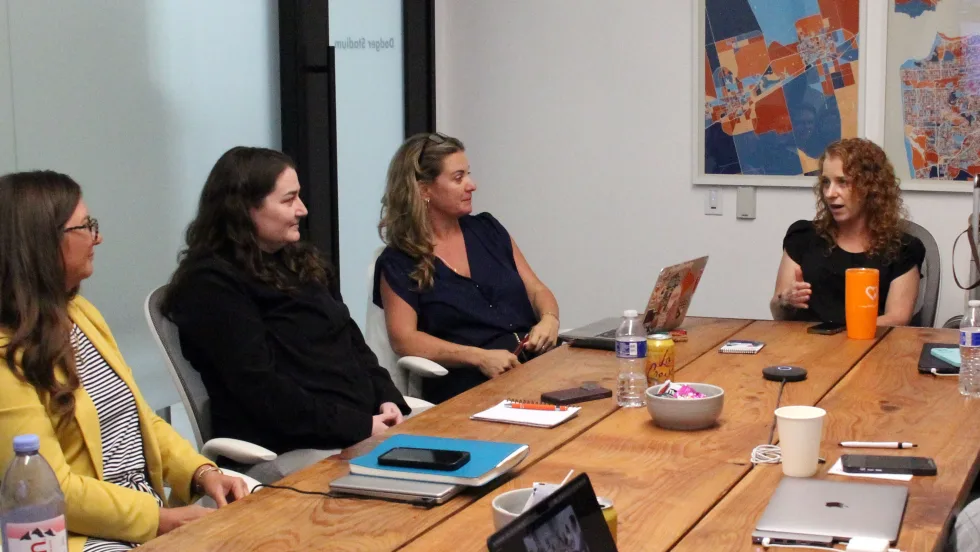
HopSkipDrive Reports Progress on Safety Advisory Council
More than a year after forming the council, independent safety experts have helped shape new rider-safety features and policy progress, with a new goal to address rider behavior.
Read More →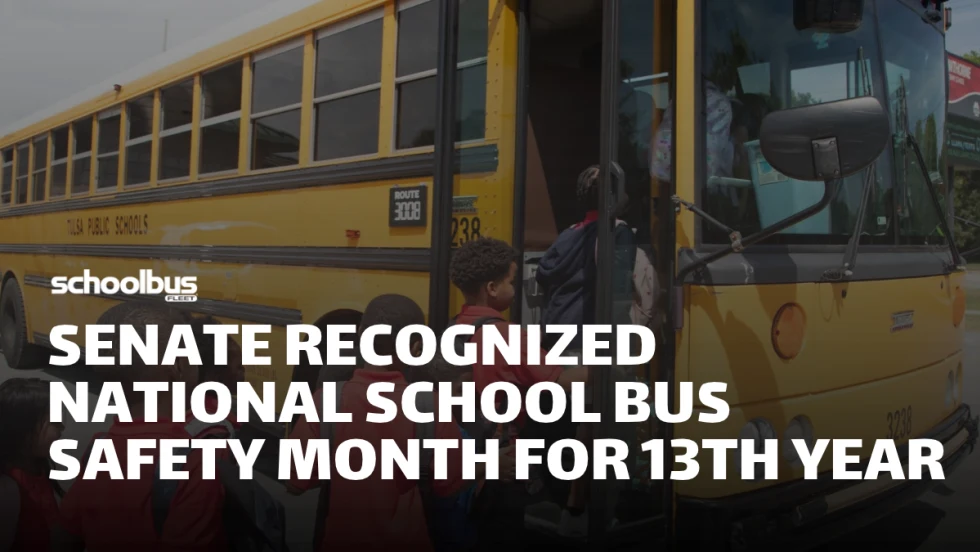
What the 2026 National School Bus Safety Month Resolution Means for Student Transportation
The bipartisan resolution highlights illegal school bus passing, student safety during loading and unloading, and the need for driver training and public education.
Read More →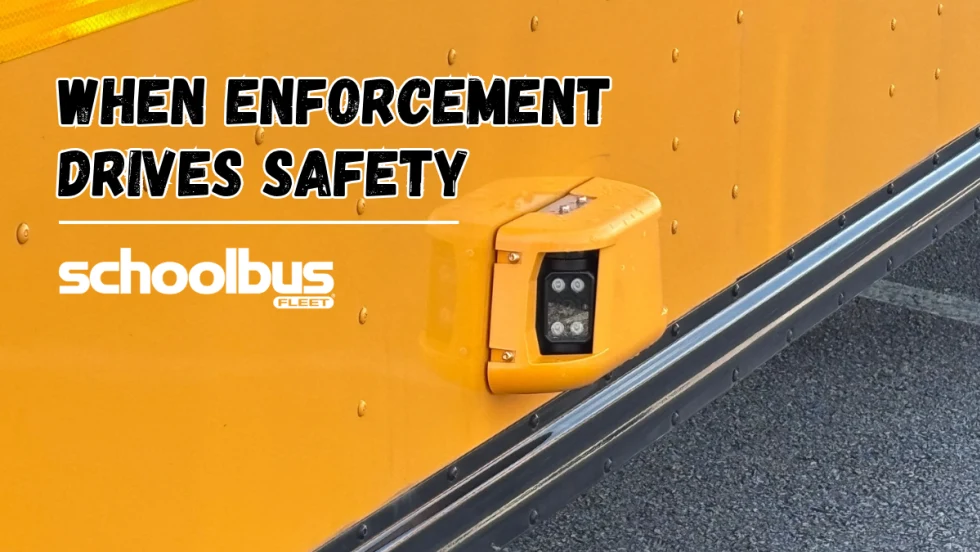
School Bus Stop-Arm Violations Decline 53% Across Verra Mobility Programs
Verra Mobility shares how school bus stop-arm cameras and school zone safety programs are changing driver behavior, reducing violations, and protecting students.
Read More →
Most Bus Crashes Aren’t Your Fault. Here’s How to Prove It.
A guide for what to do in between a school bus crash and a claim: what to preserve, who to notify, and how to keep the facts available when they matter.
Read More →
National School Bus Safety Week 2026: Tips, Toolkits & Resources to Keep Students Safe
School bus safety takes more than awareness. Explore expert tips, enforcement strategies, and free resources to help protect students on every ride.
Read More →
2 Killed, Dozens Injured in Florida School Bus Crash
A multi-vehicle collision caused a Polk County school bus carrying 37 students to overturn on its way to Winter Haven High School.
Read More →