





The Illegal Passing Problem: Reducing School Bus Stop-Arm Violations
Legislation Introduced to Curb Illegal School Bus Passings
Lawmakers consider legislation seeking to require the DOT to release a national PSA about the dangers of illegal stop-arm passings.
October 3, 2025
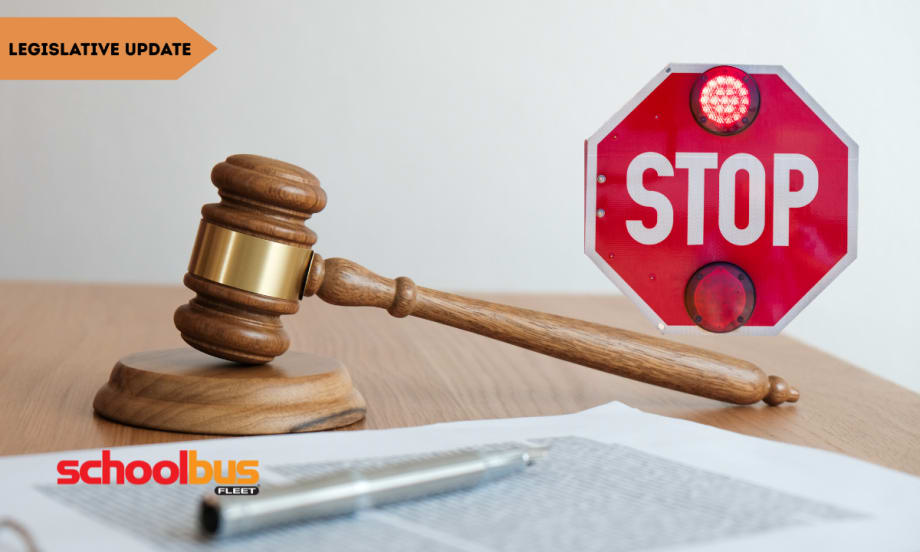
Industry association NSTA commends the effort and urges Congress to swiftly pass the act to ensure that protecting children becomes a top national priority.
Photo: School Bus Fleet
4 min to read
Earlier this week, the National School Transportation Association (NSTA) applauded Senators Todd Young (R-IN) and Gary Peters (D-MI) for introducing the “Brake for Kids Act” (S.2812) in the U.S. Senate on September 16, 2025.
This legislation directs the Department of Transportation to execute a nationwide public safety messaging campaign (PSA), including television and radio advertisements, to educate drivers about the life-threatening dangers of illegally passing stopped school buses.
“This issue has been a high priority for our membership for a long time, and we are pleased once again to partner with Senators Young and Peters in working on a messaging campaign that will grab the attention of motorists," Curt Macysyn, NSTA executive director stated. "We want to emphasize that illegal passing of a stopped bus is not only dangerous, but also illegal, and violators can face significant sanctions for their reckless behavior.”
The Need for the Bill
Passing a stopped school bus is illegal in all 50 states, yet violations remain alarmingly common. NSTA believes that a nationwide safety campaign will close knowledge gaps, strengthen driver education, and save lives. NSTA calls on Congress to swiftly pass the Brake for Kids Act.
At the 2025 NSTA Annual Meeting in Boston, the National Association of State Directors of Pupil Transportation Services (NASDPTS) released the results of its 2025 illegal passing survey. This year, more than 114,000 school bus drivers across the country participated, reporting 67,258 violations in a single day. The findings suggest drivers illegally pass school buses millions of times nationwide, putting children at significant risk for injury or death.
“The Brake for Kids Act is an essential step to protect help protect students and alleviate preventable tragedies,” said Patrick Dean, NSTA president. “Illegal school bus passings are a national crisis, and this legislation provides a platform for student transportation to raise awareness, change behavior, and prevent these all-too-frequent incidents. NSTA applauds Senators Young and Peters for their leadership on this critical safety issue.”
House Legislation
In late March 2025, the Brake for Kids Act was introduced in the House to prevent illegal stop-arm passings. It was introduced by representatives Pete Stauber (MN-08), Rudy Yakym (IN-02), Seth Moulton (MA-06), and Julia Brownley (CA-26).
The legislation was inspired by the results of a 2024 study done by the National Highway Traffic Safety Administration, in which just over 24% of drivers said that they didn’t know the law.
Curt Macysyn, executive director of the National School Transportation Association, stated: “The NSTA strongly supports the Brake for Kids Act. Private school bus contractors encounter illegal passing of their school buses every day, putting schoolchildren in great danger. NSTA believes this bill will finally move the needle in the direction of safety for kids embarking and disembarking their school buses. A national public safety messaging campaign, including television and radio ads, will serve to educate and remind all drivers that it is illegal and dangerous to pass a stopped school bus with its lights flashing and stop arm extended. NSTA thanks Representatives Stauber, Yakym, Moulton, and Brownley for their strong leadership on this critical safety issue.”
“Too many drivers nationwide drive illegally past stopped school buses, endangering children and their caregivers,” said Representative Pete Stauber. “In the most tragic cases, the outcome of these reckless actions can be fatal. We are facing an epidemic of distracted driving, but an alarming number of drivers are also unaware that driving past a stopped school bus is illegal. That’s why it is imperative that the Department of Transportation release a PSA informing American drivers of the dangers passing school busses illegally. We must do everything we can to protect our nation’s most precious commodity: our children.”
“Our community in northern Indiana is all too familiar with the devastating consequences of drivers illegally passing stopped school buses. Just last week, we were mere seconds away from another tragedy,” said Representative Rudy Yakym. “My dear friend and predecessor, Jackie Walorski, took swift action to pass the Stop for School Buses Act of 2021, and I am proud to continue her legacy by co-leading the Brake for Kids Act. By passing this legislation, we can better protect our children, safeguard our communities, and prevent further tragedies.”
“Street safety for our kids should be an issue that everyone can get on board with,” said Representative Seth Moulton. “Last year, in my district, Peabody Public Schools put cameras on their school buses and found over 3,400 instances of vehicles failing to stop. That's 2.3 illegal passes per bus per day. This legislation helps combat this dangerous behavior and ensure kids don't get killed when just trying to get to school.”
Editor's Note: This post was originally published on March 25, 2025, and updated on Oct. 3, 2025, to add new information about the Senate's introduction of the bill.
More Safety

How to Build a Better School Bus Driver Training Program
Is it time to strengthen your driver training? Here’s how to pick the right talent and improve recruitment, retention, and safety. This video is brought to you by IC Bus.
Read More →
Recent School Bus Accidents Leave 2 Dead, 2 Injured
Four school bus crashes in Florida, Illinois, and Georgia highlight risks in transportation lots, at bus stops, and during student loading and unloading.
Read More →
Sponsored•September 8, 2026
When Every Second Matters, Clarity Keeps Routes Moving
From routine delays to urgent incidents, strong communication practices help drivers, dispatchers, schools, and families respond with confidence.
Read More →

What Happens When a School Bus Catches Fire — and What Can Help
School bus fires are rare but can be devastating. Learn how advances in fire suppression and asset protection help fleets detect fires earlier, reduce damage, and improve safety.
Read More →
Geotab Launches Tool to Help Fleets Investigate Road Incidents
Geotab Investigations combines telematics data, video, documents, and other evidence to help fleets reconstruct incidents, resolve claims, and determine what happened.
Read More →
Texas Sixth Grader Wins 2026 National School Bus Safety Poster Contest
Sai Darshana Yekolu of Moseley Middle School in Prosper, Texas, was named the newest winner for her artwork, bringing the theme of “Safe Rides, Everyday Heroes” to life.
Read More →
Sponsored•August 27, 2026
Doing More With Less: How Transportation Directors Can Prioritize Safety Amid Budget Uncertainty
With diesel prices soaring and nearly one-third of transportation directors expecting budget cuts, maintaining student safety has never been more challenging. Download this guide to learn how leading districts are prioritizing risk, funding critical safety technology, and building stronger budget cases with data.
Read More →
Walton County Schools Adds Gatekeeper Stop-Arm Enforcement System
The Florida district will deploy Gatekeeper’s updated Student Protector technology, which now incorporates AI to improve video evidence.
Read More →
How To Build a More Secure School Bus Yard During and After Hours
As thefts and overnight security threats continue, school transportation leaders are combining stronger operational practices with AI-enabled surveillance to better protect buses, facilities, and staff.
Read More →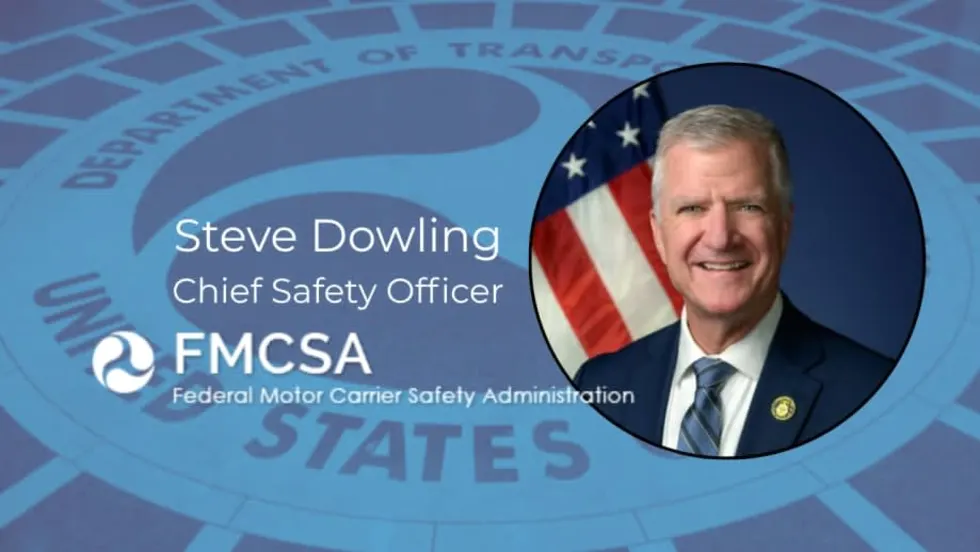
FMCSA Names New Chief Safety Officer: What School Bus Operators Should Know
Steve Dowling is set to lead the federal agency's efforts to advance commercial motor vehicle safety and reduce crashes, fatalities, and injuries on the nation's roadways.
Read More →