




2025 Trailblazer: Jessica Aquino of First Alt
Aquino, 38, serves as senior director for First Student’s First Alt, where she leads its product development.

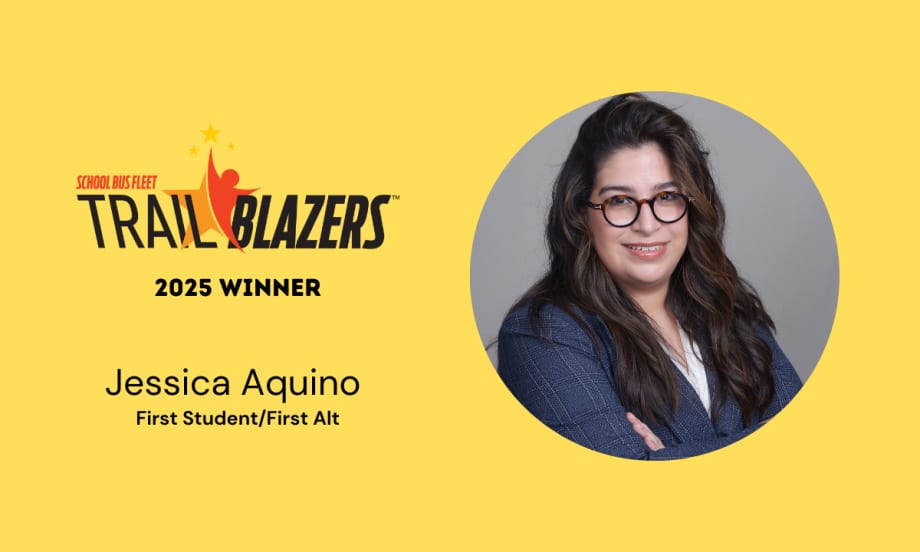
Jessica Aquino of First Alt
Photo: Jessica Aquino / SBF Canva
Age: 38
Role: First Alt, Sr. Director
Employer: First Student
Location: Houston, TX
One company serving students with special needs and those experiencing homelessness is First Alt, and one of the faces behind that work is Jessica Aquino, who came on at its inception.
When she joined the industry 13 years ago, she was ready to make a meaningful impact and help all students receive reliable access to education. What she loves most now is that her role blends logistics, problem-solving, and service to create real change.
“Being part of a team that helps students overcome transportation barriers and reach the education they deserve is deeply fulfilling,” she said.
One reason this issue is so personal is that she lost everything during Hurricane Harvey in 2017. When she was displaced from her home, it helped her realize how hard it was for her, even as an adult with a solid support system in place. She became further fueled by imagining what it would feel like as a child trying to focus on school while also facing the challenge and insecurity of homelessness.
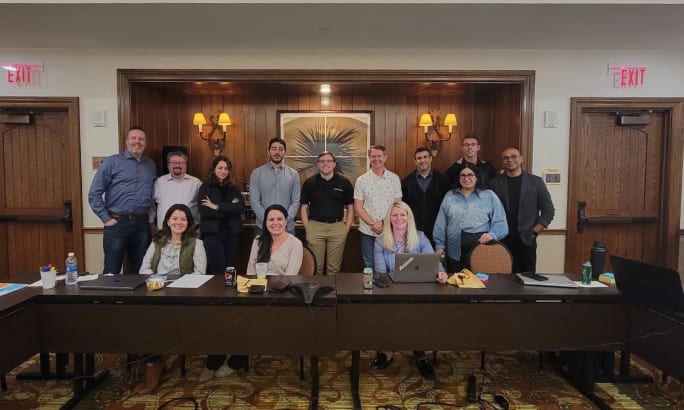
Aquino poses with First Student’s tech development partners and the First Student First Alt team.
Photo: Jessica Aquino
Now, her days consist of solving transportation challenges for homeless and special needs students across the country.
“Beyond the day-to-day, I focus on the bigger picture,” she said, “How can we make student transportation more efficient, accessible, and sustainable?”
One of her biggest accomplishments was leading First Alt’s software development team as it built a driver app and back-end support technology. She still works closely with them to enhance the technology, collaborate on feature development, provide operational feedback, and ensure the platform meets expectations.
As new drivers are onboarded, they needed a simple user interface to be able to upload the required First Alt, state and district required documents. Parents also needed a way to track their students and be alerted to their status. And, First Student First Alt needed to be able to track the real-time location of drivers and students. After many late nights, early mornings, and years of tireless work, the solution was launched in November of 2022 and has since been awarded Forrester’s 2024 Technology Strategy Impact Award.
One of the most valuable lessons she’s learned is that everyone is fighting their own battles, and leading with empathy makes a difference. “Every day, we work with students and families navigating difficult situations,” she said. “The interactions we have with these families and their students has reinforced the value of listening, understanding, and finding solutions that truly meet people where they are. At its core, special needs student transportation is about more than just logistics; it’s about breaking down barriers and making a lasting difference.”
Her biggest piece of advice is to work with both patience and purpose. “The human side of this work matters most,” she said. “The students and families we serve rely on us … When you keep that at the center of everything you do, even the hardest days become worth it.”
Her hope for the future is threefold:
That every student — regardless of their circumstances — has safe, reliable access to school.
That technology will play a key role in shaping the future of student transportation: Smarter routing, real-time data, and better integration with school systems while also investing in driver training, support, and workforce sustainability, and
For student transportation to be recognized not just as a necessity, but as a critical part of the educational experience.
“By combining innovation and a people-first mindset, we can build a system that works for every student, no matter their situation,” she said.
More Management

How to Build a Better Driver Training Program
Ready to boost up your school bus instructor training? Here’s how to pick the right talent and improve recruitment, retention, and safety.
Read More →
CALSTART and Forth Combine to Form Catalyst Mobility
The new name represents a renewed vision for the nonprofit focused on advancing clean, equitable, and affordable transportation solutions that move people and goods.
Read More →
What Makes a Great School Bus Driver Trainer?
Choosing the right school bus driver trainer takes more than experience. Learn six keys to selecting and developing trainers and evaluating program effectiveness.
Read More →


School Bus Contractors Expand Through New Deals, Acquisitions & Partnerships
STA's Canadian division acquires Ontario-based G&L Stevenson Transport while Durham School Services adds a new district contract in California, First Student adds a New Jersey contract, and Minnesota Coaches acquires Halo Transportation.
Read More →
Logan Bus Company Rolls Out AI Phone System for NYC School Bus Families
A summer pilot found that AI agents could handle most routine calls, freeing up time for customer service staff to focus on emergencies and complex family concerns.
Read More →
From Intent to Impact: What I Learned About Leadership from TAPT
A Texas transportation supervisor shares lessons on self-awareness, accountability, managing stress and building trust — and why investing in leadership development matters at every stage of your career.
Read More →
NAPT Names 2026 Award Recipients, Hall of Fame Inductee
Who earned national recognition for their work in student transportation? This year, NAPT named five recipients of its 2026 awards for service, safety, and leadership, plus its newest Hall of Famer.
Read More →
2026 State of Student Transportation Report
Driver shortages. Rising costs. Growing safety expectations. More data, but not enough time to act on it. The 2026 State of Student Transportation Report reveals what transportation leaders say is putting the most pressure on their operations—and where they’re investing next. See how your priorities compare.
Read More →
How to De-Escalate an Angry Person: 5 Steps for Handling Workplace Conflict
What makes emotions run high, and how should you handle an angry colleague or parent? Follow these steps for staying calm, listening, showing empathy, and resolving conflict.
Read More →
What Readiness Looks Like This School Year
Learn about the challenges shaping the 2026–2027 school year, from persistent driver shortages and budget pressure to technology and readiness gaps. See how school districts are responding and adapting in Zonar’s 2026 Back-to-School Readiness Report.
Read More →