




Q&A: How Does Diesel TCO Compare with Propane?
The Propane Education and Research Council’s Michael Taylor discusses ways in which propane school buses can save transportation providers money beyond just in fuel costs.
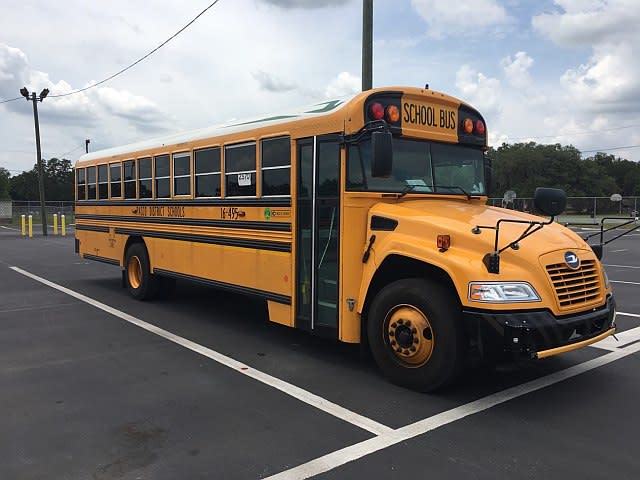
Propane buses can save pupil transportation providers on fuel, fluids, and filter costs. Shown here is one of Pasco County (Fla.) Schools' new Blue Bird Propane Vision buses.
Propane buses can save pupil transportation providers on fuel, fluids, and filter costs. Shown here is one of Pasco County (Fla.) Schools' new Blue Bird Propane Vision buses.
With fuel costs still relatively low across the U.S., pupil transportation providers may be wondering whether propane can still provide as much of a cost benefit. Here, the Propane Education and Research Council’s (PERC's) Michael Taylor discusses the ways in which, compared with diesel, propane can save transportation providers money beyond just in fuel costs.
Q: I’ve heard that propane fuel is less expensive than diesel. But how does the total cost of ownership compare with traditional fuels?
A: Fuel savings alone with propane autogas are a big incentive for school districts and private contractors, especially those facing budget cuts. Recently, the U.S. has witnessed a dramatic drop in diesel and gasoline prices; however, propane is still consistently less expensive than both fuels. On average, propane is 30% less expensive per gallon than gasoline and costs 50% less than diesel.
Comparing fuel prices at the pump is a requirement for fleet managers today; however, “fuel” is only one of 3 “Fs” that are having a significant impact on a fleet’s operations, maintenance, and repair budgets.
In compliance with Environmental Protection Agency (EPA) clean air standards, diesel engines are required to install a complex emissions-after-treatment system, which includes additional fluids and filters. The emissions-reduction system adds complexity as well as increased repair and maintenance costs for diesel buses. Propane burns clean, produces fewer emissions, and requires a simple three-gas catalyst, similar to your personal vehicle, to comply with EPA standards. This is one of many reasons that propane provides the lowest overall total cost of ownership for school districts and private contractors.
“Fluids” are the second “F” that fleet managers must investigate prior to purchasing a vehicle. Unlike propane, diesel engines require more fluids, which have a direct impact on operations and maintenance budgets over the life of the bus. Diesel engines require more oil by volume and SCR engines require diesel exhaust fluid (DEF) for proper operation. And lastly, don’t forget the fuel conditioners that are required in cold temperatures to prevent clogging of fuel filters and lines. Propane engines require less oil by volume and do not require DEF or fuel conditioners, which makes them more affordable to operate and maintain.
The final “F” to investigate is “filters.” To ensure compliance with EPA emissions requirements, a diesel particulate filter (DPF) is required for final stage regeneration of emissions before they exit the exhaust. DPFs require periodic cleanings to avoid clogging. As the system ages, annual cleanings are recommended by the OEM. Why? A clogged DPF will de-rate the engine RPMs and render the bus inoperable. This increases downtime and repair costs.
Even in the presence of disciplined maintenance programs, today’s diesel engines require repairs and replacement parts that propane buses do not. Today’s diesel engines are designed for minimal idling, which should not exceed five minutes. Excessive idling increases diesel emissions regenerations and damages injectors, EGR valves and coolers, turbochargers, and diesel particulate filters. This increases downtime, maintenance, and repair expenses.
If your school district endures sub-freezing temperatures, there’s one more costly expense to consider when operating diesel buses: electric block heaters. In cold climates, block heaters are a required option for diesel engines. Technicians or drivers are required to “plug in” every day or risk the possibility of a bus not starting for morning or afternoon routes. Often overlooked in TCO analysis, engine block heaters are “hidden costs” that increase operational expenses in the form of higher electricity bills and increased staff wages for technicians and drivers.
Propane increases a school district’s uptime and productivity by eliminating downtime directly linked to diesel’s extra repairs and maintenance. On top of low fuel prices, the total cost of ownership with propane accelerates a school’s return on investment and frees up funds to invest elsewhere, like in the classroom or hiring teachers.
For more information on propane-powered school buses, visit propane.com.

Michael Taylor is the director of autogas business development for the Propane Education & Research Council. Prior to joining PERC in 2012, Taylor served as director of fleet management at Heritage Propane for four years. Preceding his tenure at Heritage Propane, he enjoyed a 22-year career in the school transportation industry.
More Alternative Fuels
EPA Opens $180M DERA Funding Round for Diesel Upgrades
The 2026 Diesel Emissions Reduction Act program seeks applications from eligible organizations to accelerate the retirement of legacy diesel vehicles.
Read More →
The Secret Life of an Electric School Bus Battery
Batteries change throughout years of daily routes, but degradation doesn’t necessarily mean the end. Here’s what operators should know about performance, safety, and second life.
Read More →
CALSTART and Forth Combine to Form Catalyst Mobility
The new name represents a renewed vision for the nonprofit focused on advancing clean, equitable, and affordable transportation solutions that move people and goods.
Read More →
Alt-Fuel Moves: New Buses, Charging Hubs & Real-World EV Testing
Propane and electric school bus deployments continue to grow as districts add new vehicles, expand charging infrastructure, and gather more real-world operating data.
Read More →
Fewer Electric School Bus Models Reshape the U.S. Market
WRI’s latest buyer’s guide points to a consolidating electric school bus market, but fewer options may reflect a maturing industry rather than fewer meaningful choices for school bus operators.
Read More →
The Fuel Budget You Can Actually Predict: How Propane Autogas Keeps Money in the Classroom
Learn how propane autogas helps school districts manage fuel costs with predictable pricing, lower maintenance, and reduced emissions from former transportation director Joel Stutheit.
Read More →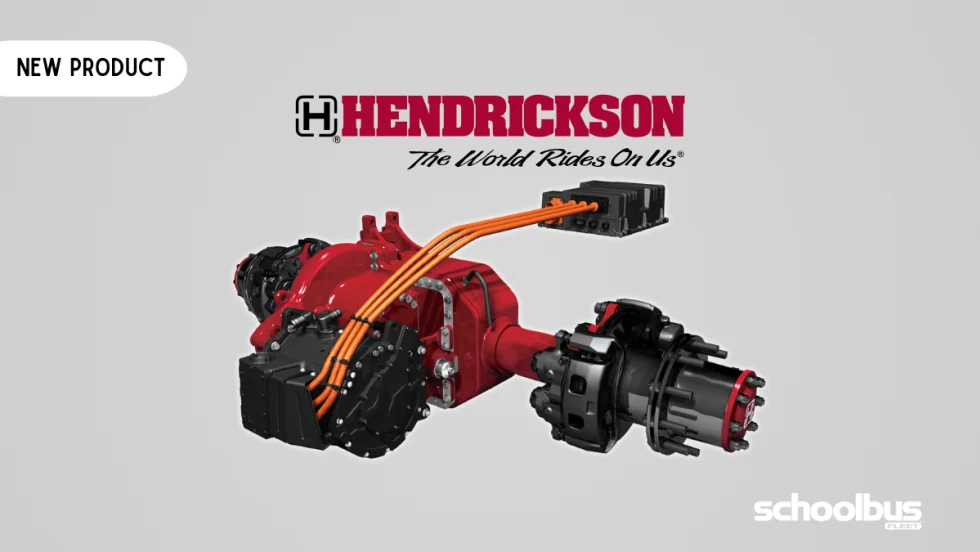
Hendrickson, Driventic Introduce New Electric Powertrain for School Buses
ELECTRAAX, the electrified, lightweight drive axle offers integrated ePowertrain efficiency and modular flexibility for Class 6–7 school bus use.
Read More →
The Mobility House Joins PowerFlex in Fleet Electrification Deal
The acquisition combines intelligent charging software, bidirectional charging expertise, and fleet electrification services to support the growing adoption of electric school buses across North America.
Read More →
Alt-Fuel Moves: Electric School Bus Investments Hit the Road
See which districts across the U.S. are putting electric school buses into service, expanding charging infrastructure, and planning the next phase of fleet electrification.
Read More →
With Fuel Volatility Ahead, School Districts Turn to Propane
While diesel prices peaked above $5 this spring, districts with propane autogas-powered fleets paid under $2 per gallon, according to PERC.
Read More →