




In the school bus business, seat repair is as common as yellow paint, costing the industry millions of dollars annually and keeping thousands of people busy in a nearly continuous exercise of aesthetic maintenance. Seat damage has a number of causes, mostly human. It often starts with the absent-minded poking, scraping or pinching of bored youngsters. Soon, small holes open up, often along seams or in corners. If not fixed quickly, these openings widen, eventually becoming gaping wounds that lead to the erosion and loss of underlying cushion material. For years, bus fleet managers used colored tape and glue to maintain some minimal level of seat cover integrity, but the effort was lost on their young pas-sengers who picked at the repairs with a fascinated intensity normally devoted to scabs. The result wasn't pretty. Master of seat repairs
Seat maintenance techniques have greatly improved during the past decade, however, thanks to L.W. Manchac, owner of Worldwide Vinyl in Kirbyville, Texas. Manchac got into the vinyl business in 1988, working as a salesman for a company that marketed repair kits to cafes, health clubs, auto dealers and bus fleets. He quickly saw the value in the product and, after a year, came to an agreement with his former boss and set out on his own, selling almost exclusively to bus shops. "I was doing nothing but cold calls back then, but I'd usually sell to about 50 percent of the people I visited," he says. "After a while, I was selling to about 75 percent of them." Such a closing ratio is almost unheard of in the sales world, but buyers liked what they saw: durable, well-camouflaged repairs that could be done without removing seat cushions from buses. Manchac's company has grown steadily over the years. Now, besides the kits, he offers complete covers and a mobile seat maintenance service. Kits come in 2 sizes
Worldwide's repair kits come in two sizes; the smaller one, selling for $485, is intended for fleets with fewer buses. The large kit sells for $685, and is said to be capable of covering 2,000 linear inches of tearing. Both kits include everything necessary for the jobs: heat gun, liquid vinyl, several different tex-ture pads, scissors, putty knives, touch-up paint, an instructional video and more — all housed inside a durable toolbox. Tim Brown, shop supervisor at Benjamin Bus in Northfield, Minn., bought a World-wide kit a year ago. He estimates the investment has already saved his 70-bus company about $1,600. Manchac says that number is conservative, at least according to the seat maintenance costs of fleets in the South, where heat and sunlight play a larger role in vinyl damage. "Down here," he says, "it's not uncommon for a fleet of 50 or 60 buses to spend $5,000 to $6,000 per year on seat repairs. The hotter the temperature, the more seat damage you'll find." For more information about Worldwide Vinyl, call (800) 642-5456. STEP 1 — Clean and fill damage.
The surface surrounding the cut should be free of dirt, oil and other contaminants. Use a vinyl cleaner to remove unwanted substances. Inspect the subsurface foam for missing material, and add as much as necessary — getting the fill from an unwanted cushion — to provide a firm, even foundation for the incoming patch. STEP 2 — Cut and insert patch.
Find a piece of appropriately colored scrap vinyl and cut off a piece in the shape of the hole, but make it slightly bigger. Poke the material into the hole, shiny side up, and tuck it under the existing cover. STEP 3 — Melt patch into cover.
Use the heat gun supplied with the Worldwide kit to melt the patch and surrounding vinyl together. Apply heat as evenly as possible over the entire patch area, moving the gun back and forth until slight whiffs of smoke appear. This smoke is a key indicator in the process because it's released at the point where the vinyl melts sufficiently to form a good bond. STEP 4 — Apply liquid vinyl.
Evenly spread a thin layer of liquid vinyl across the patch area, then apply heat until the substance becomes transparent. Firmly press the surface with the texture pad that matches the seat being repaired. Repeat the process until the patch and surrounding cover are level and smooth. Several thin layers of liquid vinyl form a much stronger bond than a single thick one. STEP 5 — Paint repaired area.
Apply a light coat of appropriately colored paint to the repair to blend it with the rest of the seat cover. Author Paul Hartley is a freelance writer and photographer in Northfield, Minn.
How to Repair Vinyl Seats on School Buses
In the school bus business, seat repair is as common as yellow paint, costing the industry millions of dollars annually and keeping thousands of peopl...
More Maintenance

12 Ways To Do More Without Blowing Your Fleet’s Budget
Driver shortages and rising costs are straining already stretched school transportation budgets. Learn 12 practical strategies that help school bus fleets be more efficient, control costs, strengthen compliance, and protect student riders…all by using fleet technology that could pay for itself within a year.
Read More →
2026 School Bus Fleet Vendor Directory & Buyer's Guide
Searching for the right equipment, technology, or services for your school transportation program? This industry guide brings together manufacturers and suppliers across the entire school bus market, all in one place. Download it to find the partners who can help move your operation forward.
Read More →
2026 School Bus Maintenance Survey
What top challenges are school bus maintenance teams facing in 2026? Explore new trends from School Bus Fleet’s annual maintenance survey covering fleet composition and age, fuel types, used vs. new purchasing patterns, technician pay and certifications, and the impact of the driver shortage. Survey sponsor: Dayton Parts.
Read More →
Fleetio Launches AI-Powered Maintenance Service Advisor
The company’s new AI tool helps fleet managers approve repairs faster, prioritize maintenance, and reduce shop time across high-volume fleets.
Read More →
Maintenance Must-Haves: Shop Products We Love
From tire changers and diagnostics to wash systems and brake tech, these maintenance must-haves save time, reduce strain, and keep school bus shops running efficiently.
Read More →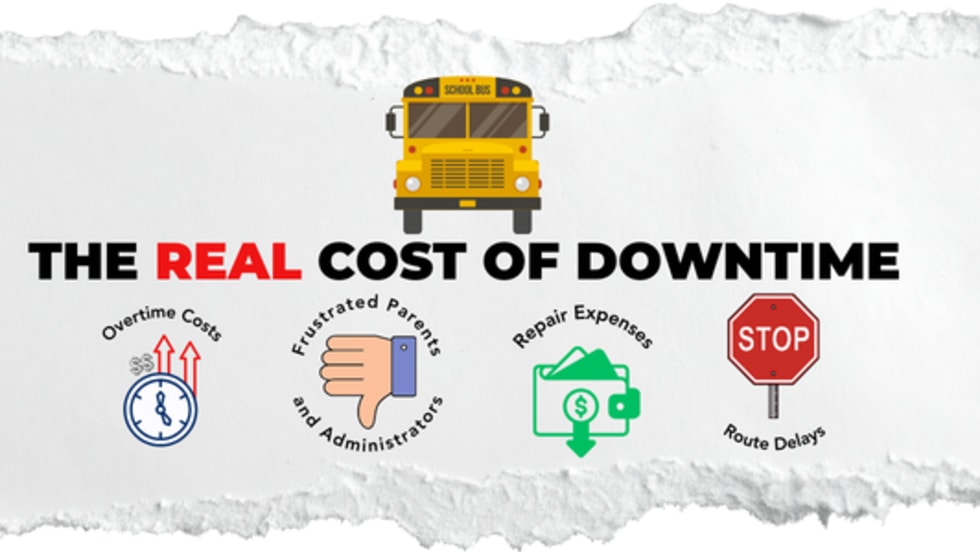
The Real Cost of Bus Fleet Downtime
When school bus communication systems fail, the consequences extend far beyond equipment repairs. Downtime can increase safety risks, strain dispatch operations, and erode driver confidence. Explore how proactive radio lifecycle management and managed services are reducing disruptions, supporting driver retention, and delivering predictable budgeting for school transportation fleets.
Read More →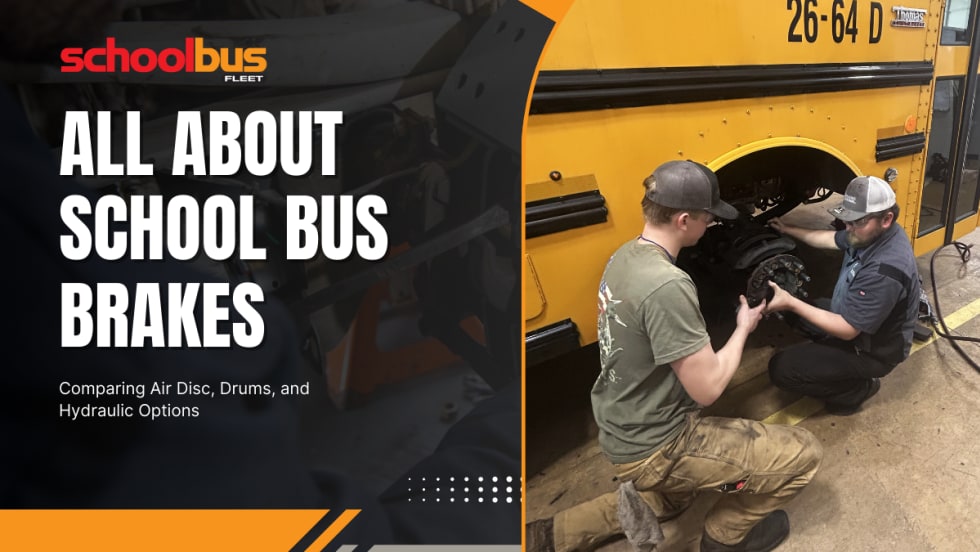
Take a Brake: How School Bus Air Disc, Drum & Hydraulic Systems Compare
Is it time to rethink your school bus brake system? Let’s break down cost, performance, maintenance, and real-world fleet experiences.
Read More →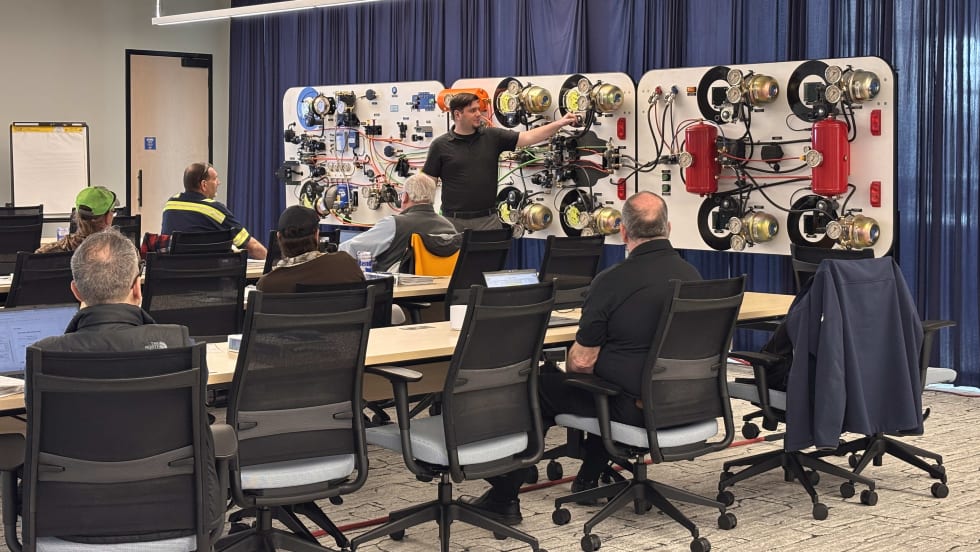
Bendix Announces 2026 Brake Training Sessions
Bendix’s 2026 training program will bring in-person and virtual brake system courses to technicians across the country, focusing on air brake fundamentals and advanced safety technologies.
Read More →
School Bus Maintenance in 2026: Costs, Tech & Workforce Gaps
As gasoline use rises, maintenance teams face tighter budgets, limited training, and slow wage growth. This and more trends and analysis in our annual survey report. Survey sponsor: Dayton Parts.
Read More →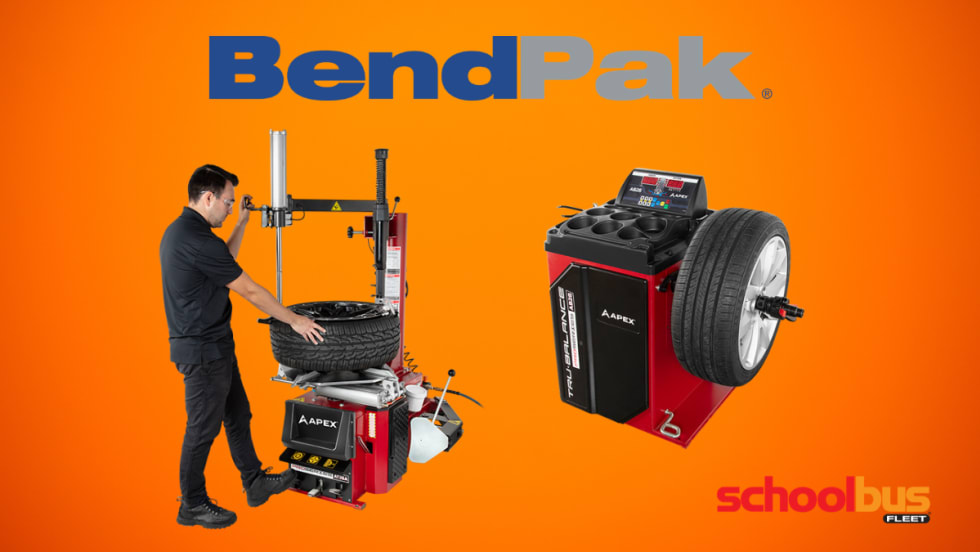
BendPak Launches New Tire Changers and Wheel Balancers
APEX by BendPak expands its tire service lineup with new swing-arm tire changers and wheel balancers designed for school bus and light-duty fleet maintenance operations.
Read More →