Strategies for Discipline Problems on the School Bus
Learn to manage discipline problems on the school bus. This comprehensive article covers the issues and offers solutions.
by Claire Atkinson, Senior Editor
September 1, 2009
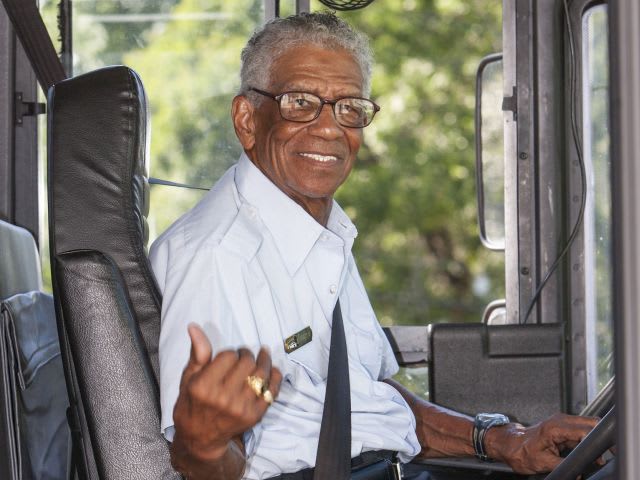
Photo courtesy NHTSA
9 min to read
School Bus Fleet has covered several stories about school districts developing programs that help manage student school bus behavior and deal with discipline problems.
At Milford (Mass.) Public Schools, the district worked with its transportation contractor to create a Bus Committee, which oversees a School Bus of the Month program, develops educational materials for students and provides incentives and prizes for good behavior. The committee also implemented a “three strikes” policy to deal with discipline issues.
Ad Loading...
Schenectady, N.Y.’s Howe International Magnet School has a Peaceful School Bus Drill, which teaches school bus behavior to students and also helps build relationships between students, bus drivers and school administrators. The 45-minute program groups students by bus route, then groups rotate to various stations for activities aimed at reducing bullying incidents, improving safety and creating a sense of community.
Officials at John T. Waugh Elementary School in Angola, N.Y., rode along on school buses to determine what behavior problems needed to be addressed. They decided to organize special lunches where students of all ages were seated with their bus drivers and all signed a bus pledge promising to follow bus rules. “Bus buddies” were also assigned to monitor problems among students on the bus, particularly bullying. Based on feedback from the bus buddies, drivers and transportation management select a Bus of the Month, and these students and their drivers receive a special lunch and certificates.
Deputizing Drivers to Deal With Discipline Problems
For John Farr, giving school bus drivers the authority to deal with behavior problems directly provides many benefits. During his tenure as director of transportation at Oceanside (Calif.) Unified School District, he says, “I was a little skeptical at first, but once I saw how it worked, I saw that the drivers feel much more supported by a system like this.”
As Farr explains it, deferring discipline matters to a higher authority, like the principal, sends the message to students that their bus driver has no power, a situation kids can easily take advantage of.
However, if drivers are allowed to call the parents of misbehaving students directly, “the kid tells their friends, ‘The driver really did call my father,’ and it permeates the whole bus,” Farr says. “The consequences are immediate for the student, which is the way it has to be.”
Ad Loading...
Under this system, a driver encountering misbehavior on the bus issues the student a warning and follows the discipline procedure set out in the transportation department’s driver handbook. If the student continues to misbehave, Farr says the driver should contact the parent that evening.
He has found that drivers need some training in making these kinds of phone calls, but some simple tips can result in successful outcomes.
“You ask for their help, using those words: ‘I need your help. Your child is causing some small problems on the bus. Before I go to suspension or any more serious measures, I thought you could help me with this.’ That way you enlist the parent’s support,” Farr says.
Frequently, parents defend their children before hearing the driver out, which is understandable, he notes. But if the conversation continues in a negative direction, Farr trains drivers to then take down his or her name and number to call back later. “Generally, I wait 10 or 15 minutes so they have a chance to talk to the child with the information the driver gave them. Then I call the parent and if there’s no resolution, I ask if they’d like to meet with me and the driver and possibly a school administrator,” he says.
Letting transportation staff deal with discipline problems is usually a good thing for school administrators, too. “They loved it,” Farr says. “For the assistant principal, bus discipline took up probably 20 percent of his day. When that went away, whenever I did ask them for help, it was no problem.”
Ad Loading...
For school districts looking to implement a similar system, Farr recommends the formation of a committee to work out the details of a written policy and the associated paperwork, such as discipline referral forms. “Then have it enacted as a board policy, so it comes from the superintendent and board all the way down to the bus driver,” he says.
Photo by John Horton
Preventive Measures for School Bus Drivers
One method drivers can use to control behavior is assigned seating or reseating students who misbehave. In Farr’s experience, requiring students to sit in numbered rows throughout the school year helped with vandalism problems. “I used to encourage drivers to dismiss passengers row by row and inspect the seat as they got off. We probably caught more than half of them,” he says.
He also trained drivers to use positive reinforcement, complimenting students when they behave well. This was effective for all age groups, but particularly for middle school students, who were not impressed by stickers or other incentive programs.
“At that age, they get rebellious, and justice is really important to them,” Farr explains. “They’ll argue and use all these deflection techniques. The driver has to rise above that and say, ‘No, this is not a dialogue, I’m telling you what’s going to happen.’”
Drivers have to become masters of keeping their cool and keeping the conversation from escalating, Farr says. “You tell them, ‘If you don’t sit down, you’ll have to sit in the front part of the bus, next to me.’ Generally, when they’re up front, the driver can see them better and can compliment them when they do something well. If reseating them doesn’t work, then you escalate the punishment,” he says.
Ad Loading...
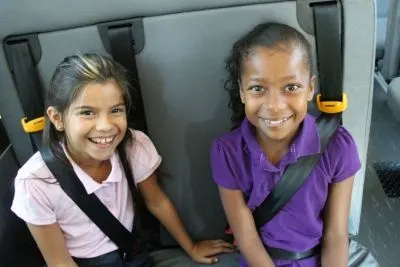
Photo courtesy IMMI
School Bus Seat Belts Effect Student Behavior Changes
Operations that have installed seat belts on buses report a positive impact on discipline issues. For the past several years, Palmdale (Calif.) School District has been using lap-shoulder belt seating from SafeGuard. Transportation Director Sherilyn Thacker says benefits of belted seating include faster loading, lower noise level and significantly reduced discipline issues. “When we did our pilot back in 2001, we put the lap-shoulder belted seats on a bus with one of our best drivers,” she recalls. “Jayne was almost at the point of quitting because the kids wouldn’t behave. After she got the bus with lap-shoulder belts, she wasn’t having discipline issues any more. And she stayed.”
Transportation Director Clifton Guillory at Beaumont (Texas) Independent School District experienced a similar response on buses equipped with belted seats. “The discipline issues are on the unbelted buses,” Guillory says. “I have not been called into even one discipline situation on the buses equipped with seat belts. Students aren’t moving around, and that makes a difference.”
Executive Director of Transportation Liz McGowan says that flexible belted seating on a Cumberland County Schools bus in Fayetteville, N.C., has resulted in strong positive feedback from parents, transportation officials and drivers. “The bus driver, Mr. Newsome, has seen a dramatic improvement in behavior on the bus,” she says. The district has taken a hard line on seat belt usage. “Either they comply, or they don’t ride,” McGowan says. “We’ve seen behavior is a lot better because students are forced to sit forward and talk to the people sitting beside them, rather than moving around in their seats and switching seats.”
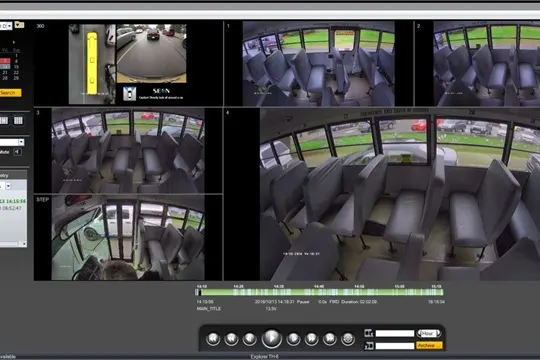
Photo courtesy Seon
Smile, You’re on Camera
Video surveillance can also lead to better behavior, or at least protect the driver in case of a false accusation from a student. Recorded footage of school bus passengers can also provide evidence to be used in convincing parents that their student is causing problems on the bus. “A parent would really melt when you show the child cutting a seat or pulling hair,” Farr says. If vandalism occurs in a bus, video can also confirm which student to punish and which parents to charge for the cost of repairing the damage.
“We’re careful to respect the other kids’ privacy, so we’ll just go to a couple frames where their child was involved with something,” Farr explains. “We didn’t set up audio, and we did have a sticker on the front of the bus that said that one of the conditions of riding the bus in our school district is that you might be taped, so there was no problem with privacy.”
Ad Loading...
WHEELS Program Deters Bullying on the School Bus
Missouri school bus drivers are receiving tools to establish a safe bus environment and deter bullying through WHEELS — a program that bridges the gap between bus drivers and schools.
The program is part of a state-funded character education project, facilitated by CHARACTERplus, that involves school, home and the community. WHEELS was developed by Gina Crump, state project facilitator for the southwest region.
“I started writing the WHEELS program to support kids and the issues they face on the bus, but I realized that drivers need just as much support,” Crump says. “Teachers participate in staff development all the time, but sometimes bus drivers don’t get those opportunities, so I’m [giving] them opportunities to learn from one another because everyone needs to work together to reach kids.”
WHEELS promotes good character on the school bus through components that enforce Crump’s view of the bus as an extension of the school day.
“The objective is to link everything to learning to show students that there are the same expectations on the bus as in the classroom,” she explains.
Ad Loading...
The program’s components comprise adult role modeling; learning how to connect with students, parents and the community; and implementing “Bus Buddies” or a “Bus Task Force,” among others.
With Bus Buddies, older students are paired with younger students to make certain that they behave respectfully. A Bus Task Force is a committee of students and/or a committee of parents, bus drivers and school officials that brainstorms solutions to bus-based problems, ensuring that the driver isn’t alone in tackling difficult issues.
There are numerous ways for drivers to build relationships with their students. Greeting students by name and making eye contact is one approach Crump discusses in the program. “One driver mentioned that she has an ‘American Idol’ contest each day,” Crump adds. “Many students want to sing, and it builds morale on the bus.”
Drivers can also connect with parents by attending students’ extracurricular activities, if they are invited. This enables parents to interact with drivers in a different setting.
Crump noted that WHEELS is most effective when as many transportation officials as possible participate in the training. Such was the case when Crump led a WHEELS session for Missouri Association for Pupil Transportation conference attendees in July. She concluded the session with a lesson on school bus bullying — what it looks and sounds like, and ways to intervene if a problem arises.
Ad Loading...
“We had transportation directors, drivers, driver trainers and a school board member in the audience,” Crump says. “The discussion was invaluable.”
Those who are interested in learning more about WHEELS may contact Crump at (417) 861-5769 or crumpg@centurytel.net.
With fewer than 5% of citations involving repeat offenders, Westchester County officials said enforcement, education, and community partnerships are helping change driver behavior.
New safety and video capabilities aim to help fleet managers assess risk, support drivers, and take targeted action through video coaching, red-light violation detection, and more.
Is it time to strengthen your driver training? Here’s how to pick the right talent and improve recruitment, retention, and safety. This video is brought to you by IC Bus.
Four school bus crashes in Florida, Illinois, and Georgia highlight risks in transportation lots, at bus stops, and during student loading and unloading.
School bus fires are rare but can be devastating. Learn how advances in fire suppression and asset protection help fleets detect fires earlier, reduce damage, and improve safety.
Geotab Investigations combines telematics data, video, documents, and other evidence to help fleets reconstruct incidents, resolve claims, and determine what happened.
Sai Darshana Yekolu of Moseley Middle School in Prosper, Texas, was named the newest winner for her artwork, bringing the theme of “Safe Rides, Everyday Heroes” to life.
With diesel prices soaring and nearly one-third of transportation directors expecting budget cuts, maintaining student safety has never been more challenging. Download this guide to learn how leading districts are prioritizing risk, funding critical safety technology, and building stronger budget cases with data.