




Washington association voices concern over proposed transportation changes
Gov. Chris Gregoire wants to remove funding for the state’s five regional transportation coordinators and use the state’s Transportation Vehicle Fund to support a new funding formula. Washington Association for Pupil Transportation President Tom Culliton discusses with SBF the effect the proposals would have and what the association has done to spread the word about them.


The Washington Association for Pupil Transportation (WAPT) has reached out to its members and to personnel at school districts throughout the state and encouraged them to contact their representatives about two transportation changes proposed by Gov. Chris Gregoire. Pictured are pupil transporters attending the association's 2009 conference.
SPOKANE, Wash. — The Washington Association for Pupil Transportation (WAPT) has taken an active role in voicing its concerns about two proposed changes from Gov. Chris Gregoire that association officials said could adversely affect the state’s pupil transportation community.
At issue is the governor’s proposal to remove from her budget for the upcoming biennium funding for the state’s five regional transportation coordinators. The governor also wants to use the state’s Transportation Vehicle Fund to support the first phase of the state’s new funding formula.
WAPT President Tom Culliton, who is director of transportation for North Mason School District in Belfair, Wash., told SBF in an interview that the regional transportation coordinators play a critical role in the safety and efficiency of the state’s pupil transportation operations.
One of their responsibilities is training school district transportation personnel on the state’s new funding formula, which is slated to be implemented with the upcoming school year. (Under the new formula, called the Student Transportation Allocation Reporting System, money will be dispersed to school districts based on numerous factors, including how much fuel they use, how many miles their buses travel annually, the total number of homeless students transported, etc.)
Culliton said that the training entails teaching districts how to record the information needed under the funding formula and how to track that data. He added that if the regional transportation coordinators are removed due to a lack of funding, they won’t be there to provide that training, and perform a number of day-to-day operational tasks.
“We couldn’t do our jobs without them, and one way that I look at it is, if they eliminate the regional coordinators, who’s going to do their job? It’s still going to cost money to do the job, whether it’s someone at the state auditor’s office or a contractor,” he explained.
[IMAGE]342[/IMAGE]
The WAPT also opposes the governor’s proposal to use the Transportation Vehicle Fund to support the new funding formula, saying that is not a fiscally responsible solution. The association believes that it will put the state’s school districts in financial trouble, as they were relying on their yearly depreciation revenue to pay the debt service on their school bus loans.
Moreover, the association feels that taking money from the Transportation Vehicle Fund would “break a system that has worked perfectly for years,” according to Culliton. In e-mails that he’s sent to 120 state representatives, the governor and the director of the state’s Office of Financial Management, Culliton has explained that the state has worked hard to bring its school buses up to date in terms of safety standards, and that using the Transportation Vehicle Fund to support the new funding formula would be a step backward.
“We do fully support the new funding formula, and we want whatever funding is currently available to go to the new funding formula,” Culliton said. “But we feel that new funding should be applied when it becomes available — perhaps when the economy bounces back.”
Since learning in December of the governor’s proposals about the regional transportation coordinators and the Transportation Vehicle Fund, the WAPT has been working diligently to spread the word about them and the impact that they would have. At the encouragement of its executive board’s legislative representative, the association conducted a survey on the issues. Culliton said that the results showed that about 92 percent of school districts throughout the state supported not touching the Transportation Vehicle Fund, and nearly 100 percent supported not removing funding for the regional transportation coordinators.
Information about the proposals and talking points related to them were then sent to 1,700 people at 295 school districts statewide, and the WAPT encouraged recipients to contact state representatives about the issues. Culliton said that it appears to be making a difference.
“They’re contacting their local representatives. I think the WAPT is really having an impact on what’s going to happen in the future. We’re starting to hear and we’re cautiously optimistic that the governor isn’t going to remove funding for the regional transportation coordinators,” he said.
More Safety
HopSkipDrive Reports Progress on Safety Advisory Council
More than a year after forming the council, independent safety experts have helped shape new rider-safety features and policy progress, with a new goal to address rider behavior.
Read More →
What the 2026 National School Bus Safety Month Resolution Means for Student Transportation
The bipartisan resolution highlights illegal school bus passing, student safety during loading and unloading, and the need for driver training and public education.
Read More →
School Bus Stop-Arm Violations Decline 53% Across Verra Mobility Programs
Verra Mobility shares how school bus stop-arm cameras and school zone safety programs are changing driver behavior, reducing violations, and protecting students.
Read More →
Most Bus Crashes Aren’t Your Fault. Here’s How to Prove It.
A guide for what to do in between a school bus crash and a claim: what to preserve, who to notify, and how to keep the facts available when they matter.
Read More →
National School Bus Safety Week 2026: Tips, Toolkits & Resources to Keep Students Safe
School bus safety takes more than awareness. Explore expert tips, enforcement strategies, and free resources to help protect students on every ride.
Read More →
2 Killed, Dozens Injured in Florida School Bus Crash
A multi-vehicle collision caused a Polk County school bus carrying 37 students to overturn on its way to Winter Haven High School.
Read More →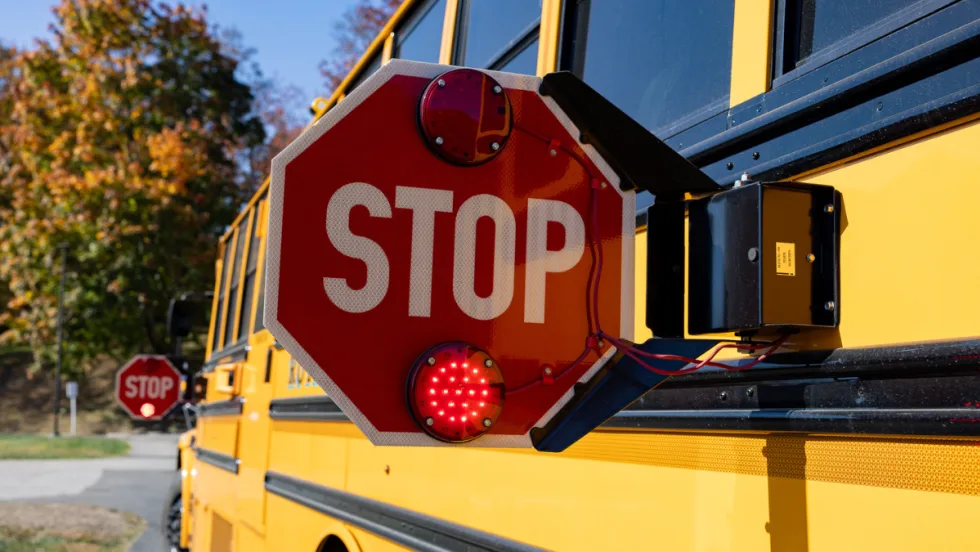
Illegal School Bus Passing Drops 24% in New York Districts
With fewer than 5% of citations involving repeat offenders, Westchester County officials said enforcement, education, and community partnerships are helping change driver behavior.
Read More →
School's Back. Here's What Happened to Traffic, Speeding & Distraction
What happens to traffic when school resumes? New data analysis examines changes in distracted driving, congestion, and speeding around schools.
Read More →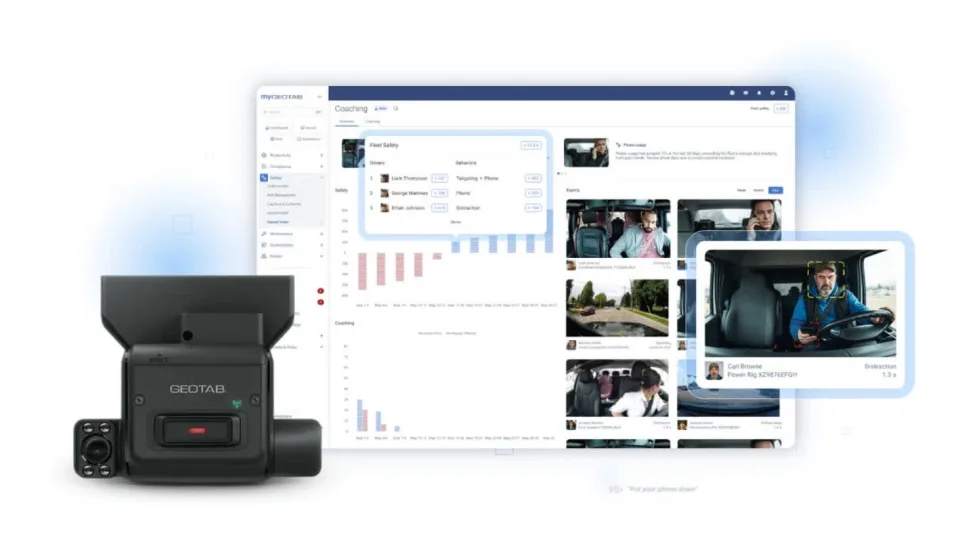
Geotab Expands Fleet Safety Tools With Video Coaching, Risk Insights
New safety and video capabilities aim to help fleet managers assess risk, support drivers, and take targeted action through video coaching, red-light violation detection, and more.
Read More →
How to Build a Better School Bus Driver Training Program
Is it time to strengthen your driver training? Here’s how to pick the right talent and improve recruitment, retention, and safety. This video is brought to you by IC Bus.
Read More →