




Vaccine Mandate Challenges Consolidated in Single Court
A number of lawsuits challenging the Biden administration’s emergency regulation mandating COVID-19 vaccines or weekly testing are being consolidated and could end up at the Supreme Court.


More than two dozen lawsuits have been filed challenging OSHA's COVID-19 vaccine mandate.
Photo: Christian Emmer
A number of lawsuits challenging the Biden administration’s emergency regulation mandating COVID-19 vaccines or weekly testing for larger employers is being consolidated and quite possibly could end up at the Supreme Court.
The Occupational Safety and Health Administration’s COVID-19 Vaccination and Testing Emergency Temporary Standard, published on Nov. 5, requires employers with 100 or more employees to develop, implement, and enforce a mandatory COVID-19 vaccination policy. It offers an alternative for a policy requiring employees who are not fully vaccinated to undergo weekly COVID-19 testing and wear a face covering at the workplace.
More than two dozen lawsuits challenging the emergency rule have been filed in 12 circuit courts, including from Republican-led states and the American Trucking Associations, as well as challenges from unions saying the mandate didn’t go far enough.
On Nov. 12, the U.S. Court of Appeals for the Fifth Circuit granted a motion to stay the ETS. The court ordered that OSHA “take no steps to implement or enforce” the ETS “until further court order.”
The judges in that decision made their opinion quite clear, saying OSHA was not “intended ... to make sweeping pronouncements on matters of public health affecting every member of society in the profoundest of ways… On the dubious assumption that the mandate does pass constitutional muster… it is nonetheless fatally flawed on its own terms. Indeed, the Mandate’s strained prescriptions combine to make it the rare government pronouncement that is both overinclusive (applying to employers and employees in virtually all industries and workplaces in America, with little attempt to account for the obvious differences between the risks facing, say, a security guard on a lonely night shift, and a meatpacker working shoulder to shoulder in a cramped warehouse) and underinclusive (purporting to save employees with 99 or more coworkers from a “grave danger” in the workplace, while making no attempt to shield employees with 98 or fewer coworkers from the very same threat).”
The legal challenges to the OSHA rule have been consolidated in the SIxth Circuit Court of Appeals, based in Cincinnati, Ohio. The court was selected by the U.S. Judicial Panel on Multidistrict Litigation on Nov. 16 in a random drawing using ping-pong balls, a process used when challenges to certain federal agency actions are filed in multiple courts.
According to the American Trucking Associations, “the Sixth Circuit is generally a friendly circuit for business.” ATA said it expects motions to try to move the venue back to the Fifth Circuit from some parties and that the government may try to move the case elsewhere as well.
In a statement on its website, OSHA said, while it “remains confident in its authority to protect workers in emergencies, OSHA has suspended activities related to the implementation and enforcement of the ETS pending future developments in the litigation.”
According to ATA, OSHA has issued only 10 emergency rules since it was formed half a century ago. Of the six challenged in court, only one survived intact.
What's Next?
"The first order of business for the Sixth Circuit, absent motions to transfer venue, will almost certainly involve whether to lift the stay currently neutralizing the ETS," said the trucking attorneys at Scopelitis, Garvin, Light, Hanson & Feary in an email alert. "The Fifth Circuit’s stay not only prohibited OSHA from enforcing the ETS but also prohibited OSHA from taking steps to implement the ETS, likely forestalling any further guidance or clarification about the requirements and applicability of the ETS. Therefore, a flurry of requests to lift the temporary stay will almost certainly be made in the coming days."
Whether the ETS will survive, according to Scopelitis, will be decided by the courts – perhaps even the Supreme Court – on a timeline yet to be established by the courts.
There is a possibility that the stay could get lifted. It it does, we still don't really know the extent of how it would affect trucking.
"We know the ETS does not apply to independent contractors (likely using the economic realities test to determine independent contractor status)," Scopelitis said. "We also know there are reasonable arguments for why the ETS may not apply to many truck drivers based on the text and rationale for the ETS. OSHA will have the first opportunity to weigh in on that question."
Trucking groups such as the American Trucking Associations and the Truckload Carriers Association maintain that most over-the-road truck drivers qualify for one or more of the three exemptions set forth in the ETS. "Although the ETS does not expressly identify drivers as categorically exempt, Secretary of Labor Walsh, in media interviews, indicated most truck drivers would qualify as exempt because they frequently meet a combination of the listed exemptions; namely, they work alone when driving in their truck and work outdoors when interacting with others," Scoplitis noted, adding that additional arguments relating to the “working from home” exemption, though not addressed by Secretary Walsh, could apply.
Originally posted on Heavy Duty Trucking
More Management
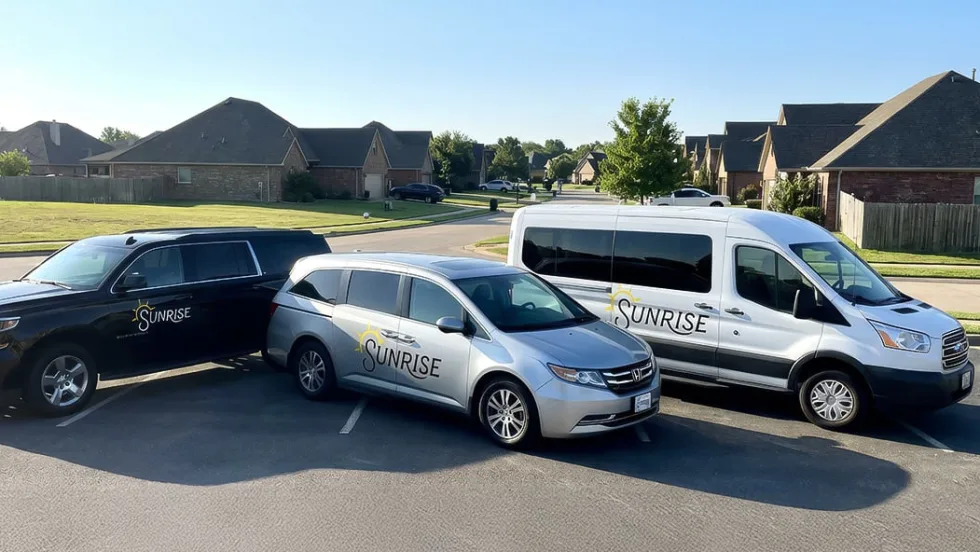
STA Acquires Sunrise Transportation
Student Transportation of America expands in Illinois and Connecticut through Sunrise's fleet of nearly 1,000 vehicles.
Read More →
EPA Opens $180M DERA Funding Round for Diesel Upgrades
The 2026 Diesel Emissions Reduction Act program seeks applications from eligible organizations to accelerate the retirement of legacy diesel vehicles.
Read More →
HopSkipDrive’s CareEngine Targets the ‘Exceptions’ in Student Transportation
The new platform works alongside districts’ existing transportation management systems to coordinate specialized rides, automate last-minute changes, and turn ride data into operational improvements.
Read More →


The Right Ride for Every Student: Navigating the New Student Transportation Ecosystem
How should districts blend school buses with small-vehicle transportation and other options? EverDriven CEO Mitch Bowling discusses safety, costs, partnerships, and strategy.
Read More →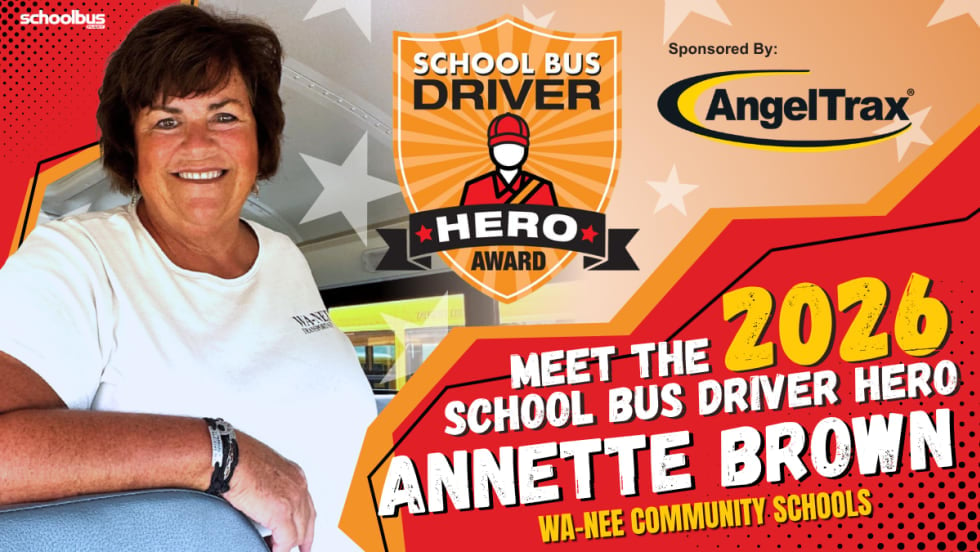
Annette Brown Always Takes the Extra Time: Meet Our 2026 School Bus Driver Hero
For more than 30 years, the Wa-Nee Community Schools driver has treated students like family, combining safety, compassion, and servant leadership to make a lasting difference on and beyond the school bus.
Read More →
How to Build a Better Driver Training Program
Ready to boost up your school bus instructor training? Here’s how to pick the right talent and improve recruitment, retention, and safety.
Read More →
CALSTART and Forth Combine to Form Catalyst Mobility
The new name represents a renewed vision for the nonprofit focused on advancing clean, equitable, and affordable transportation solutions that move people and goods.
Read More →
What Makes a Great School Bus Driver Trainer?
Choosing the right school bus driver trainer takes more than experience. Learn six keys to selecting and developing trainers and evaluating program effectiveness.
Read More →
School Bus Contractors Expand Through New Deals, Acquisitions & Partnerships
STA's Canadian division acquires Ontario-based G&L Stevenson Transport; Durham School Services adds a new district in California; First Student expands in New Jersey; and Minnesota Coaches rebrands and acquires Halo Transportation.
Read More →
Logan Bus Company Rolls Out AI Phone System for NYC School Bus Families
A summer pilot found that AI agents could handle most routine calls, freeing up time for customer service staff to focus on emergencies and complex family concerns.
Read More →