




Utah bill aims to increase state's CNG-powered vehicles
Senate Bill 275 would establish a governing body to facilitate conversion of fleets in the state to alternative fuel vehicles, specifically those powered by compressed natural gas (CNG). In a press conference on board a CNG-powered school bus, Gov. Gary Herbert calls for everyone to improve the state’s air quality, and he spotlights the bill as one way to reduce heavy vehicle and fleet emissions.
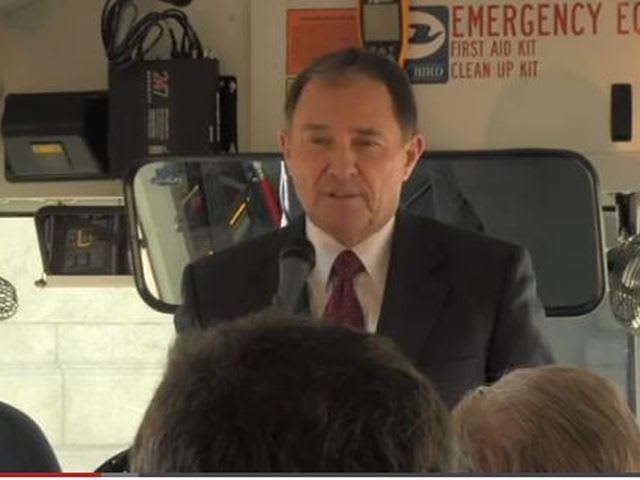
During a press conference on a CNG-powered school bus, Utah Gov. Gary Herbert called on everyone to improve the state’s air quality, and he spotlighted Senate Bill 275 as one way to reduce heavy vehicle and fleet emissions.
SALT LAKE CITY — A bill has been introduced in the state Legislature that is designed to increase the number of vehicles in the state running on alternative fuels — specifically compressed natural gas (CNG).
Senate Bill 275 would establish a governing body to facilitate conversion of fleets to alternative fuel vehicles, or to facilitate the construction, operation and maintenance of facilities for these types of vehicles.
The governing body would consist of an individual from the executive branch of the state government, a member of the Senate, a member of the House of Representatives, a person from the Utah Association of Counties, someone from the Utah League of Cities and Towns, an individual employed by a school district in the state, someone appointed by the public transit district and an individual employed by a gas corporation in the state.
It would also direct the Public Service Commission to initiate and conduct proceedings to explore opportunities for advancing and promoting measures in the state that would result in cleaner air. For example, the commission would look into the potential funding options available to pay for the enhancement and expansion of infrastructure and facilities for alternative fuel vehicles, and the most effective ways to overcome any obstacles in converting to alternative fuel vehicles.
The commission would be required to report the results of its proceedings, including any conclusions and recommendations, to the governor, the Legislative Management Committee, and the Public Utilities and Technology Interim Committee by Sept. 30.
“This bill will jumpstart the process of making it easier to finance, build infrastructure and convert an entire fleet to alternative fuel vehicles,” said Sen. J. Stuart Adams, who introduced the bill and is its chief sponsor.
Adams added that the bill’s primary objective is to improve air quality across the state, but it also aims to strengthen Utah’s economy by reducing the state’s dependence on foreign oil.
Another component of the bill is to provide a cost recovery mechanism for a gas corporation that pays for natural gas fueling stations and related facilities.
According to Adams, the Utah Public Service Commission currently oversees a program that allows Questar Gas to assist homeowners in making their homes more energy efficient by financing home insulation. Senate Bill 275 proposes a similar program aimed at assisting in cleaner transportation processes in the state. Questar would be allowed to assist agencies in converting their existing fleets into CNG vehicles, and maintaining CNG facilities and infrastructure as part of their utility function.
During a press conference on Monday that was held on board a CNG-powered school bus, Gov. Gary Herbert called for everyone to do their part to improve Utah’s air quality. He urged state and local government, schools, public transit and businesses to transition more of their fleets to clean fuel vehicles.
“Utah should lead out in creating policies that promote fleet conversion to clean burning vehicles and improved air quality,” Herbert said, adding that the result will be “reduced emissions, not just on inversion days, but every day.”
He also spotlighted Senate Bill 275 as one way to reduce heavy vehicle and fleet emissions.
As of Thursday, the bill was on the Senate calendar for a second reading.
This isn’t the first time that Herbert has supported clean air efforts in the state. In 2011, he declared September “Idle Free Awareness Month,” and the declaration cited the success of Utah’s school bus idling reduction program as an example for the rest of the state.
A video from Monday’s press conference on Senate Bill 275 is below.
More Safety
2 Killed, Dozens Injured in Florida School Bus Crash
A multi-vehicle collision caused a Polk County school bus carrying 37 students to overturn on its way to Winter Haven High School.
Read More →
Illegal School Bus Passing Drops 24% in New York Districts
With fewer than 5% of citations involving repeat offenders, Westchester County officials said enforcement, education, and community partnerships are helping change driver behavior.
Read More →
School's Back. Here's What Happened to Traffic, Speeding & Distraction
What happens to traffic when school resumes? New data analysis examines changes in distracted driving, congestion, and speeding around schools.
Read More →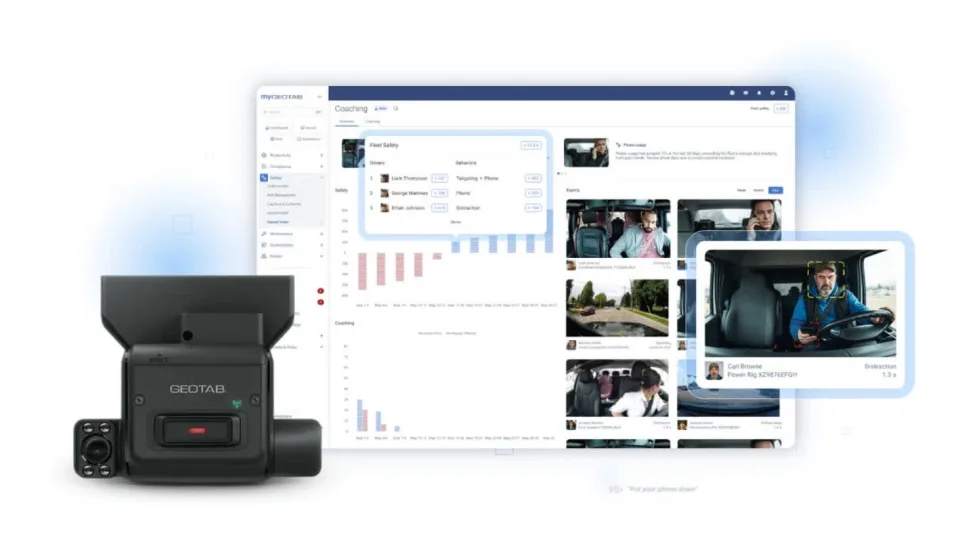
Geotab Expands Fleet Safety Tools With Video Coaching, Risk Insights
New safety and video capabilities aim to help fleet managers assess risk, support drivers, and take targeted action through video coaching, red-light violation detection, and more.
Read More →
How to Build a Better School Bus Driver Training Program
Is it time to strengthen your driver training? Here’s how to pick the right talent and improve recruitment, retention, and safety. This video is brought to you by IC Bus.
Read More →
Recent School Bus Accidents Leave 2 Dead, 2 Injured
Four school bus crashes in Florida, Illinois, and Georgia highlight risks in transportation lots, at bus stops, and during student loading and unloading.
Read More →
When Every Second Matters, Clarity Keeps Routes Moving
From routine delays to urgent incidents, strong communication practices help drivers, dispatchers, schools, and families respond with confidence.
Read More →
What Happens When a School Bus Catches Fire — and What Can Help
School bus fires are rare but can be devastating. Learn how advances in fire suppression and asset protection help fleets detect fires earlier, reduce damage, and improve safety.
Read More →
Geotab Launches Tool to Help Fleets Investigate Road Incidents
Geotab Investigations combines telematics data, video, documents, and other evidence to help fleets reconstruct incidents, resolve claims, and determine what happened.
Read More →
Texas Sixth Grader Wins 2026 National School Bus Safety Poster Contest
Sai Darshana Yekolu of Moseley Middle School in Prosper, Texas, was named the newest winner for her artwork, bringing the theme of “Safe Rides, Everyday Heroes” to life.
Read More →