





Similar News: Grant Uncertainty: Clean School Bus Funds in Limbo
U.S. Department of Education Cut in Half: What Now?
The Trump administration is working with the Department of Education’s new secretary to head toward total agency shutdown and shift oversight to the states. But without Congress’ approval, many are voicing their concerns about what this could mean for IDEA, school districts, and the students they serve. Here’s what we know.
March 13, 2025

Downsizing the department was the first step toward President Trump's effort to dismantle the federal agency.
Photo: SBF/Canva
3 min to read
Editor's update as of March 20, 2025: Today, President Trump signed an executive order to begin total departmental shutdown. Congress' approval is still needed before the agency can be dismantled. Over 20 states have sued to halt the shutdown. The rest of the original news story follows.
Yesterday, the U.S. Department of Education announced a reduction in its workforce by nearly 50%.
Impacted staff will be placed on administrative leave beginning Friday, March 21.
The department clarified it will continue to deliver on all statutory programs that fall under the agency’s purview, including grants and program awards mandated by law and funding for special needs students.
As of President Trump’s inauguration, the agency’s workforce stood at 4,133 workers. It now stands at about 2,183, which included nearly 600 employees who accepted voluntary resignation and retirement over the last seven weeks.
In a statement, Secretary of Education Linda McMahon said: “Today’s reduction in force reflects the Department of Education’s commitment to efficiency, accountability, and ensuring that resources are directed where they matter most: to students, parents, and teachers. I appreciate the work of the dedicated public servants and their contributions to the department. This is a significant step toward restoring the greatness of the United States education system.”
McMahon told FOX News that the president’s directive is to shut down the department entirely, which they intend to pursue with Congress, and that this was the first step in that effort.
An executive order is expected, despite delays already.
Of note: The department’s dismantling cannot happen without Congress. Republicans hold majorities in both chambers, and it would require 60 votes in the Senate.
The directive has sparked much debate.
Some leaders and advocates have raised concerns about how this could impact programs such as the Individuals with Disabilities Education Act (IDEA), which defines 13 different categories of special needs and ensures that children with those needs receive a free public education — which includes transportation.
North Carolina Superintendent of Public Instruction Maurice Green said that: “A productive partnership with and continued funding from the federal government are essential for North Carolina’s students and schools. About $1.2 billion for North Carolina public schools comes from the U.S. Department of Education annually. The complete loss of this funding would be detrimental to students and result in the loss of thousands of educator jobs.”
Randi Weingarten, president of the American Federation of Teachers, told MSNBC that shutting down the Education Department is a “disaster symbolically as much as a disaster in reality.”
Other advocates are preparing to defend the agency through litigation and civic action, according to a report from The Hill.
Michigan’s State Superintendent Michael F. Rice issued a statement, calling the administration’s actions an “outrage.” His full quote can be seen in a Facebook post.
SBF reached out to a few state department transportation leaders for comment, but none were able to say much yet.
Appointed by President Trump, McMahon was confirmed as the 13th Secretary of Education on March 3.
In a speech that same day, she said: “The Department of Education’s role … is to restore the rightful role of state oversight in education and to end the overreach from Washington. This restoration will profoundly impact staff, budgets, and agency operations here at the department. In coming months, we will partner with Congress and other federal agencies to determine the best path forward ... An effective transfer of educational oversight to the states will mean more autonomy for local communities.”
For more breakdown and opinions, check out this video:
Editor’s Note: We will keep following this story and update this post as further developments are known.
What do you think? Please share your reactions, comments with us here or by email. If these cuts affect you, whether positively or negatively, we want to hear your experience.
More Management

How to Build a Better Driver Training Program
Ready to boost up your school bus instructor training? Here’s how to pick the right talent and improve recruitment, retention, and safety.
Read More →
CALSTART and Forth Combine to Form Catalyst Mobility
The new name represents a renewed vision for the nonprofit focused on advancing clean, equitable, and affordable transportation solutions that move people and goods.
Read More →
What Makes a Great School Bus Driver Trainer?
Choosing the right school bus driver trainer takes more than experience. Learn six keys to selecting and developing trainers and evaluating program effectiveness.
Read More →

School Bus Contractors Expand Through New Deals, Acquisitions & Partnerships
STA's Canadian division acquires Ontario-based G&L Stevenson Transport while Durham School Services adds a new district contract in California, First Student adds a New Jersey contract, and Minnesota Coaches acquires Halo Transportation.
Read More →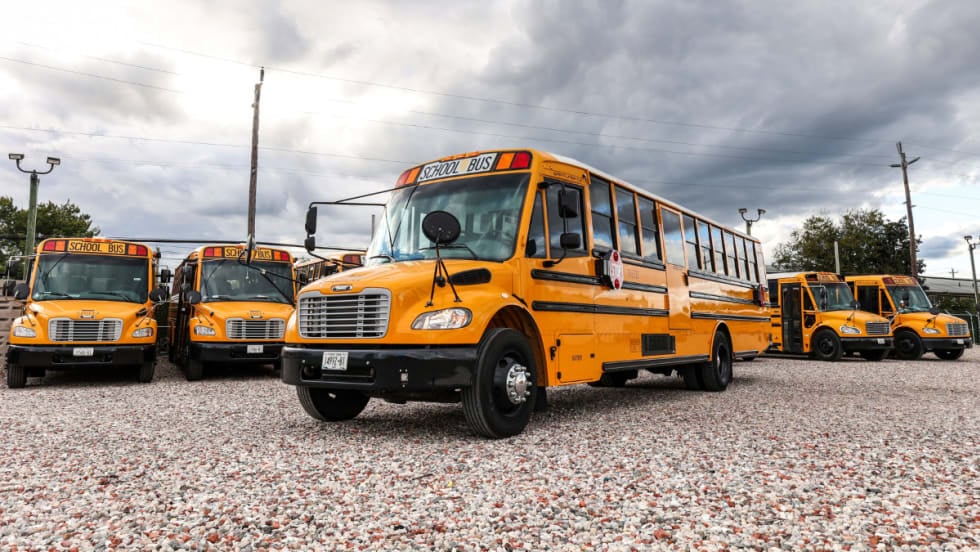
Logan Bus Company Rolls Out AI Phone System for NYC School Bus Families
A summer pilot found that AI agents could handle most routine calls, freeing up time for customer service staff to focus on emergencies and complex family concerns.
Read More →
From Intent to Impact: What I Learned About Leadership from TAPT
A Texas transportation supervisor shares lessons on self-awareness, accountability, managing stress and building trust — and why investing in leadership development matters at every stage of your career.
Read More →
NAPT Names 2026 Award Recipients, Hall of Fame Inductee
Who earned national recognition for their work in student transportation? This year, NAPT named five recipients of its 2026 awards for service, safety, and leadership, plus its newest Hall of Famer.
Read More →
Sponsored•September 2, 2026
2026 State of Student Transportation Report
Driver shortages. Rising costs. Growing safety expectations. More data, but not enough time to act on it. The 2026 State of Student Transportation Report reveals what transportation leaders say is putting the most pressure on their operations—and where they’re investing next. See how your priorities compare.
Read More →
How to De-Escalate an Angry Person: 5 Steps for Handling Workplace Conflict
What makes emotions run high, and how should you handle an angry colleague or parent? Follow these steps for staying calm, listening, showing empathy, and resolving conflict.
Read More →
Sponsored•September 1, 2026
What Readiness Looks Like This School Year
Learn about the challenges shaping the 2026–2027 school year, from persistent driver shortages and budget pressure to technology and readiness gaps. See how school districts are responding and adapting in Zonar’s 2026 Back-to-School Readiness Report.
Read More →