




Teen Helps Save Choking Student While on School Bus
The New York eighth grader performs the Heimlich maneuver on a first grade student, preventing her from choking on a piece of candy.

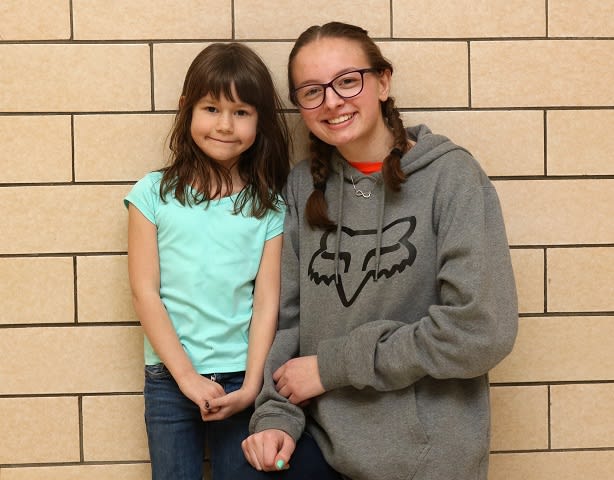
Rachel Trimbell (right) performed the Heimlich maneuver on first grader Danielle Miller to prevent her from choking on a piece of candy while she was on the school bus. Photo courtesy P.J. Harmer from Walton (N.Y.) Central School District
Rachel Trimbell (right) performed the Heimlich maneuver on first grader Danielle Miller to prevent her from choking on a piece of candy while she was on the school bus. Photo courtesy P.J. Harmer from Walton (N.Y.) Central School District
WALTON, N.Y. — An eighth grade student here recently helped save another student who was choking on a piece of candy while on the school bus.
What seemed like a normal afternoon on the bus of Walton Central School District driver Dave Edwards turned into a bit of panic when first grader Danielle Miller started to choke on a piece of candy that had become lodged in her throat, according to a news release posted on the district's website.
Edwards said he saw Miller in the middle of the aisle with what he described as a blank look as students behind him began shouting, “She’s choking! She’s choking!” Knowing that 14-year-old Rachel Trimbell is certified in CPR and first aid and is a member of the Walton Fire Department Explorer Post, Edwards shouted to the back for her to help Miller as he secured the bus.
“I just wanted to help her,” Trimbell said. “She was scared. Her eyes were wide and she was gasping. You could tell she was choking.”
By the time Edwards came to where the incident happened on the bus, Trimbell, who was seated about seven rows away from Miller, had already jumped into action and had performed the Heimlich maneuver. She said she thought it was about the fifth try when the candy became dislodged and everything seemed to be back to normal.
“I knew it would be scary,” Trimbell, who noted she had just been re-certified a week before the incident happened, said. “I freaked out more after the fact just because of the fact that I did it.”
Once things settled and Edwards started the bus on its normal route, the two sat with one another.
“Not only did Rachel save a possible worse situation, but she sat with Danielle to comfort her and make sure she was OK,” Edwards said.
About a week after the incident, Trimbell visited Miller at Townsend Elementary, and they had a chance to talk about what had happened.
A strawberry Starburst that was “hard as a rock” was the culprit, Miller said. She also added that she likely wouldn’t be eating those candies again any time soon.
When asked what she thought when she looked at Trimbell, she said “happiness” and then thanked her. The two have continued to sit together on the bus, and Miller noted that she has a best friend in Trimbell.
More Safety
Illegal School Bus Passing Drops 24% in New York Districts
With fewer than 5% of citations involving repeat offenders, Westchester County officials said enforcement, education, and community partnerships are helping change driver behavior.
Read More →
School's Back. Here's What Happened to Traffic, Speeding & Distraction
What happens to traffic when school resumes? New data analysis examines changes in distracted driving, congestion, and speeding around schools.
Read More →
Geotab Expands Fleet Safety Tools With Video Coaching, Risk Insights
New safety and video capabilities aim to help fleet managers assess risk, support drivers, and take targeted action through video coaching, red-light violation detection, and more.
Read More →
How to Build a Better School Bus Driver Training Program
Is it time to strengthen your driver training? Here’s how to pick the right talent and improve recruitment, retention, and safety. This video is brought to you by IC Bus.
Read More →
Recent School Bus Accidents Leave 2 Dead, 2 Injured
Four school bus crashes in Florida, Illinois, and Georgia highlight risks in transportation lots, at bus stops, and during student loading and unloading.
Read More →
When Every Second Matters, Clarity Keeps Routes Moving
From routine delays to urgent incidents, strong communication practices help drivers, dispatchers, schools, and families respond with confidence.
Read More →
What Happens When a School Bus Catches Fire — and What Can Help
School bus fires are rare but can be devastating. Learn how advances in fire suppression and asset protection help fleets detect fires earlier, reduce damage, and improve safety.
Read More →
Geotab Launches Tool to Help Fleets Investigate Road Incidents
Geotab Investigations combines telematics data, video, documents, and other evidence to help fleets reconstruct incidents, resolve claims, and determine what happened.
Read More →
Texas Sixth Grader Wins 2026 National School Bus Safety Poster Contest
Sai Darshana Yekolu of Moseley Middle School in Prosper, Texas, was named the newest winner for her artwork, bringing the theme of “Safe Rides, Everyday Heroes” to life.
Read More →
Doing More With Less: How Transportation Directors Can Prioritize Safety Amid Budget Uncertainty
With diesel prices soaring and nearly one-third of transportation directors expecting budget cuts, maintaining student safety has never been more challenging. Download this guide to learn how leading districts are prioritizing risk, funding critical safety technology, and building stronger budget cases with data.
Read More →