





Check Out: The Route: Clean Cash and Shocking Returns
Southern California District Flips Switch on Region’s First V2G School Bus Project
The collaboration between San Diego Gas & Electric, Nuvve, and the Cajon Valley Union School District offered the first live demonstration of bi-directional charging since launch of the federal cross-sector initiative to rapidly commercialize technology.
July 27, 2022
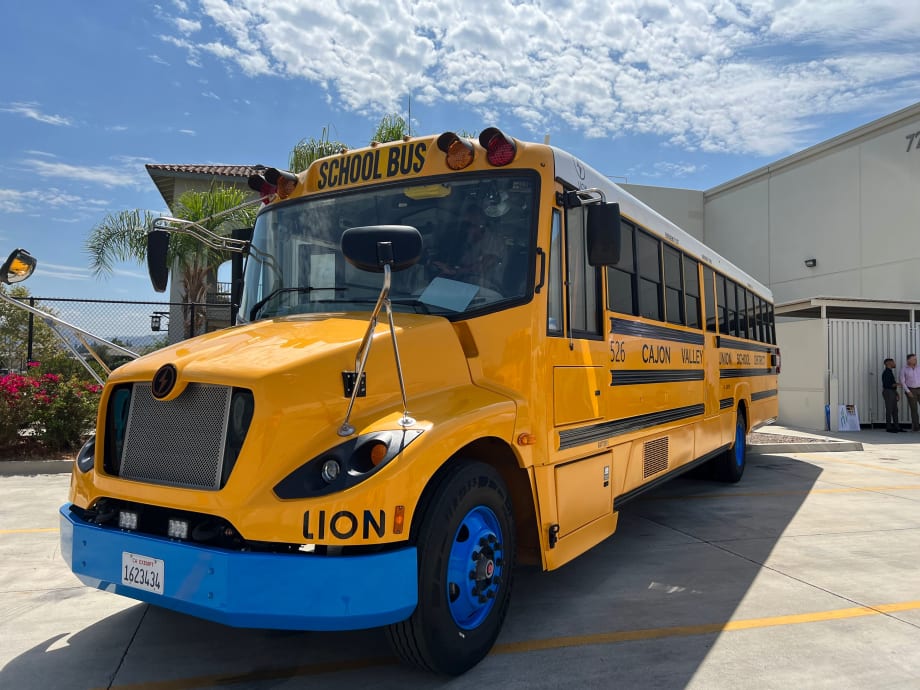
With the bi-directional chargers now in operation, Cajon Valley can participate in SDG&E’s new Emergency Load Reduction Program (ELRP), which pays business customers $2/kWh if they can export energy to the grid or reduce energy use during grid emergencies.
Photo: Nuvve
3 min to read
Working with San Diego Gas & Electric and technology company Nuvve, California’s Cajon Valley Union School District successfully deployed a vehicle-to-grid project that allows eight electric school buses to send power back to the grid when needed on hot summer days.
According to a news release, it’s the first V2G project to become operational in Southern California, with the intent of advancing clean air and climate goals while bolstering grid reliability.
It comes after the U.S. Department of Energy’s vehicle-to-everything (V2X) initiative, which was announced this spring. SDG&E is a signatory on the V2G memorandum of understanding (MOU). The agreement is designed to merge resources from DOE National Labs, state and local governments, utilities, and private entities to unlock the potential of bi-directional charging to increase energy security, community resilience, and economic growth.
As part of the five-year pilot project, SDG&E installed six 60kW bi-directional DC fast chargers at Cajon Valley’s bus yard in El Cajon. The pilot was celebrated at an event on July 26 with project partners and San Diego County District Two Supervisor Joel Anderson.
“This pilot project is a great example of our region being at the forefront of testing and adopting innovative technologies to reduce greenhouse gas emissions and strengthen the electric grid,” said SDG&E Vice President of Energy Innovation Miguel Romero. “Electric fleets represent a vast untapped energy storage resource and hold immense potential to benefit our customers and community not just environmentally, but also financially and economically.”
On average, cars are parked 95% of the time. California is home to 1.1 million EVs, the largest concentration of EVs in the nation. Starting in 2035, all new cars and passenger trucks sold in California must be zero-emission vehicles. Many local agencies and companies are working to transition to electric fleets under SDG&E’s Power Your Drive for Fleets program, which provides infrastructure support. In addition to Cajon Valley, SDG&E is working with San Diego Unified and Ramona Unified School Districts on V2G projects.
“Pilots like these are critical to advancing industry knowledge and commercialization of new technologies that help create jobs and build a clean energy future,” said Rima Oueid of the Office of Technology Transitions Commercialization. “I am thrilled to see this project go live less than three months after the DOE launched our V2X initiative, validating the value of public-private partnership.”
With the bi-directional chargers now in operation, Cajon Valley can participate in SDG&E’s new Emergency Load Reduction Program (ELRP), which pays business customers $2/kWh if they can export energy to the grid or reduce energy use during grid emergencies.
“We jumped at the opportunity to be part of this pilot project because of its potential to help us build a healthier community and better serve our students,” said Assistant Superintendent Scott Buxbaum. “If we are able to reduce our energy and vehicle maintenance costs as a result of this project, it frees up more resources for our schools and students.”
V2G technology works by allowing batteries onboard vehicles to charge up during the day when energy, particularly renewable energy such as solar is abundant. The batteries then discharge clean electricity back to the grid during peak hours or other periods of high demand.
“School buses are an excellent use case for V2G,” said Gregory Poliasne, Nuvve co-founder, chair, and CEO. “They hold larger batteries than standard vehicles and can spend peak solar hours parked and plugged into bi-directional chargers. Nuvve’s technology enables the grid to draw energy from a bus when it is needed most, yet still ensuring the bus has enough stored power to operate when needed.”
More Alternative Fuels

CALSTART and Forth Combine to Form Catalyst Mobility
The new name represents a renewed vision for the nonprofit focused on advancing clean, equitable, and affordable transportation solutions that move people and goods.
Read More →
Alt-Fuel Moves: New Buses, Charging Hubs & Real-World EV Testing
Propane and electric school bus deployments continue to grow as districts add new vehicles, expand charging infrastructure, and gather more real-world operating data.
Read More →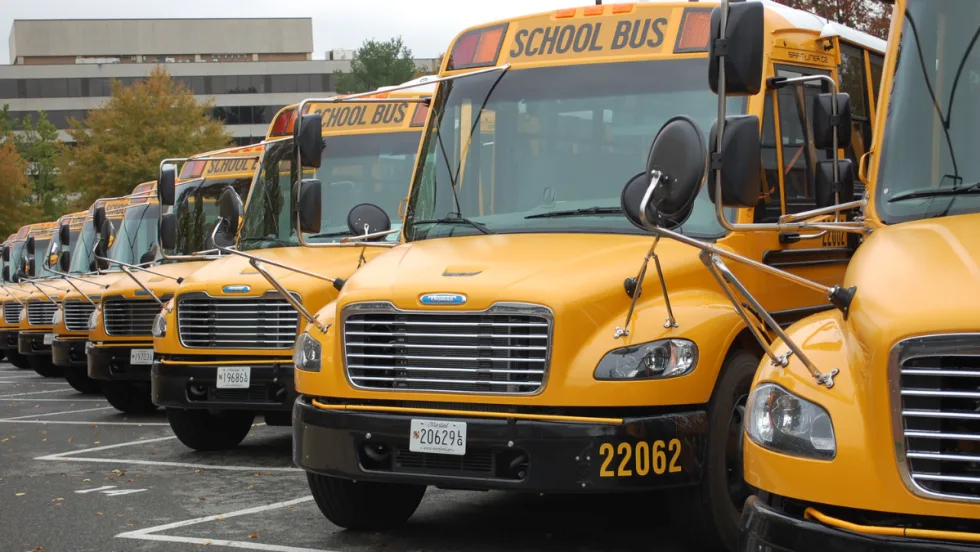
Fewer Electric School Bus Models Reshape the U.S. Market
WRI’s latest buyer’s guide points to a consolidating electric school bus market, but fewer options may reflect a maturing industry rather than fewer meaningful choices for school bus operators.
Read More →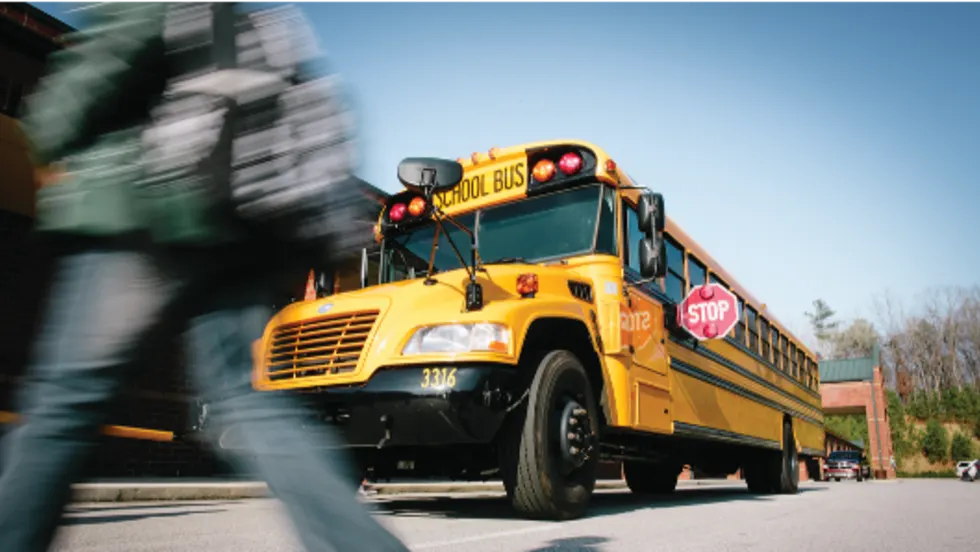
The Fuel Budget You Can Actually Predict: How Propane Autogas Keeps Money in the Classroom
Learn how propane autogas helps school districts manage fuel costs with predictable pricing, lower maintenance, and reduced emissions from former transportation director Joel Stutheit.
Read More →
Hendrickson, Driventic Introduce New Electric Powertrain for School Buses
ELECTRAAX, the electrified, lightweight drive axle offers integrated ePowertrain efficiency and modular flexibility for Class 6–7 school bus use.
Read More →
The Mobility House Joins PowerFlex in Fleet Electrification Deal
The acquisition combines intelligent charging software, bidirectional charging expertise, and fleet electrification services to support the growing adoption of electric school buses across North America.
Read More →
Alt-Fuel Moves: Electric School Bus Investments Hit the Road
See which districts across the U.S. are putting electric school buses into service, expanding charging infrastructure, and planning the next phase of fleet electrification.
Read More →
With Fuel Volatility Ahead, School Districts Turn to Propane
While diesel prices peaked above $5 this spring, districts with propane autogas-powered fleets paid under $2 per gallon, according to PERC.
Read More →
EPA Unveils Proposed Changes to 2027 Heavy-Duty Engine Rules
The federal agency has proposed changes to next year’s targets that would eliminate DEF derates, ease warranty requirements, and retain current NOx emissions standards.
Read More →
Alt-Fuel Moves: EV Charging & Infrastructure Projects Gain Momentum
The latest developments include new funding, charging infrastructure, utility investments, and fleet technologies designed to support the transition to electric school buses nationwide.
Read More →