




Short-Term Energy Outlook Expects Falling Prices
Global production of liquid fuels could be up to 102.8 million barrels per day by 2024, driven by growth in non-OPEC sources. But forecasts could be fogged by uncertainty over Russia’s oil supply, eased COVID-19 restrictions in China, and other global economic conditions.

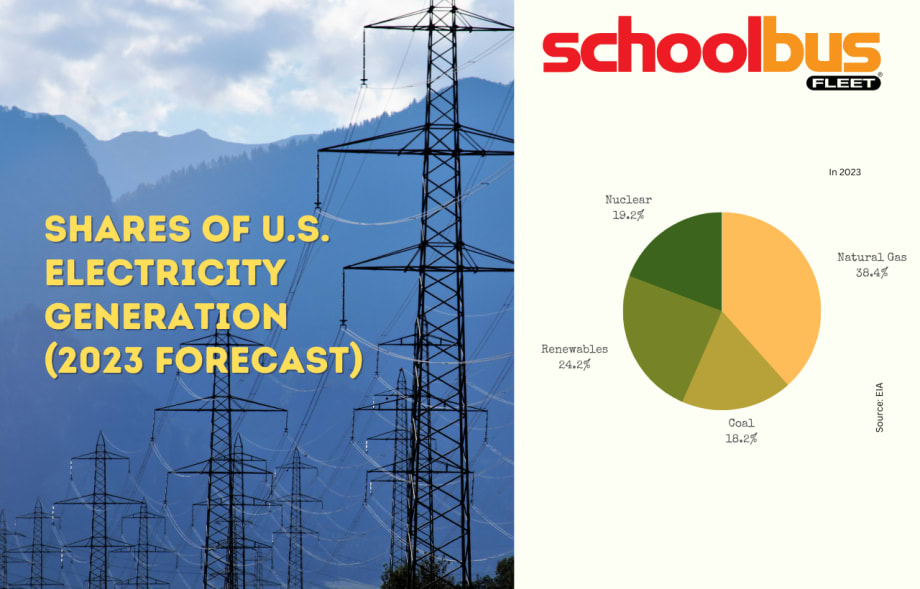
The percentage of electricity production from coal is forecast to fall from 20% in 2022 to 18% this year.
Image: SBF/EIA
Non-OPEC production growth should boost global production of liquid fuels that keep school bus fleets moving to 102.8 million barrels per day by 2024, according to the latest Short-Term Energy Outlook (STEO) report from the U.S. Energy Information Administration.
That’s up from 100 million barrels per day in 2022. However, there’s some uncertainty with these production estimates thanks to Russia’s ongoing war in Ukraine. Also, demand could be affected by easing of COVID-19 restrictions in China and other global economic conditions in the coming months.
Global consumption of liquid fuels, which averaged 99.4 million barrels per day in 2022, could grow to 102.2 million in 2024.
“Our forecast for global consumption of petroleum depends on uncertain economic conditions – especially in China,” said Joe DeCarolis, EIA administrator, in a news release. “How China’s economy changes following its reopening from pandemic lockdowns could have a significant impact on global consumption of petroleum products.”
Other highlights from the report include:
Crude oil prices averaging $83 a barrel in 2023, down 18% from 2022. It may keep falling to $78 a barrel in 2024 “as global inventories build, putting downward pressure on crude oil prices.”
Retail gasoline prices in 2023 are expected to average about $3.30 per gallon this year and $3.10 in 2024 as wholesale refining margins and crude oil prices drop.
Diesel prices should average $4.20 per gallon in 2023, down 16% from 2022. Prices may keep falling in 2024, averaging about $3.70 per gallon.
Electricity production from coal is expected to fall from 20% last year to 18% in 2023 and 17% in 2024. That decline may be offset by an increase in combined utility-scale solar and wind generation, climbing from 16% in 2023 to 18% in 2024.
Got news for School Bus Fleet? Send your information to info@schoolbusfleet.com.
More Maintenance

The Evolution of DEF Header Technology: What School Bus Operations Should Know at Replacement Time
See what school bus fleets should consider when replacing DEF headers to improve reliability, reduce repeat repairs, and control maintenance costs.
Read More →
The Essential Guide to School Bus Maintenance and Student Safety
Your district's buses carry students to school every day. This guide shows how predictive maintenance powered by fleet data helps keep buses reliable, drivers accountable and students safer from the first bell to the last stop.
Read More →
Kerry Brothers Grows Michigan School Bus Repair Network
The acquisition of Downriver Truck and Bus expands Kerry Brothers’ school bus maintenance footprint across southeast Michigan, adding repair capacity, diagnostic resources, and state inspection support.
Read More →
Noregon Introduces CAN Bus Diagnostic Tool, Expands JPRO Features
CAN Mentor and the latest JPRO update aim to simplify vehicle network diagnostics and improve repair efficiency for technicians of all experience levels.
Read More →
Cummins on Smarter, Simpler Engine Innovation
Cummins discusses its first-ever gasoline engine for school buses, EPA 2027, and why bus fleets still want durable, simpler internal combustion options.
Read More →
Report: 72% of Diesel School Buses Now Use Advanced Low-Emission Engines
New data shows advanced low-emission diesel technology continues expanding across school bus fleets, even as electric bus adoption gains momentum.
Read More →
Vampire Tools' CAIMAN 7.5-Inch Multi-Purpose Screw Extractor Long-Nose Pliers with Crimper
Vampire Tools introduced the VAMPLIERS Caiman 7.5-inch multi-purpose pliers, combining screw extraction, cutting, crimping, and gripping functions into a single tool designed for fleet maintenance professionals.
Read More →
How Advanced Diagnostics Helps Bus Fleets Stay Ahead of Repairs
Chat with Noregon’s Kevin Smallhorn at ACT Expo about bus diagnostic tools, telematics integration, CNG maintenance support, and strategies to help reduce downtime and improve uptime.
Read More →
How School Bus Fleets are Getting Ahead of Breakdowns
Don’t let bus downtime wear you down. Here’s how bus operators are shifting from manual processes to AI-powered, data-driven maintenance systems for improved reliability and safety.
Read More →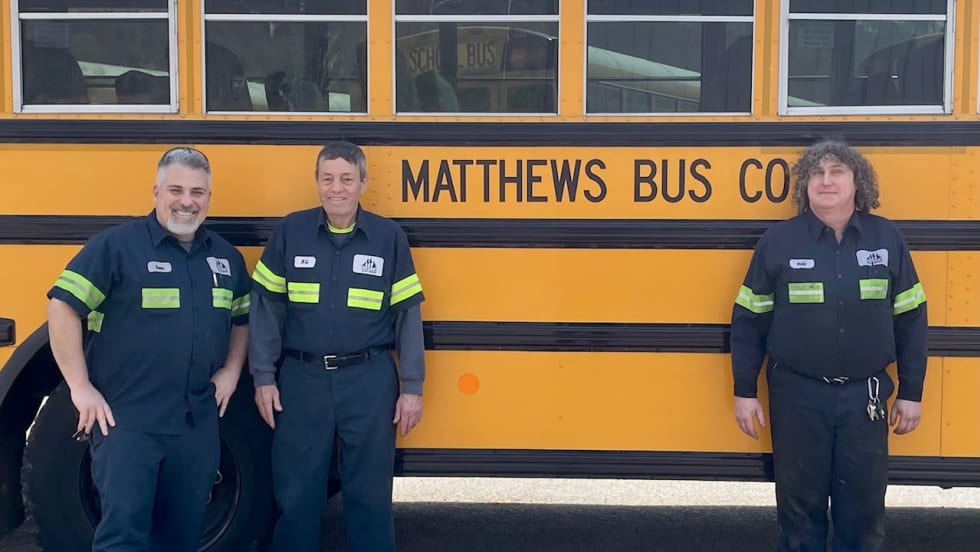
Pennsylvania School Bus Maintenance Team Praised for Dedication to Safety
Matthews Bus Company’s West Jefferson received a letter of commendation from the Pennsylvania State Police for their fleet inspections.
Read More →