




School Bus Transportation Turns 100 in North Carolina
State transportation and education leaders celebrate a century of transporting students in motorized school buses.

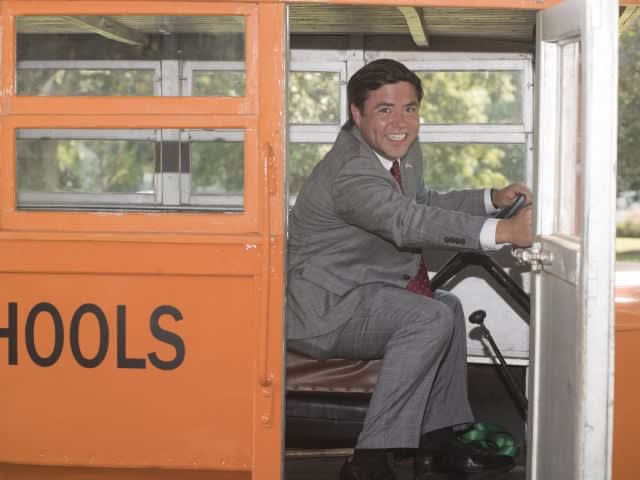
Mark Johnson, North Carolina’s state superintendent of public instruction, takes the wheel of a vintage 1930s school bus at an event recognizing the 100th anniversary of motorized school transportation in the state. Photo courtesy North Carolina Department of Public Instruction
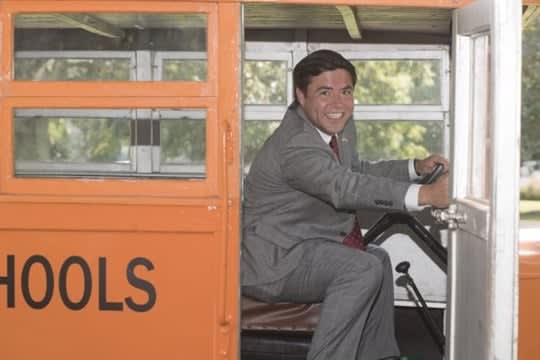
Mark Johnson, North Carolina’s state superintendent of public instruction, takes the wheel of a vintage 1930s school bus at an event recognizing the 100th anniversary of motorized school transportation in the state. Photo courtesy North Carolina Department of Public Instruction
ORIENTAL, N.C. — North Carolina has marked a milestone in pupil transportation: 100 years since the first motorized bus carried students to school.
On Tuesday, state transportation and education leaders recognized the notable anniversary at events held at the town hall in Oriental and the North Carolina General Assembly building in Raleigh. Officials emphasized the vital role that school bus transportation has played for North Carolina’s students and families over the past century.
“School buses are so much a part of our daily lives that it’s hard to believe that they were once a groundbreaking innovation. But they were, back in 1917,” said Mark Johnson, state superintendent of public instruction, who spoke at the event in Raleigh.
Pamlico County Schools launched the state’s first motorized school bus service in Oriental on Sept. 5, 1917, according to the North Carolina Department of Natural and Cultural Resources. At the time, horse-drawn wagons — also known as kid hacks — were typically used for pupil transportation.
Pamlico bought its first bus from the Corbitt Co. of Henderson, North Carolina, for $1,379. The vehicle, which The News & Observer referred to as a “truck,” could carry 30 passengers. It led to a revolution in education: the shift to centralized schools.
“The introduction of a motorized bus to deliver students from outlying areas to the schoolhouse was considered a logistical triumph, and made it possible for school districts to move from scattered networks of one-room schoolhouses to modern, centralized schools with more professional staff,” according to the Department of Natural and Cultural Resources.
Johnson, the state superintendent, noted that T.B. Atmore, then-superintendent for Pamlico County, “was so proud of his ‘truck’ that he drove it all the way to Raleigh, giving rides around the city to Gov. Thomas Bickett and other state leaders.”
Today, some 13,000 yellow school buses transport about 780,000 students in North Carolina each school day.
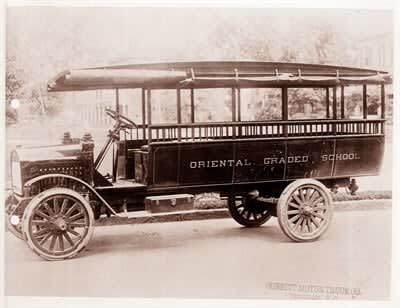
This early school bus was built by the Corbitt Co. for transporting students of Oriental Graded School in Pamlico County, North Carolina, circa 1917. Photo courtesy North Carolina State Archives
The events on Tuesday showcased a vintage school bus from the 1930s and a new model with seat belts and GPS. Along with recognizing North Carolina’s 100th school bus anniversary, the events promoted school bus safety, and they tied in with Gov. Roy Cooper’s designation of September as “Safe to School Month.”
“It is no accident that the school bus is the safest vehicle on the road,” said Mark Ezzell, director of the North Carolina Governor’s Highway Safety Program. “We encourage motorists to practice safe driving, especially in school zones or in the proximity of school buses on roadways.”
Speakers also included Kevin Harrison, North Carolina’s state director of pupil transportation, and Lisa Jackson, superintendent of Pamlico County Schools.
Beyond Tuesday’s events, North Carolina’s first school bus is perpetually commemorated on a street in Oriental. The vehicle itself hasn’t survived, but a state historical marker stands in tribute. It reads:
“First Motorized School Bus — On September 5, 1917, the Pamlico Co. School system inaugurated the first motorized school bus service in North Carolina.”
More historical information is available on the North Carolina Highway Historical Marker Program website.
More Safety

How to Build a Better School Bus Driver Training Program
Is it time to strengthen your driver training? Here’s how to pick the right talent and improve recruitment, retention, and safety. This video is brought to you by IC Bus.
Read More →
Recent School Bus Accidents Leave 2 Dead, 2 Injured
Four school bus crashes in Florida, Illinois, and Georgia highlight risks in transportation lots, at bus stops, and during student loading and unloading.
Read More →
When Every Second Matters, Clarity Keeps Routes Moving
From routine delays to urgent incidents, strong communication practices help drivers, dispatchers, schools, and families respond with confidence.
Read More →

What Happens When a School Bus Catches Fire — and What Can Help
School bus fires are rare but can be devastating. Learn how advances in fire suppression and asset protection help fleets detect fires earlier, reduce damage, and improve safety.
Read More →
Geotab Launches Tool to Help Fleets Investigate Road Incidents
Geotab Investigations combines telematics data, video, documents, and other evidence to help fleets reconstruct incidents, resolve claims, and determine what happened.
Read More →
Texas Sixth Grader Wins 2026 National School Bus Safety Poster Contest
Sai Darshana Yekolu of Moseley Middle School in Prosper, Texas, was named the newest winner for her artwork, bringing the theme of “Safe Rides, Everyday Heroes” to life.
Read More →
Doing More With Less: How Transportation Directors Can Prioritize Safety Amid Budget Uncertainty
With diesel prices soaring and nearly one-third of transportation directors expecting budget cuts, maintaining student safety has never been more challenging. Download this guide to learn how leading districts are prioritizing risk, funding critical safety technology, and building stronger budget cases with data.
Read More →
Walton County Schools Adds Gatekeeper Stop-Arm Enforcement System
The Florida district will deploy Gatekeeper’s updated Student Protector technology, which now incorporates AI to improve video evidence.
Read More →
How To Build a More Secure School Bus Yard During and After Hours
As thefts and overnight security threats continue, school transportation leaders are combining stronger operational practices with AI-enabled surveillance to better protect buses, facilities, and staff.
Read More →
FMCSA Names New Chief Safety Officer: What School Bus Operators Should Know
Steve Dowling is set to lead the federal agency's efforts to advance commercial motor vehicle safety and reduce crashes, fatalities, and injuries on the nation's roadways.
Read More →