




New North Carolina State Director Focuses on Crossing Safety Efforts
Kevin Harrison takes over the role as longtime director Derek Graham retires. Harrison oversees a multi-pronged approach to crossing safety, including pilots for extended stop arms and bumper-level strobe lights.

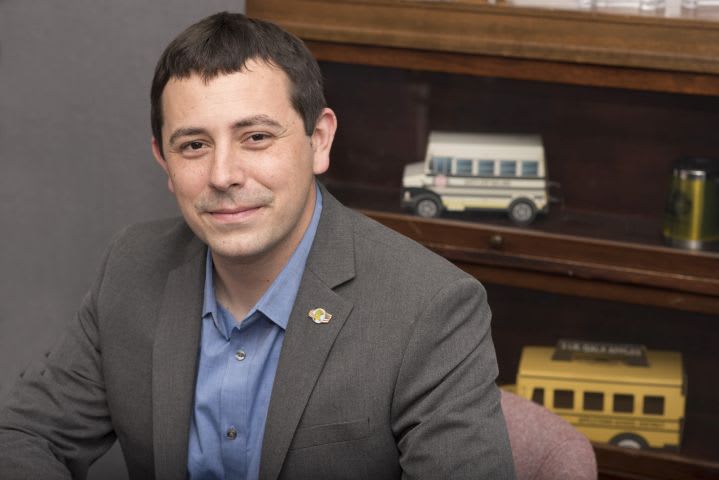
Kevin Harrison assumed the role of North Carolina state director when longtime director Derek Graham retired in February. Harrison oversees a multi-pronged approach to crossing safety, including pilots for extended stop arms and bumper-level strobe lights.
Kevin Harrison assumed the role of North Carolina state director when longtime director Derek Graham retired in February. Harrison oversees a multi-pronged approach to crossing safety, including pilots for extended stop arms and bumper-level strobe lights.
RALEIGH, N.C. — North Carolina has a new leader for its pupil transportation system: Kevin Harrison has taken over the role from longtime director Derek Graham.
Harrison officially took on the position in late February as Graham was stepping down to retire. (Graham is now working as a consultant.) Harrison had previously worked as a transportation computer consultant for the North Carolina Department of Public Instruction since 2005, training employees on using the statewide system for fleet and inventory management, supporting all things computer-related, and helping with legislative and funding issues, he said.
Harrison takes the helm at a busy time as school transportation safety efforts are advancing in the state: An extended school bus stop-arm project is quickly progressing, and a proposed bill, SB 55, which would allow video from stop-arm cameras to be used to penalize violators, is making its way through the state House of Representatives after passing the Senate at the end of March.
In late April, the North Carolina Department of Public Instruction approved 300 additional extended stop arms as part of an ongoing pilot project that began in 2015 at Guilford County Schools. Extended stop-arm supplier Bus Safety Solutions worked with the department to develop the stop arm. Ten counties participated in the initial pilot, and 10 more counties were added to the pilot this year.
“The people that have [the stop arms] so far are pleased with [them], so we allowed some expansion,” Harrison said.
At the beginning of the 2017-18 school year, there will be 340 extended stop arms in service, he added.
Additionally, the state recently started conducting a pilot that tests bumper-level strobe lights that alternate along with an eight-light system. The bumper-level lights will be tested in one or two counties with a small number of vehicles, Harrison said.
Even with the progress on pilot projects, Harrison’s first few months on the job haven’t all been smooth sailing: Just one month after he stepped into the position, a tragedy occurred. On March 27, a teenage student was struck and killed by an illegally passing motorist while the student was crossing the road to board his bus.
Harrison and his department staff rushed to assure parents of all the efforts the state has made and continues to make, such as those previously mentioned, to further improve safety. That multi-pronged approach also includes practices adopted in the last few years, such as a driver hand signal to communicate with students when it is safe to cross the street, and requiring documentation of additional school bus safety training for every student.
“We are trying multiple avenues simultaneously to reduce incidents. We are taking the approach [that] more can be done, because school transportation is the safest way to get to and from school,” Harrison said. “Students are most vulnerable when they are loading and unloading, and that is an area we have to look at.”
Meanwhile, a recent near-miss incident, in which a student just escaped being struck by a motorist, drove home to Harrison the need for a multifaceted safety approach. A group of five students received the signal from their bus driver that it was safe to cross the street when the motorist allegedly drove past the bus “at 55 miles an hour,” Harrison said.
“The [students] were not looking while they were crossing, and the bus driver thankfully got on the horn, and the driver swerved,” he added. “But if you watch the video, the kids, except one, would not have even seen the car before it hit them. They kept right on walking.”
“We know that we have to continue to impress upon students that … when you’re walking on a roadway, it’s always dangerous, and you always have to look. That’s going to be another area we continue to emphasize.”
More Safety

How to Build a Better School Bus Driver Training Program
Is it time to strengthen your driver training? Here’s how to pick the right talent and improve recruitment, retention, and safety. This video is brought to you by IC Bus.
Read More →
Recent School Bus Accidents Leave 2 Dead, 2 Injured
Four school bus crashes in Florida, Illinois, and Georgia highlight risks in transportation lots, at bus stops, and during student loading and unloading.
Read More →
When Every Second Matters, Clarity Keeps Routes Moving
From routine delays to urgent incidents, strong communication practices help drivers, dispatchers, schools, and families respond with confidence.
Read More →

What Happens When a School Bus Catches Fire — and What Can Help
School bus fires are rare but can be devastating. Learn how advances in fire suppression and asset protection help fleets detect fires earlier, reduce damage, and improve safety.
Read More →
Geotab Launches Tool to Help Fleets Investigate Road Incidents
Geotab Investigations combines telematics data, video, documents, and other evidence to help fleets reconstruct incidents, resolve claims, and determine what happened.
Read More →
Texas Sixth Grader Wins 2026 National School Bus Safety Poster Contest
Sai Darshana Yekolu of Moseley Middle School in Prosper, Texas, was named the newest winner for her artwork, bringing the theme of “Safe Rides, Everyday Heroes” to life.
Read More →
Doing More With Less: How Transportation Directors Can Prioritize Safety Amid Budget Uncertainty
With diesel prices soaring and nearly one-third of transportation directors expecting budget cuts, maintaining student safety has never been more challenging. Download this guide to learn how leading districts are prioritizing risk, funding critical safety technology, and building stronger budget cases with data.
Read More →
Walton County Schools Adds Gatekeeper Stop-Arm Enforcement System
The Florida district will deploy Gatekeeper’s updated Student Protector technology, which now incorporates AI to improve video evidence.
Read More →
How To Build a More Secure School Bus Yard During and After Hours
As thefts and overnight security threats continue, school transportation leaders are combining stronger operational practices with AI-enabled surveillance to better protect buses, facilities, and staff.
Read More →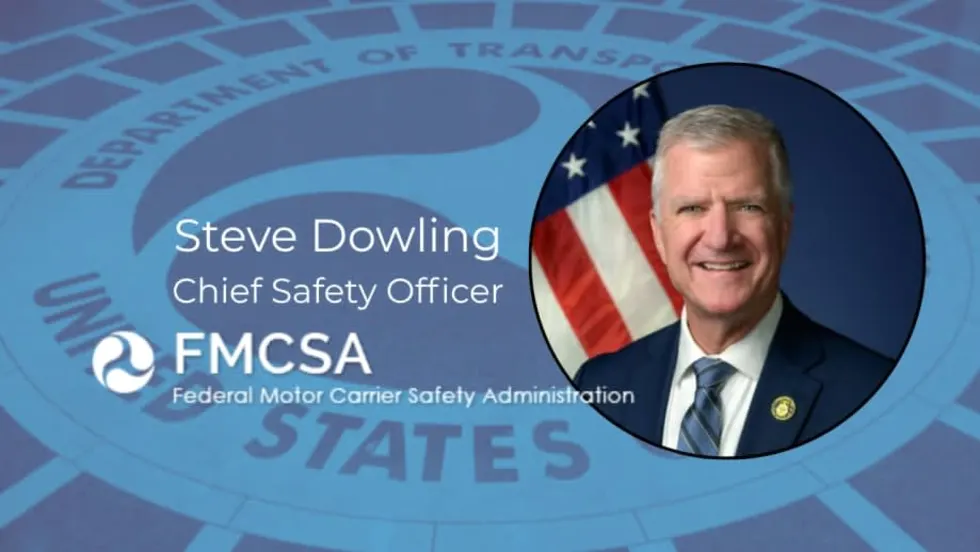
FMCSA Names New Chief Safety Officer: What School Bus Operators Should Know
Steve Dowling is set to lead the federal agency's efforts to advance commercial motor vehicle safety and reduce crashes, fatalities, and injuries on the nation's roadways.
Read More →