




Report Targets School Buses Caught on Camera Running Red Lights in New York
State associations respond to the attorney general’s report, which highlights traffic camera citations issued to school bus companies.

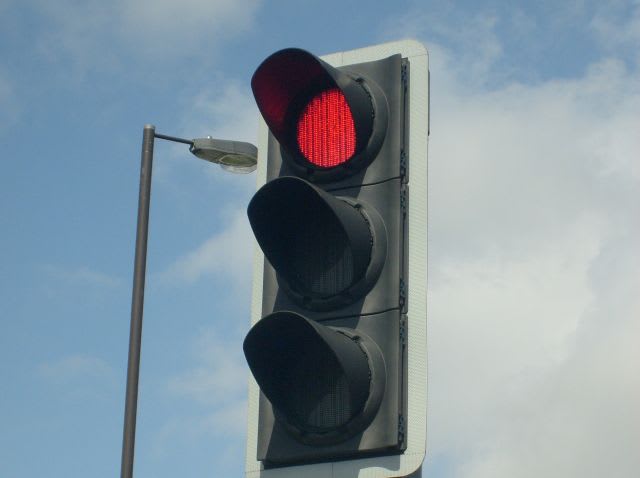
A new report from the New York attorney general highlights red light camera citations issued to school bus companies. Photo by Unisouth via Wikimedia Commons
A new report from the New York attorney general highlights red light camera citations issued to school bus companies. Photo by Unisouth via Wikimedia Commons
New York’s attorney general is calling for more oversight of school bus citations from traffic cameras, even as opponents of traffic cameras call for the removal of the devices.
On Tuesday — notably during National School Bus Safety Week — New York Attorney General Eric Schneiderman released a report titled “Wrong on Red: Report on School Bus Traffic Light Violations.” (To be clear, the report targets school buses running red lights at intersections, not other vehicles running the red lights on school buses.)
The Office of the Attorney General collected and analyzed data from 15 randomly selected school bus companies operating in New York’s Westchester and Suffolk counties. The investigation found that the surveyed companies in Suffolk County received 422 red light camera tickets in 2016, while the Westchester County companies received 296.
According to the report, some school bus drivers from those companies were caught on camera running red lights on more than one occasion in 2016. From the surveyed companies, 28 of the school bus drivers in Suffolk County and 20 of those in Westchester County were hit with more than one red light camera ticket while driving bus company vehicles.
In a press release issued with the release of the report on Tuesday, Schneiderman said that state law doesn’t require traffic camera citations to be reported to the New York State Department of Motor Vehicles (DMV) as part of the state’s oversight of school bus operators.
“Bus companies can rack up red light camera violations — yet have no legal obligation to report them to the state, or even use them as part of their evaluation of drivers,” the attorney general said. “It’s time for action to protect our kids by requiring bus companies to report red light violations to the state and the school districts they serve, and to use those violations in driver evaluations. We must crack down on the problem now, before it turns tragic.”
The New York Association for Pupil Transportation (NYAPT) issued a statement saying that the association “is deeply concerned about the findings” of the attorney general’s report.
“The investigative work that the attorney general has completed has revealed an area in which we can and should collaborate to improve the overall situation,” NYAPT said. “First and foremost, it is critical that all of us in school transportation deliver a clear and direct message to all of our school bus drivers about the importance of obeying the traffic signals they encounter on a daily basis.”
In its own statement, the New York School Bus Contractors Association (NYSBCA) noted that transportation providers take corrective action when a school bus driver is caught running a red light.
“In any of these instances where a driver is found to have gone through a stop light, it is not just swept under the rug — it is taken very seriously,” NYSBCA spokesman Al Roney said. “While different companies may have different disciplinary procedures, the driver is subjected to retraining, suspension, and/or possible termination.”
Both associations also highlighted the safety performance of school buses in general.
“We remind all the parents and school leaders in our state to recognize the overall outstanding safety record of New York’s school transportation operators — school district operators as well as private contractors,” NYAPT said.
“School buses are, by far … the safest mode of transportation for students to get back and forth to school each day,” Roney of NYSBCA said.
NYAPT and NYSBCA each said that they will work with the attorney general and other state officials to address the traffic light violation topic.
For his part, Schneiderman is proposing several changes in state law, including requiring school bus companies to report their number of red light camera violations to the New York Department of Motor Vehicles and to the school districts they serve. The attorney general is also recommending that any school bus drivers who accumulate three red light camera violations be disqualified from driving for one year.
Meanwhile, some legislators and members of the public are advocating the removal of red light cameras. As Newsday reported last month, an effort is underway to shut down Suffolk County’s red light camera program, which collects $31 million annually. Opponents claim that the program is designed to generate revenue rather than increase safety.
More Safety

How to Build a Better School Bus Driver Training Program
Is it time to strengthen your driver training? Here’s how to pick the right talent and improve recruitment, retention, and safety. This video is brought to you by IC Bus.
Read More →
Recent School Bus Accidents Leave 2 Dead, 2 Injured
Four school bus crashes in Florida, Illinois, and Georgia highlight risks in transportation lots, at bus stops, and during student loading and unloading.
Read More →
When Every Second Matters, Clarity Keeps Routes Moving
From routine delays to urgent incidents, strong communication practices help drivers, dispatchers, schools, and families respond with confidence.
Read More →

What Happens When a School Bus Catches Fire — and What Can Help
School bus fires are rare but can be devastating. Learn how advances in fire suppression and asset protection help fleets detect fires earlier, reduce damage, and improve safety.
Read More →
Geotab Launches Tool to Help Fleets Investigate Road Incidents
Geotab Investigations combines telematics data, video, documents, and other evidence to help fleets reconstruct incidents, resolve claims, and determine what happened.
Read More →
Texas Sixth Grader Wins 2026 National School Bus Safety Poster Contest
Sai Darshana Yekolu of Moseley Middle School in Prosper, Texas, was named the newest winner for her artwork, bringing the theme of “Safe Rides, Everyday Heroes” to life.
Read More →
Doing More With Less: How Transportation Directors Can Prioritize Safety Amid Budget Uncertainty
With diesel prices soaring and nearly one-third of transportation directors expecting budget cuts, maintaining student safety has never been more challenging. Download this guide to learn how leading districts are prioritizing risk, funding critical safety technology, and building stronger budget cases with data.
Read More →
Walton County Schools Adds Gatekeeper Stop-Arm Enforcement System
The Florida district will deploy Gatekeeper’s updated Student Protector technology, which now incorporates AI to improve video evidence.
Read More →
How To Build a More Secure School Bus Yard During and After Hours
As thefts and overnight security threats continue, school transportation leaders are combining stronger operational practices with AI-enabled surveillance to better protect buses, facilities, and staff.
Read More →
FMCSA Names New Chief Safety Officer: What School Bus Operators Should Know
Steve Dowling is set to lead the federal agency's efforts to advance commercial motor vehicle safety and reduce crashes, fatalities, and injuries on the nation's roadways.
Read More →