




Related- PHOTOS: National School Bus Safety Week 2019 in Pictures
Pupil Transportation Associations Tout the Yellow Bus as National School Bus Safety Week Begins
Three national associations highlight school bus safety benefits and COVID-19 precautions taken by pupil transporters.
by SBF Staff
October 20, 2020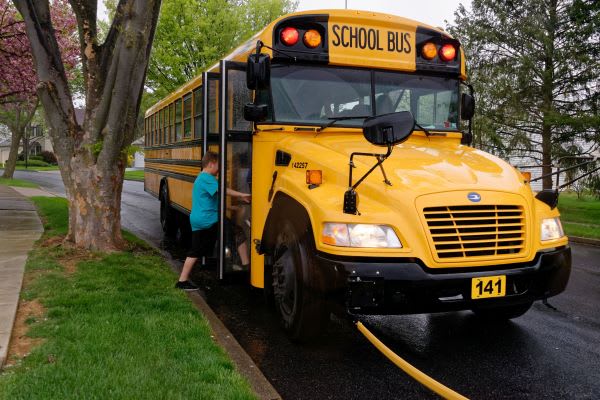
Three national associations highlight school bus safety benefits and COVID-19 precautions taken by pupil transporters during National School Bus Safety Week.
File photo courtesy Student Transportation Inc.
4 min to read
To help mark National School Bus Safety Week, the three major school transportation associations that comprise the American School Bus Council (ASBC) are stressing the integral role that the yellow bus plays in keeping students safe.
Held annually during the third full week of October (the 19th to the 23rd this year), National School Bus Safety Week encourages parents, students, teachers, motorists, school bus operators, school administrators, and the public to promote the importance of school bus safety.
“The yellow school bus saves hundreds of lives every year, has a positive impact on the environment and connects children to essential learning opportunities,” the associations — the National Association for Pupil Transportation (NAPT), the National Association of State Directors of Pupil Transportation Services (NASDPTS), and the National School Transportation Association (NSTA) — noted in a news release.
Safety Benefits
In particular, the ASBC shared the following school bus safety benefits:
· According to the National Highway Traffic Safety Administration (NHTSA), school buses are the safest form of transportation to and from school.
· School buses meet 48 federal safety standards — more than any vehicle on the road.
· Riding a school bus is 70 times safer than riding in a passenger vehicle and 10 times safer than walking to school.
· School buses are driven by professionals who undergo extensive pre-service training, driving certification, and additional testing to ensure that they can drive safely and protect students.
· School buses replace 36 passenger cars, thereby helping reduce traffic by keeping more than 17 million cars off the road in the U.S. each year.
· School buses are becoming even safer, thanks to technological features such as stop-arm cameras, student tracking, and lane departure systems.
Taking COVID-19 Precautions
In the midst of COVID-19, the school bus industry has been at the forefront of promoting a safe return to school. Student Transportation Aligned for Return to School, or STARTS Task Force — a collaboration of the NAPT, NASDPTS, NSTA, and school bus manufacturers — has researched, reviewed, and reported on matters relating to COVID-19 and student transportation.
The goal of this task force is to provide resources for student transportation professionals and their stakeholders to be used in the design and development of school opening plans and the development of sustainable operational support in a time of COVID-19.
“The task force knows that education starts with transportation, so we continue to work to prepare school districts across the nation for the challenges of in-person school start and operations in 2020–21,” said Mike Martin, executive director of NAPT.
“School buses are the safest way to get to and from school. And even in a COVID-19 world, that remains true,” said Curt Macysyn, NSTA’s executive director. “But this year, as we promote the importance of taking an active role in school bus safety, the presence of COVID-19 has required implementing new safety measures.”
National School Bus Safety Week is a great time, the associations noted, to remind students and parents of extra precautions that individuals in the industry are taking to ensure a safe ride for students:
• School bus drivers, bus aides, and all members of the transportation staff will undergo ongoing monitoring for COVID-19 symptoms via screenings, self-monitoring, and routine testing. Individuals who exhibit COVID-19 symptoms or have been in close contact with someone who has tested positive for COVID-19 will be asked to stay home until it is deemed safe for them to return to work.
• Drivers, aides, and staff will wear a mask and possibly other personal protective equipment (PPE) in accordance with state and local guidelines and sanitize their hands throughout the day.
• Schools will increase ongoing and routine cleaning and sanitization of high-touch surfaces within school buses such as handrails, seat backs, etc. Increased deep cleaning will also take place as needed.
• Students may be required to wear face coverings and parents may be expected to ensure they do not allow their children to board the bus if they exhibit COVID-19 symptoms or have been exposed to the virus.
• Based on reopening plans and locally adopted school schedules, many districts may alter routes, seat assignments, and plans for extracurricular travel.
• School districts will have additional procedures and requirements in place for special-needs students.
In addition to these new COVID-19 measures, Charlie Hood, executive director of NASDPTS, also encourages the public to treat students as pedestrians to help keep them safe while traveling to school.
He noted that NHTSA has designated October as National Pedestrian Safety Month and encourages motorists to be aware of students by following slower speed limits in school zones and in neighborhoods where children are present.
“Knowing when to stop for a bus if you are a driver and how to approach and leave the bus if you are a passenger is imperative,” Hood added.
More Safety

How to Build a Better School Bus Driver Training Program
Is it time to strengthen your driver training? Here’s how to pick the right talent and improve recruitment, retention, and safety. This video is brought to you by IC Bus.
Read More →
Recent School Bus Accidents Leave 2 Dead, 2 Injured
Four school bus crashes in Florida, Illinois, and Georgia highlight risks in transportation lots, at bus stops, and during student loading and unloading.
Read More →
Sponsored•September 8, 2026
When Every Second Matters, Clarity Keeps Routes Moving
From routine delays to urgent incidents, strong communication practices help drivers, dispatchers, schools, and families respond with confidence.
Read More →

What Happens When a School Bus Catches Fire — and What Can Help
School bus fires are rare but can be devastating. Learn how advances in fire suppression and asset protection help fleets detect fires earlier, reduce damage, and improve safety.
Read More →
Geotab Launches Tool to Help Fleets Investigate Road Incidents
Geotab Investigations combines telematics data, video, documents, and other evidence to help fleets reconstruct incidents, resolve claims, and determine what happened.
Read More →
Texas Sixth Grader Wins 2026 National School Bus Safety Poster Contest
Sai Darshana Yekolu of Moseley Middle School in Prosper, Texas, was named the newest winner for her artwork, bringing the theme of “Safe Rides, Everyday Heroes” to life.
Read More →
Sponsored•August 27, 2026
Doing More With Less: How Transportation Directors Can Prioritize Safety Amid Budget Uncertainty
With diesel prices soaring and nearly one-third of transportation directors expecting budget cuts, maintaining student safety has never been more challenging. Download this guide to learn how leading districts are prioritizing risk, funding critical safety technology, and building stronger budget cases with data.
Read More →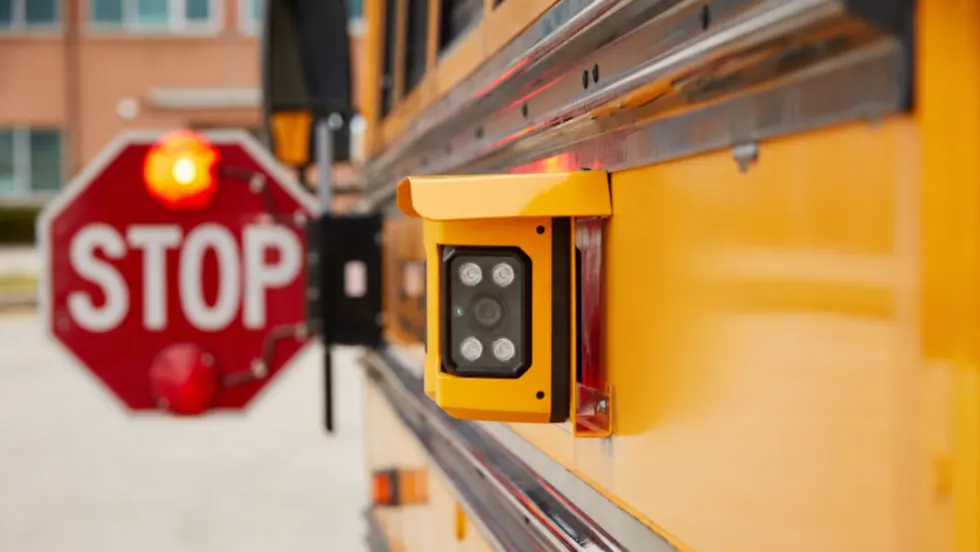
Walton County Schools Adds Gatekeeper Stop-Arm Enforcement System
The Florida district will deploy Gatekeeper’s updated Student Protector technology, which now incorporates AI to improve video evidence.
Read More →
How To Build a More Secure School Bus Yard During and After Hours
As thefts and overnight security threats continue, school transportation leaders are combining stronger operational practices with AI-enabled surveillance to better protect buses, facilities, and staff.
Read More →
FMCSA Names New Chief Safety Officer: What School Bus Operators Should Know
Steve Dowling is set to lead the federal agency's efforts to advance commercial motor vehicle safety and reduce crashes, fatalities, and injuries on the nation's roadways.
Read More →