





Have You Read: How to Find Funding for Alt-Fuel School Buses
Praise for Clean School Bus Funding Meets Political Concerns
Environmentalists welcome the latest round of funding from the Environmental Protection Agency via the Bipartisan Infrastructure Law. But some politicians don't approve of the focus on electric vehicles.
April 25, 2023
Some lawmakers worry the Environmental Protection Agency has put too much emphasis on electric buses with the Clean School Bus Program.
Image: Canva
5 min to read
The new round of federal clean school bus funding from the Environmental Protection Agency - $400 million in grants supplied by the Bipartisan Infrastructure Law – is celebrated among those looking to transition the country’s school bus fleets to electric and other zero- and low-emission vehicles. But some politicians worry the agency is too focused on electric vehicles.
The new funding round consists of two sub-programs: one for school districts and tribal applicants, and a third-party program for applicants among manufacturers, vehicle dealers, school bus service providers, and private fleet operators. The EPA expects to award as many as 50 awards throughout the country.
Praise for the New EPA Funding Opportunity
“The EPA’s Clean School Bus Program is providing a crucial boost to the nationwide movement to provide our children with a clean, healthy ride to school – especially in underserved communities that need it most,” said Sue Gander, director of the Electric School Bus Initiative at the World Resources Institute. “The overwhelming preference for electric school buses seen in the first round of applications serves as further evidence that the electric school bus moment is here. We’re looking forward to seeing the second round of Clean School Bus Program funding complement last year’s rebate program, investing to electrify school bus fleets that will continue to pay off for districts, through lower maintenance and fuel costs over time, and protect the health of children, drivers, communities, and the planet.”
The Sierra Club, a founding member of the Alliance for Electric School Buses, welcomed news of the grant opportunity.
Said Eric Willadsen, representative with the Clean Transportation for All campaign: “The demand for electric school buses is at an all-time high, and for good reason: Electrifying our nation’s school buses will bring immense benefits to children’s health, the well-being of bus drivers, and our climate. Young people in our most vulnerable communities are exposed to dirty diesel exhaust every day in their commutes to school, and the funding going to school districts to reduce this dangerous exposure pollution is long overdue. The EPA’s Clean School Bus Program continues to be a model example of how electrifying our heavy-duty vehicles improves the quality of life for residents across the nation while cutting climate pollution from the transportation sector.”
“School buses use more oil and produce more harmful emissions than other vehicles on the road, and our children are paying the price,” said Ben Prochazka, executive director of the Electrification Coalition. “We must urgently shift to cleaner electric school buses. Electric school buses not only reduce pollution, but they can also reduce fuel and maintenance costs for schools – saving schools as much as $10,000 per year per bus. Add in that their large batteries can provide backup power to communities during emergencies with vehicle-to-grid technology and it’s clear that electric school buses are a win-win for kids, schools, and communities. The Electrification Coalition believes every child deserves a clean ride to school and we are glad to see the EPA continuing to invest in our children.”
Daoud Chaaya, vice president of sales, aftermarket and marketing for Thomas Built Buses, said: "We're thrilled to see the EPA and the current administration taking these next steps to further accelerate the electrification of our industry. As we saw with the first round of funding, these new grants from the Clean School Bus Program will play a crucial role in reducing emissions and, ultimately, make bus rides to and from school cleaner and safer for our children."
School transportation provider First Student's head of electrification, Kevin Matthews, agreed.
"This latest round of funding from the U.S. EPA is an important step toward ensuring cleaner air, better learning experiences, and healthier futures for children across the country," Matthews said. "Replacing just one diesel school bus with an electric school bus can reduce greenhouse gas emissions by 54,000 pounds each year, improving health outcomes for children and communities."
Blue Bird's Britton Smith, senior vice president of electrification and chief strategy officer, said: "We applaud the U.S. Environmental Protection Agency's $400-million grant program to accelerate the adoption of clean student transportation. This program will benefit in particular school districts committed to converting larger bus fleets from dirty diesel to clean, zero- and low-emission vehicles."
Some Politicians Don’t Favor the Program
The program hasn’t been popular with everyone, however. In a recent letter to EPA Administrator Michael S. Regan, House Energy and Commerce Committee Chairwoman Cathy McMorris Rodgers and Bill Johnson, chair of the Environment, Manufacturing, and Critical Materials Subcommittee, complained about the agency’s focus on electric buses.
They wrote that the EPA “ignores legislative intent, favors electric” and that “The EPA and the federal government at large should support local school districts’ efforts to increase the efficiency of their bus fleets, not mandate what types of school buses should be on the roads across America.”
They also accused the EPA of picking winners and losers, noting that compressed natural gas buses can reduce tailpipe greenhouse gas emissions and can be quickly refueled at a public station, rather than taking six to eight hours to recharge.
The letter cited concerns raised by EPA Inspector General Sean O’Donnell, who reportedly said that the Clean School Bus Program “will create demand for electric school buses that, based on current supply limitations, will far exceed supply, placing associated funds at risk of not being properly expended.”
According to an NPR report, O’Donnell also told legislators: “We have seen this before: the equation of an unprepared agency dispensing an unprecedented amount of money times a large number of struggling recipients equals a high risk of fraud, waste, and abuse.”
The EPA, during the first funding round in 2022, held webinars on the topic of preventing fraud.
The first information session about this funding opportunity is scheduled for May 10 at 3 p.m. Eastern. Grant applications are due by Aug. 22, 2023.
More Alternative Fuels

CALSTART and Forth Combine to Form Catalyst Mobility
The new name represents a renewed vision for the nonprofit focused on advancing clean, equitable, and affordable transportation solutions that move people and goods.
Read More →
Alt-Fuel Moves: New Buses, Charging Hubs & Real-World EV Testing
Propane and electric school bus deployments continue to grow as districts add new vehicles, expand charging infrastructure, and gather more real-world operating data.
Read More →
Fewer Electric School Bus Models Reshape the U.S. Market
WRI’s latest buyer’s guide points to a consolidating electric school bus market, but fewer options may reflect a maturing industry rather than fewer meaningful choices for school bus operators.
Read More →
The Fuel Budget You Can Actually Predict: How Propane Autogas Keeps Money in the Classroom
Learn how propane autogas helps school districts manage fuel costs with predictable pricing, lower maintenance, and reduced emissions from former transportation director Joel Stutheit.
Read More →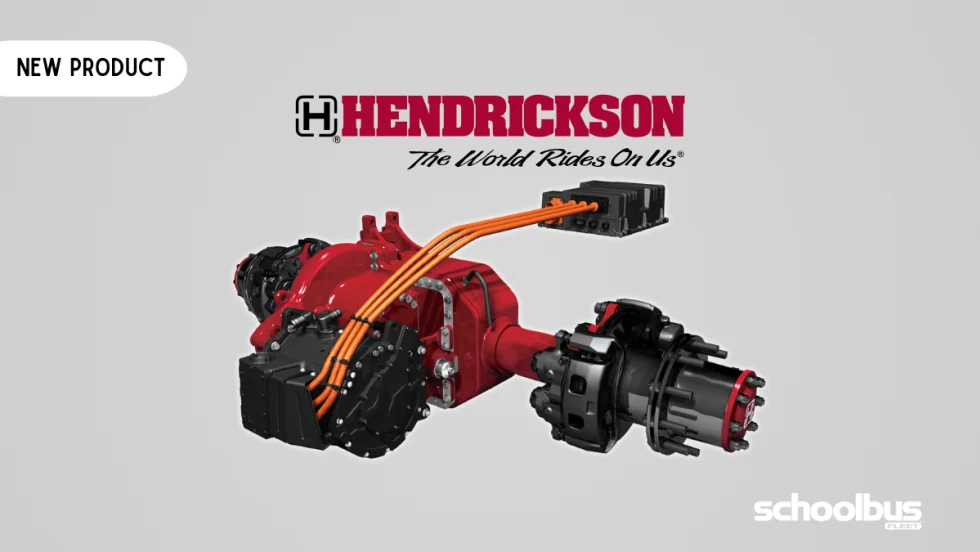
Hendrickson, Driventic Introduce New Electric Powertrain for School Buses
ELECTRAAX, the electrified, lightweight drive axle offers integrated ePowertrain efficiency and modular flexibility for Class 6–7 school bus use.
Read More →
The Mobility House Joins PowerFlex in Fleet Electrification Deal
The acquisition combines intelligent charging software, bidirectional charging expertise, and fleet electrification services to support the growing adoption of electric school buses across North America.
Read More →
Alt-Fuel Moves: Electric School Bus Investments Hit the Road
See which districts across the U.S. are putting electric school buses into service, expanding charging infrastructure, and planning the next phase of fleet electrification.
Read More →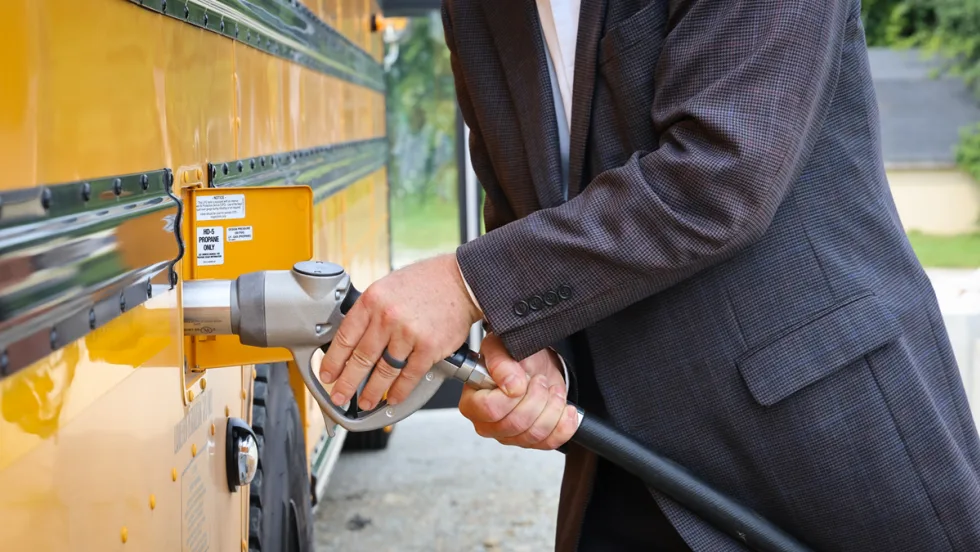
With Fuel Volatility Ahead, School Districts Turn to Propane
While diesel prices peaked above $5 this spring, districts with propane autogas-powered fleets paid under $2 per gallon, according to PERC.
Read More →
EPA Unveils Proposed Changes to 2027 Heavy-Duty Engine Rules
The federal agency has proposed changes to next year’s targets that would eliminate DEF derates, ease warranty requirements, and retain current NOx emissions standards.
Read More →
Alt-Fuel Moves: EV Charging & Infrastructure Projects Gain Momentum
The latest developments include new funding, charging infrastructure, utility investments, and fleet technologies designed to support the transition to electric school buses nationwide.
Read More →