





Did You Miss: Game Changers in Student Transportation
NYSBCA President Seeks Legislative Help for EV School Bus Adoption
Nick Vallone, president of the New York School Bus Contractors Association, urged a joint committee on elementary and secondary education to consider proposals to make electric school buses more affordable and to attract bus drivers.
February 10, 2023
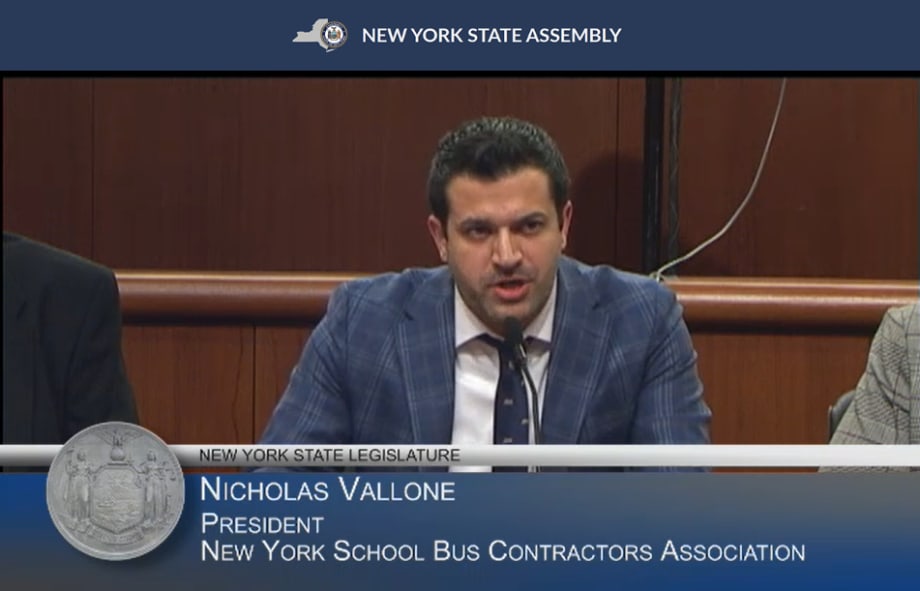
The NYSBCA president proposed eliminating sales tax on purchases of new electric buses, more contract flexibility for transportation providers, and a tax credit for school bus drivers.
Image: New York State Assembly
3 min to read
Nick Vallone, president of the New York School Bus Contractors Association (NYSBCA), on Feb. 8 testified before the New York State legislature about the electrification of the state’s school bus fleets.
In prepared remarks to a joint legislative budget hearing on elementary and secondary education, Vallone made three proposals on behalf of the NYSBCA’s 200 members, private pupil transportation services that carry students for 85% of New York’s school districts.
His proposals included:
Eliminating sales tax on purchases of new electric buses, which he estimates would save as much as $30,000 per electric school bus.
Adding flexibility to multi-year pupil transportation contracts to provide a mechanism for contractor compensation due to unforeseen circumstances and expenses associated with electric school buses.
Setting up a $2,000 tax credit for school bus drivers in good standing, with a sunset date around 2035 (when New York’s fleets are expected to be fully electrified).
Said Vallone: “Despite the significant advantages of electric buses, the upfront purchase price has emerged as the greatest obstacle to their adoption. New electric buses can cost 2-3x (or even greater) compared to a traditional new diesel bus. Fleet operators just can’t afford the upfront costs, even with grants and subsidies. And while the trend is clear – electric vehicles continually get cheaper – the funding gap for now remains too great for many. One creative way to speed up the conversion is by eliminating the sales tax associated with the purchase of new electric school buses and parts.”
With the sales tax gone, Vallone went on, school bus operators would have money available for driver wage increases, higher insurance premiums, and additional safety equipment.
Curt Macysyn, executive director of the National School Transportation Association (NSTA), noted that variants of Vallone’s first two proposals were discussed at the recent Midwinter Meeting in San Diego. He said the sales tax idea would be state-specific, “because not every state charges sales tax on school bus sales.”
However, Macysyn noted that “taking money from the federal program (Clean School Bus) to pay another governmental entity doesn’t seem to make sense.” He said it also wouldn’t be fair to expect contractors to foot the bill for sales tax on their own.
“We raised the issue with EPA, but (it’s) more likely to be addressed at the state level, so we are glad that Nick is highlighting,” Macysyn said.
The NSTA also supports the tax credit idea.
The proposals didn’t gain any immediate traction among members of the New York State Senate or Assembly during the Feb. 8 session. In fact, one member of the committee, State Sen. Thomas O’Mara, suggested it might be too soon to act.
New York Gov. Kathy Hochul has mandated conversion of the entire school bus fleet of New York to zero-emission vehicles by 2035, and O’Mara noted that the process officially starts in 2027.
Assemblywoman Crystal D. Peoples-Stokes recognized “a lot of reluctance to think about electric buses,” she said. “It’s a scary notion, but at some point we’ve got to get there.”
“We need to get there and we can get there,” Vallone replied.
More Alternative Fuels

CALSTART and Forth Combine to Form Catalyst Mobility
The new name represents a renewed vision for the nonprofit focused on advancing clean, equitable, and affordable transportation solutions that move people and goods.
Read More →
Alt-Fuel Moves: New Buses, Charging Hubs & Real-World EV Testing
Propane and electric school bus deployments continue to grow as districts add new vehicles, expand charging infrastructure, and gather more real-world operating data.
Read More →
Fewer Electric School Bus Models Reshape the U.S. Market
WRI’s latest buyer’s guide points to a consolidating electric school bus market, but fewer options may reflect a maturing industry rather than fewer meaningful choices for school bus operators.
Read More →
The Fuel Budget You Can Actually Predict: How Propane Autogas Keeps Money in the Classroom
Learn how propane autogas helps school districts manage fuel costs with predictable pricing, lower maintenance, and reduced emissions from former transportation director Joel Stutheit.
Read More →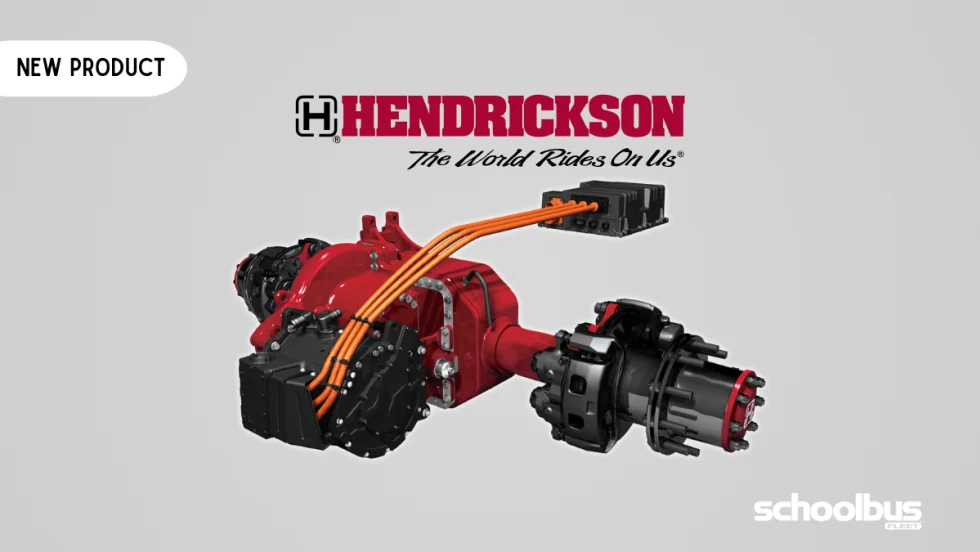
Hendrickson, Driventic Introduce New Electric Powertrain for School Buses
ELECTRAAX, the electrified, lightweight drive axle offers integrated ePowertrain efficiency and modular flexibility for Class 6–7 school bus use.
Read More →
The Mobility House Joins PowerFlex in Fleet Electrification Deal
The acquisition combines intelligent charging software, bidirectional charging expertise, and fleet electrification services to support the growing adoption of electric school buses across North America.
Read More →
Alt-Fuel Moves: Electric School Bus Investments Hit the Road
See which districts across the U.S. are putting electric school buses into service, expanding charging infrastructure, and planning the next phase of fleet electrification.
Read More →
With Fuel Volatility Ahead, School Districts Turn to Propane
While diesel prices peaked above $5 this spring, districts with propane autogas-powered fleets paid under $2 per gallon, according to PERC.
Read More →
EPA Unveils Proposed Changes to 2027 Heavy-Duty Engine Rules
The federal agency has proposed changes to next year’s targets that would eliminate DEF derates, ease warranty requirements, and retain current NOx emissions standards.
Read More →
Alt-Fuel Moves: EV Charging & Infrastructure Projects Gain Momentum
The latest developments include new funding, charging infrastructure, utility investments, and fleet technologies designed to support the transition to electric school buses nationwide.
Read More →