




NTSB issues recommendations from 2014 truck-motorcoach crash
After investigating the Orland, California, crash in which five students were among those killed, the agency calls for motorcoach survivability enhancements.

WASHINGTON, D.C. — The National Transportation Safety Board (NTSB) has recommended that motorcoach interiors be designed with improved flammability requirements and improved emergency exits, and that event data recorders be installed on large buses.
The recommendations resulted from the investigation of the April 2014 truck-motorcoach collision in Orland, California, in which 10 people were killed.
In the crash, a 2007 Volvo truck-tractor operated by FedEx Freight Inc. crossed a 58-foot-wide median, struck a 2013 Nissan Altima passenger car, and then collided head-on with a 2014 Setra motorcoach. The motorcoach was transporting high school students and chaperones on a trip to visit a college.
The truck and motorcoach drivers were killed, along with eight motorcoach passengers — five students and three chaperones. Thirty-seven motorcoach passengers and two occupants of the passenger car were injured.
Investigators were unable to determine why the truck crossed the median, but they ruled out truck and motorcoach driver experience, licensing and training, alcohol and drug use, mechanical factors and weather as possible causes of the crash. Likewise, the agency found no evidence that the truck driver was experiencing distraction or fatigue, or that he intentionally crossed into opposing traffic.
“The investigation brought to light the difficulty of getting out of a burning motorcoach,” NTSB Chairman Christopher Hart said. “It is unacceptable for anyone who survives a crash to perish in a post-crash fire because the exits were too hard to find or too difficult to use.”
According to NTSB, the investigation revealed inadequacies in the fire performance standards for commercial passenger vehicle interiors, Federal Motor Vehicle Safety Standard (FMVSS) 302. The flammability testing under FMVSS 302 involves a small-scale fire source, such as those that might be caused by matches or cigarettes, which NTSB said differ drastically from the actual common causes of bus fires.
The board also found that neither the motorcoach driver who initiated the trip nor the relief driver gave a safety briefing or played the prerecorded safety briefing that the company had provided, and many passengers struggled to locate and open the emergency exit windows. At least two passengers died because they could not exit the motorcoach before succumbing to asphyxiation due to inhaling smoke from the fire.
According to NTSB, a pre-trip safety briefing or a video about evacuation could have expedited the evacuation process and possibly saved lives and mitigated injuries. Also, Hart said that neither the truck-tractor nor the motorcoach had event data recorders, which impeded the investigation of the crash’s cause.
As a result of the investigation, the NTSB issued safety recommendations for commercial passenger vehicles that address fire performance standards; pre-trip safety briefings; improving vehicle design to facilitate evacuations; requiring the development of minimum performance standards for event data recorders in trucks and large buses; and requiring event data recorders to be installed in these vehicles.
The recommendation on requiring event data recorders, which NTSB has issued before, includes school buses. It specifies that those systems for school buses should record the status of flashing red lights, among other factors.
To view NTSB’s findings, the probable cause and all recommendations, go here. The full report will be available on the NTSB website in several weeks.
More Management
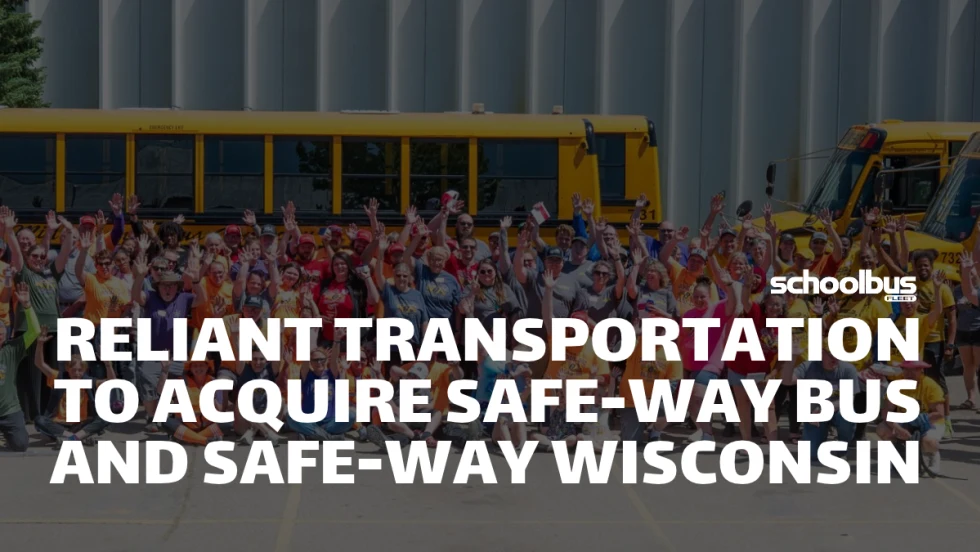
Reliant Transportation to Acquire Safe-Way Bus, Expand Midwest Operations
The Minnesota and Wisconsin-based school and charter service operator adds 160 buses to Reliant's fleet as the company continues its expansion.
Read More →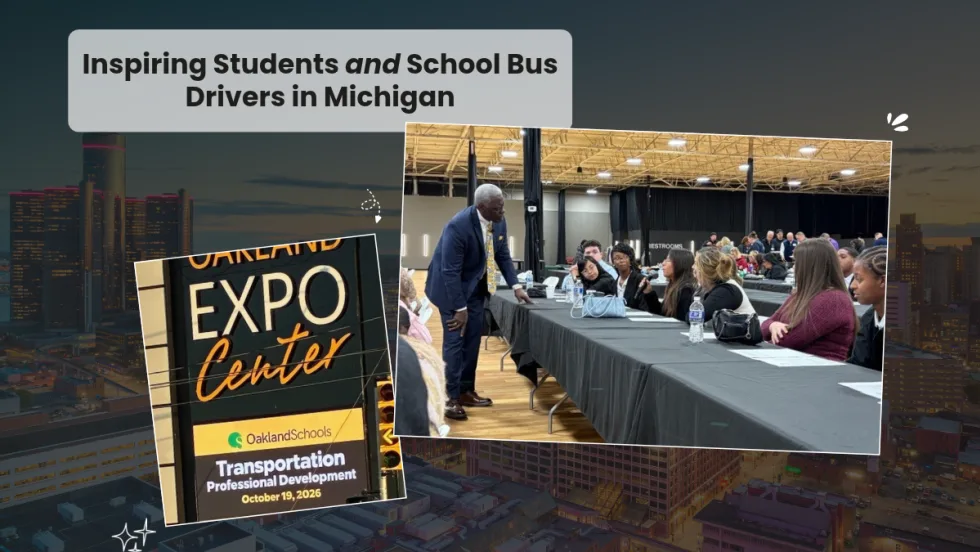
Michigan ISD Brings Students, School Bus Staff Together for Leadership Training
Oakland Schools is expanding its transportation staff training to include students, designed to build mutual respect and stronger relationships between both.
Read More →
Four Lessons Learned from My Own ‘Mount Rushmore’ of Leaders
What makes a great leader? Shannon Barnett shares what he's learned from influential mentors and why leaders should seek wisdom and pass it on.
Read More →
Changing Lanes: Catalyst Mobility, Netradyne, School Bus Logistics, Verra Mobility, Zonar
Get the rundown on who's been hired, promoted, and appointed to leadership positions at school transportation nonprofits, advisory companies, and tech providers.
Read More →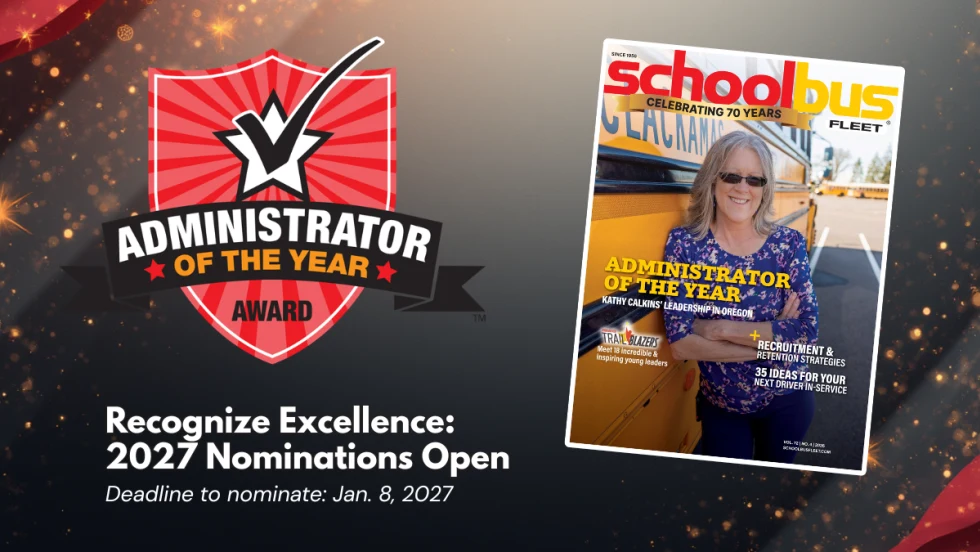
2027 School Bus Fleet Administrator of the Year: Nominations Now Open
Know a state or district-level transportation director who inspires others, leads by example, and goes above and beyond? Tell us about them for their chance to be recognized in this School Bus Fleet award!
Read More →
5 Questions: How CharterUP Brought a Marketplace to Student Transportation
What does it take to bring a transportation marketplace into K-12? Hear firsthand what CharterUP has learned about the unique needs of schools and bus operators.
Read More →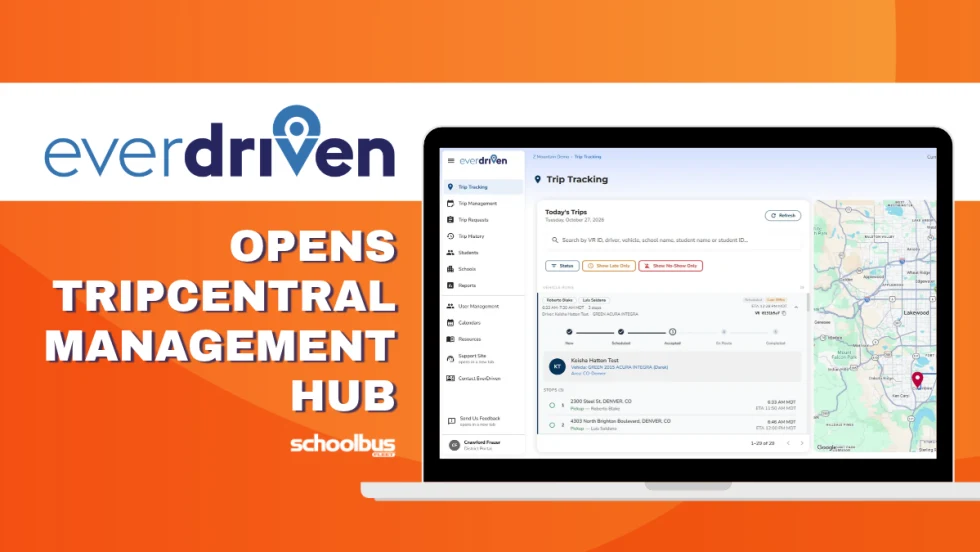
EverDriven Expands TripCentral Transportation Management Platform to All Partner Districts
The platform provides school districts with real-time trip tracking, student transportation scheduling tools, and pickup and drop-off management capabilities.
Read More →
6 School Transportation Trends to Watch: 2026 District Survey Results
School bus buying is up, fuel choices are shifting, and driver shortages persist. This and more in the latest K-12 public school survey, plus the largest fleets in the U.S.
Read More →
The 100 Largest School Bus Fleets in America: 2026 Rankings
Which public K-12 school districts are the largest in the nation in terms of bus fleet size? Here are the new standings of the top 100 district fleets.
Read More →
EverDriven Launches Route Consolidation Calculator to Estimate Diesel Savings
As diesel prices hit record highs, the largest alternative transportation provider says a 10% route consolidation could save a 120-route district more than $78,000 a year in fuel alone.
Read More →