




NTSB Ends On-Scene Investigation in Chattanooga, Durham Takes New Safety Measures
The federal investigative agency finishes gathering evidence at the scene of the fatal school bus crash, although the driver declined an interview.

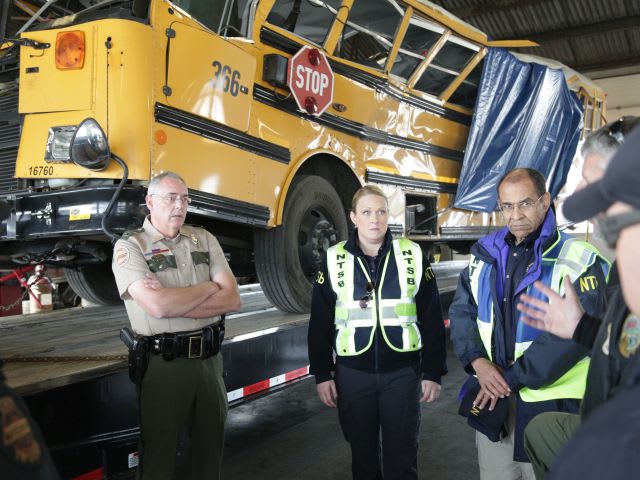
The National Transportation Safety Board (NTSB) has finished examining the school bus in the fatal crash in Chattanooga, Tennessee. NTSB photo by Nicholas Worrell
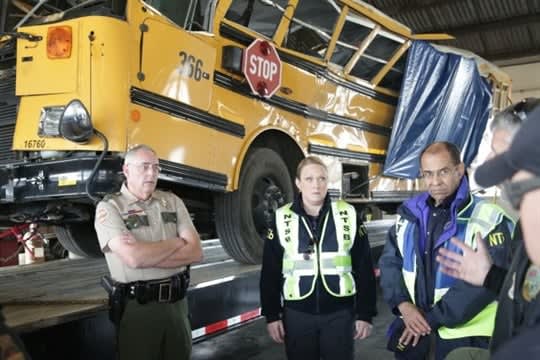
The National Transportation Safety Board (NTSB) has finished examining the school bus in the fatal crash in Chattanooga, Tennessee. NTSB photo by Nicholas Worrell
CHATTANOOGA, Tenn. — The National Transportation Safety Board (NTSB) has finished gathering evidence at the scene of the recent fatal school bus crash here, although the driver declined an interview with the investigative agency.
Six students were killed (one of whom died two days after the crash) and more than 20 were injured in the Nov. 21 incident. School bus driver Johnthony Walker, 24, was arrested and charged with vehicular homicide and other charges.
As part of its investigation, NTSB pursued an interview with Walker, but he reportedly declined on the advice of legal counsel. However, the agency worked to obtain the medical history of the driver, with subpoenas delivered to a local hospital and mental health facility and local pharmacies canvassed for records. Also, subpoenas were delivered for the driver’s cell phone records and his employment record with Amazon, which was in addition to his school bus driving employment.
In Chattanooga, NTSB also finished examining the school bus, obtained data from the engine control module and video recorders, and got 30 days of GPS data for the school bus and the route prior to the Nov. 21 crash.
The agency previously reported that Walker was not on his designated route when the crash occurred.
NTSB interviewed the school principal about Walker’s past behavior toward students and other complaints that had been lodged about his driving. Investigators were also working with the Tennessee Department of Children’s Services to set up interviews with student passengers.
NTSB said that it expects to publish a preliminary report on the Chattanooga crash within the next few weeks. After that, the next update from the agency will be the opening of the accident docket and notice of an NTSB board meeting on the matter. The agency said that its final report is likely to be ready for board review within 12 to 18 months.
The school bus in the Chattanooga crash was operated by Durham School Services. On Thursday, Durham CEO David Duke issued a second video statement (see below), this time detailing new safety measures that the company is taking. Those include a cloud-based complaint management system to connect schools directly to Durham, beginning immediately in Chattanooga and rolling out to the company’s entire customer base by the end of next year.
“Through this system, teachers and administrators will be able to quickly and directly report issues they have with individual buses or drivers,” Duke said. “This bolsters our existing system and enables us to more quickly take corrective action.”
Also, the company will add DriveCam video cameras, which record the driver and the road, to all 16,000 Durham School Services buses within the next two years, with its Chattanooga buses getting the technology by the end of this year.
The company will also appoint a chief safety data and compliance officer, who will work with the senior vice president of safety and will report to Duke.
“By creating this new executive position, we will have a dedicated leader and team to continuously review all available data to identify potential issues before they become actual issues,” Duke said.
Watch Duke’s second video statement below.
More Safety

How to Build a Better School Bus Driver Training Program
Is it time to strengthen your driver training? Here’s how to pick the right talent and improve recruitment, retention, and safety. This video is brought to you by IC Bus.
Read More →
Recent School Bus Accidents Leave 2 Dead, 2 Injured
Four school bus crashes in Florida, Illinois, and Georgia highlight risks in transportation lots, at bus stops, and during student loading and unloading.
Read More →
When Every Second Matters, Clarity Keeps Routes Moving
From routine delays to urgent incidents, strong communication practices help drivers, dispatchers, schools, and families respond with confidence.
Read More →

What Happens When a School Bus Catches Fire — and What Can Help
School bus fires are rare but can be devastating. Learn how advances in fire suppression and asset protection help fleets detect fires earlier, reduce damage, and improve safety.
Read More →
Geotab Launches Tool to Help Fleets Investigate Road Incidents
Geotab Investigations combines telematics data, video, documents, and other evidence to help fleets reconstruct incidents, resolve claims, and determine what happened.
Read More →
Texas Sixth Grader Wins 2026 National School Bus Safety Poster Contest
Sai Darshana Yekolu of Moseley Middle School in Prosper, Texas, was named the newest winner for her artwork, bringing the theme of “Safe Rides, Everyday Heroes” to life.
Read More →
Doing More With Less: How Transportation Directors Can Prioritize Safety Amid Budget Uncertainty
With diesel prices soaring and nearly one-third of transportation directors expecting budget cuts, maintaining student safety has never been more challenging. Download this guide to learn how leading districts are prioritizing risk, funding critical safety technology, and building stronger budget cases with data.
Read More →
Walton County Schools Adds Gatekeeper Stop-Arm Enforcement System
The Florida district will deploy Gatekeeper’s updated Student Protector technology, which now incorporates AI to improve video evidence.
Read More →
How To Build a More Secure School Bus Yard During and After Hours
As thefts and overnight security threats continue, school transportation leaders are combining stronger operational practices with AI-enabled surveillance to better protect buses, facilities, and staff.
Read More →
FMCSA Names New Chief Safety Officer: What School Bus Operators Should Know
Steve Dowling is set to lead the federal agency's efforts to advance commercial motor vehicle safety and reduce crashes, fatalities, and injuries on the nation's roadways.
Read More →