




‘No Transportation Zone’ Expanded to 1 Mile at Indiana High School
The move is expected to free up more buses for middle and elementary school service at Greater Clark County Schools.

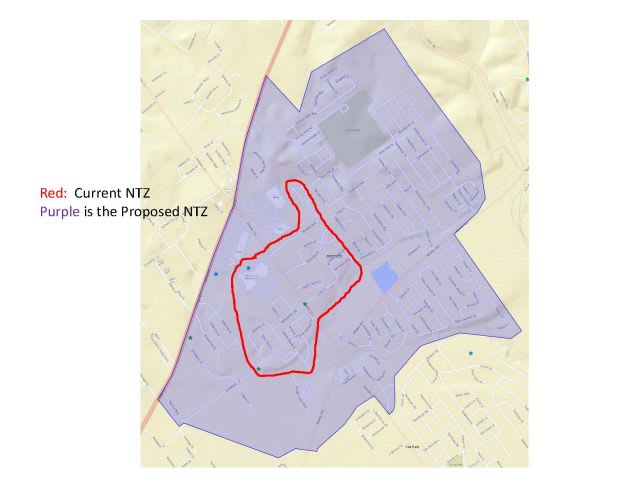
This map shows the previous “no transportation zone” (NTZ) for Jeffersonville High School outlined in red, with a larger area shaded in purple illustrating the new NTZ.
This map shows the previous “no transportation zone” (NTZ) for Jeffersonville High School outlined in red, with a larger area shaded in purple illustrating the new NTZ.
JEFFERSONVILLE, Ind. — Some high school students here will lose school bus service next year with an expansion of the “no transportation zone” (NTZ) around the school.
Greater Clark County Schools announced that it will enforce an adjusted NTZ for Jeffersonville High School students beginning with the 2018-19 school year.
According to Greater Clark County Schools, the new NTZ is an area of about 1 mile or less from the school. A map posted on the district website shows the previous NTZ for Jeffersonville High School outlined in red, with a larger area shaded in purple illustrating the new NTZ (see image above).
According to the district, there were 75 students living in the previous NTZ for Jeffersonville High School. Based on data from the 2017-18 school year, the NTZ expansion will directly affect 160 students.
Students who live in the NTZ will not receive school bus service. The district said in a Q&A on its website that those students’ options include “walking to school, riding with friends or family, riding a bike, or any other form of transportation.”
Also, parents can apply to have their children walk to a school bus stop outside of the NTZ. The district said that approval will be based on bus seat availability and safety of the student getting to the stop.
Greater Clark County Schools noted that NTZs are not new, and many neighboring school districts have NTZs of 2 miles in place for their high schools. Greater Clark County Schools has decided to cap its NTZs at 1 mile for all of its schools.
In a July 10 presentation to the school board, the district described the NTZ adjustment as an effort to ensure fairness across schools and effective use of funding.
“At a time when some districts look to eliminate all transportation services because of budget cuts, [Greater Clark County Schools] is being fiscally proactive, positioning the district to continue transportation services for those who do not live in an NTZ,” the board presentation said.
The move is also expected to provide more flexiblity with buses, enabling the district to move some routes to a two-run system and allowing more time to transport middle and elementary school bus riders.
“With the implementation of the expanded NTZ, this would give us the ability to eliminate three runs and condense two additional runs,” the board presentation said. “This will free up the mentioned buses to help alleviate timing issues at River Valley [Middle School]."
In the July 10 meeting, the Greater Clark County Schools board approved the adjusted NTZ for Jeffersonville High School for the 2018-19 school year. Also, the district said that its transportation department plans to review the NTZs for each school over the next several months.
More Management
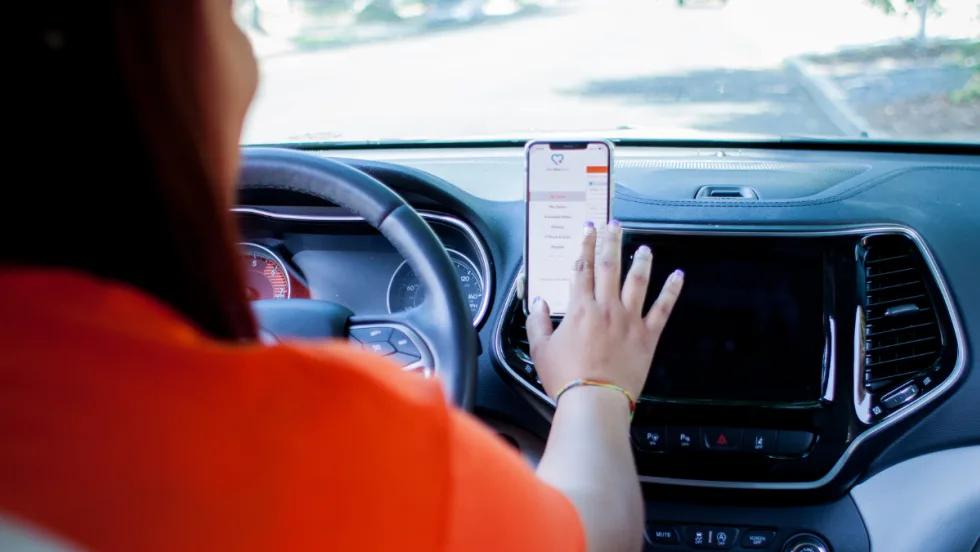
HopSkipDrive’s CareEngine Targets the ‘Exceptions’ in Student Transportation
The new platform works alongside districts’ existing transportation management systems to coordinate specialized rides, automate last-minute changes, and turn ride data into operational improvements.
Read More →
The Right Ride for Every Student: Navigating the New Student Transportation Ecosystem
How should districts blend school buses with small-vehicle transportation and other options? EverDriven CEO Mitch Bowling discusses safety, costs, partnerships, and strategy.
Read More →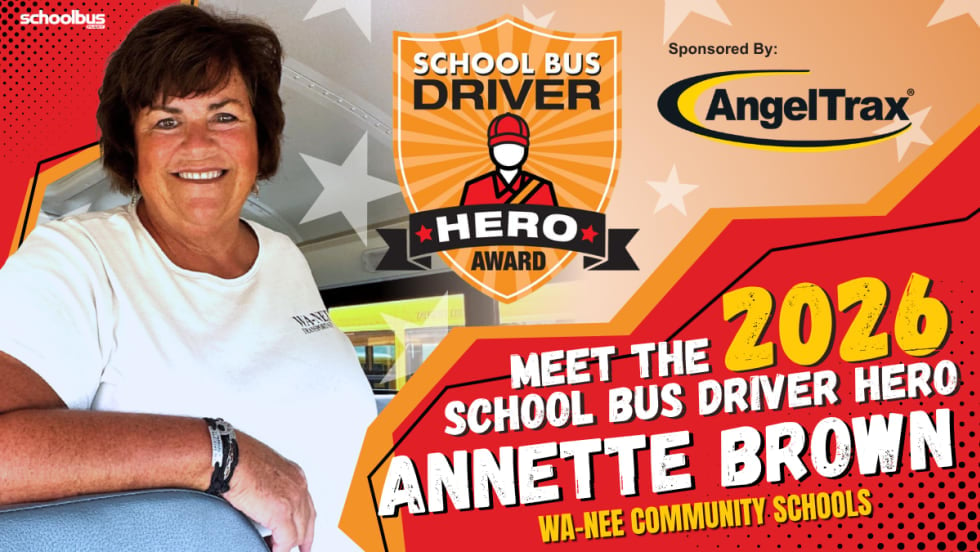
Annette Brown Always Takes the Extra Time: Meet Our 2026 School Bus Driver Hero
For more than 30 years, the Wa-Nee Community Schools driver has treated students like family, combining safety, compassion, and servant leadership to make a lasting difference on and beyond the school bus.
Read More →


How to Build a Better Driver Training Program
Ready to boost up your school bus instructor training? Here’s how to pick the right talent and improve recruitment, retention, and safety.
Read More →
CALSTART and Forth Combine to Form Catalyst Mobility
The new name represents a renewed vision for the nonprofit focused on advancing clean, equitable, and affordable transportation solutions that move people and goods.
Read More →
What Makes a Great School Bus Driver Trainer?
Choosing the right school bus driver trainer takes more than experience. Learn six keys to selecting and developing trainers and evaluating program effectiveness.
Read More →
School Bus Contractors Expand Through New Deals, Acquisitions & Partnerships
STA's Canadian division acquires Ontario-based G&L Stevenson Transport; Durham School Services adds a new district in California; First Student expands in New Jersey; and Minnesota Coaches rebrands and acquires Halo Transportation.
Read More →
Logan Bus Company Rolls Out AI Phone System for NYC School Bus Families
A summer pilot found that AI agents could handle most routine calls, freeing up time for customer service staff to focus on emergencies and complex family concerns.
Read More →
From Intent to Impact: What I Learned About Leadership from TAPT
A Texas transportation supervisor shares lessons on self-awareness, accountability, managing stress and building trust — and why investing in leadership development matters at every stage of your career.
Read More →
NAPT Names 2026 Award Recipients, Hall of Fame Inductee
Who earned national recognition for their work in student transportation? This year, NAPT named five recipients of its 2026 awards for service, safety, and leadership, plus its newest Hall of Famer.
Read More →