




Navigating the Shift to Electric Bus Air-Conditioning, Heating in 4 Steps
New Mexico School District Gets Air-Conditioned School Buses
The purchase was part of the Las Cruces Transportation Federation Local No. 6341 bus driver union's negotiations that led to a one-day strike in October 2021. The STS-NM general manager said the buses would be replaced no matter what.
by SBF Staff
January 18, 2022
100 new, air-conditioned school buses are being added to the fleet that services Las Cruces, New Mexico Public School District.
Photo courtesy Las Cruces Public Schools
2 min to read
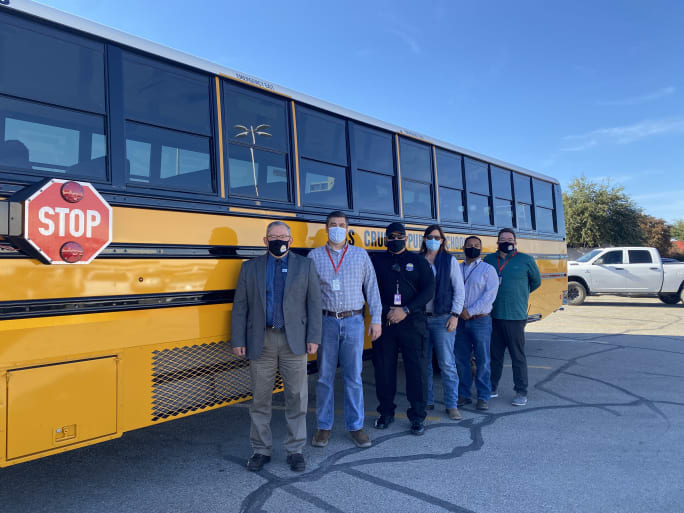
Las Cruces Public Schools district administrators jstand in front of one of the dozens of new air-conditioned school buses being used to transport students.
Photo courtesy Las Cruces Public Schools
Most of the school bus fleet that services the Las Cruces (New Mexico) Public School District is being replaced with brand new, air-conditioned school buses.
According to the Las Cruces Sun News, Student Transportation Specialists of New Mexico (STS-NM) received 92 brand new school buses this calendar year, with eight more on the way. Out of the 126 routes in Las Cruces Public Schools managed by STS, few older buses will remain. A local union school bus driver said in the summer, drivers will now be able to work in 70-80 degree weather, as opposed to 120-125 degree temperatures.
"Las Cruces Public Schools has made a commitment to student safety, and this new fleet is essential in that mission. The added comfort features will also ensure a better ride for our kids, and for our drivers who don't get nearly enough credit for the job they do for our district," district superintendent Ralph Ramos told School Bus Fleet.
This was part of the Las Cruces Transportation Federation Local #6341 bus driver union's negotiations that led to a one-day strike in October 2021. The STS-NM general manager told the Las Cruces Sun News the lifespan of a route bus is 12 years, and they would be replaced no matter what. The 100 buses being replaced have been in service daily since 2010. The 26 remaining route buses will be replaced when they've reached their own 12-year marks.
These replacements cost a little over $10 million. Some of the old buses are kept as back-ups in case of necessary service.
The buses are now equipped with air conditioning — three units in each. The old buses had no air conditioning. The new buses also have functioning AM and FM radio and built-in intercom systems. Most of the old buses had either malfunctioning intercom systems or none at all. Each bus now has three to four cameras to monitor drivers and students. Buses for special-education students have built-in car seats for students. Drivers no longer have to take external car seats in and out. The internal lights on the buses also turn on when the driver opens the door.
More Management

How to Build a Better Driver Training Program
Ready to boost up your school bus instructor training? Here’s how to pick the right talent and improve recruitment, retention, and safety.
Read More →
CALSTART and Forth Combine to Form Catalyst Mobility
The new name represents a renewed vision for the nonprofit focused on advancing clean, equitable, and affordable transportation solutions that move people and goods.
Read More →
What Makes a Great School Bus Driver Trainer?
Choosing the right school bus driver trainer takes more than experience. Learn six keys to selecting and developing trainers and evaluating program effectiveness.
Read More →


School Bus Contractors Expand Through New Deals, Acquisitions & Partnerships
STA's Canadian division acquires Ontario-based G&L Stevenson Transport while Durham School Services adds a new district contract in California, First Student adds a New Jersey contract, and Minnesota Coaches acquires Halo Transportation.
Read More →
Logan Bus Company Rolls Out AI Phone System for NYC School Bus Families
A summer pilot found that AI agents could handle most routine calls, freeing up time for customer service staff to focus on emergencies and complex family concerns.
Read More →
From Intent to Impact: What I Learned About Leadership from TAPT
A Texas transportation supervisor shares lessons on self-awareness, accountability, managing stress and building trust — and why investing in leadership development matters at every stage of your career.
Read More →
NAPT Names 2026 Award Recipients, Hall of Fame Inductee
Who earned national recognition for their work in student transportation? This year, NAPT named five recipients of its 2026 awards for service, safety, and leadership, plus its newest Hall of Famer.
Read More →
Sponsored•September 2, 2026
2026 State of Student Transportation Report
Driver shortages. Rising costs. Growing safety expectations. More data, but not enough time to act on it. The 2026 State of Student Transportation Report reveals what transportation leaders say is putting the most pressure on their operations—and where they’re investing next. See how your priorities compare.
Read More →
How to De-Escalate an Angry Person: 5 Steps for Handling Workplace Conflict
What makes emotions run high, and how should you handle an angry colleague or parent? Follow these steps for staying calm, listening, showing empathy, and resolving conflict.
Read More →
Sponsored•September 1, 2026
What Readiness Looks Like This School Year
Learn about the challenges shaping the 2026–2027 school year, from persistent driver shortages and budget pressure to technology and readiness gaps. See how school districts are responding and adapting in Zonar’s 2026 Back-to-School Readiness Report.
Read More →