




NCST deliberations under way
Sessions held so far during the 15th National Congress on School Transportation have led to amendments to the Bus Body and Specifications, School Bus Inspection, Specially Equipped School Buses and Transportation for Students with Disabilities and Health Care Needs sections.

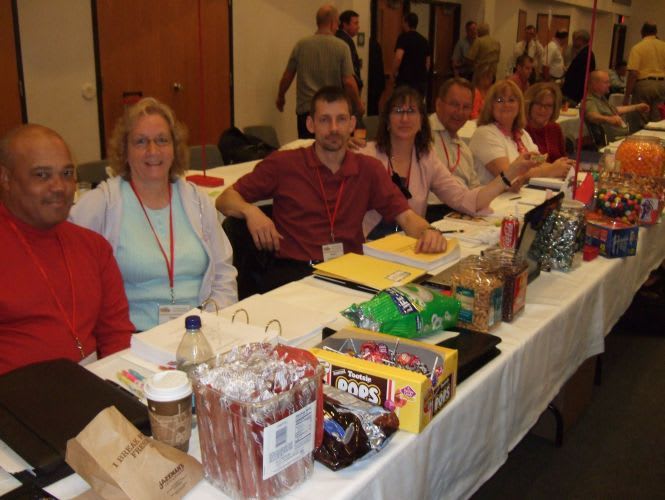
The Illinois delegation came stocked with provisions and set up a snack bar on their table to help them get through the general sessions.
WARRENSBURG, Mo. — Delegates began adoption of revisions to the 2005 National School Transportation Specifications and Procedures document here this week.
For the first time, delegates at the National Congress on School Transportation, which is held every five years, were able to vote on revisions and amendments electronically.
On Monday, delegates first dealt with a consolidation of the Bus Body and Chassis Specifications sections into one, eliminating redundancies. The proposed change that spurred the most active discussion on the floor was one that would have effectively required the installation of crossing arms on all school buses (the revision changed the wording to say that vehicles "shall" be equipped with the devices rather than "may").
Among the delegates who spoke in opposition to the change was California state director John Green, who said that the state's escorted crossing requirement makes crossing arms unnecessary. Larry Bluthardt, Kansas state director, pointed out that most student deaths that result from being struck by their own bus occur at the rear wheels rather than the front, where the crossing arm is positioned.
Utah state director Murrell Martin suggested that this issue may reflect the necessity for training of drivers and students, rather than necessitating a blanket change to school bus specifications. Others mentioned that some buses used to transport students with special needs often do not require use of a crossing arm, and delegates from cold weather states pointed out mechanical problems that arise in operating crossing arms during the winter.
In the end, the motion was defeated by a 35-to-11 vote.
Also in the Bus Body and Chassis Specifications section, under the section discussing exhaust systems, new language was added to account for 2010 engines and EPA requirements. The writing committee chair, Mike Kenney, said these changes were brought forward by the manufacturers, and comprised the inclusion of the term "after treatment system" in the pertinent sections.
Notable in the revisions to the Specially Equipped School Buses section was a requirement to have two webbing cutters on board specially equipped buses (the second cutter would serve as a backup). This motion passed in a 25-to-21 vote.
Perhaps the most dramatic occurrence Monday was the wholesale rejection of the School Bus Inspection Writing Committee's revisions to the section. Committee chair Sgt. Sharron VanCampen of Michigan asked delegates to approve or reject the section in its entirety, as it was written to conform to Federal Motor Carrier Safety Administration and FMVSS statutes. If approved, Sgt. VanCampen said the section would be forwarded to the federal government to challenge the U.S. Department of Transportation's annual inspection requirement.
Among others, New Mexico state director Gilbert Perea spoke in opposition to the motion, saying that it set up a slippery slope in which the feds could then be able to impose citations for non-compliance. Delegates voted to reject the section and revert to the 2005 document.
On Tuesday, congress activities began with revisions to the Transportation for Students with Disabilities and Health Care Needs section, which essentially was edited and revised to reflect the 2004 reauthorization and 2006 regulations regarding the Individuals with Disabilities Education Improvement Act. Most revisions to that section and the Infants, Toddlers and Pre-Schoolers Operations section were approved without much opposition from the delegates.
Next, a delegate moved to reconsider the inspection section as presented by VanCampen on Monday when it was rejected. After going through the section page by page, allowing delegates to make amendments, the section was eventually approved and now replaces the 2005 version.
The Tuesday session closed after discussion of the first portions of the School Transportation Security and Emergency Preparedness section. Topics that sparked discussion on the floor included a suggestion to install systems to allow school bus drivers to have direct communications with first responders in the event of an emergency, and in addressing emerging technology, a proposal to allow first responders access to live school bus video and audio to assess and respond to the threat in real time.
Congress activities were scheduled to continue Wednesday.
More Safety
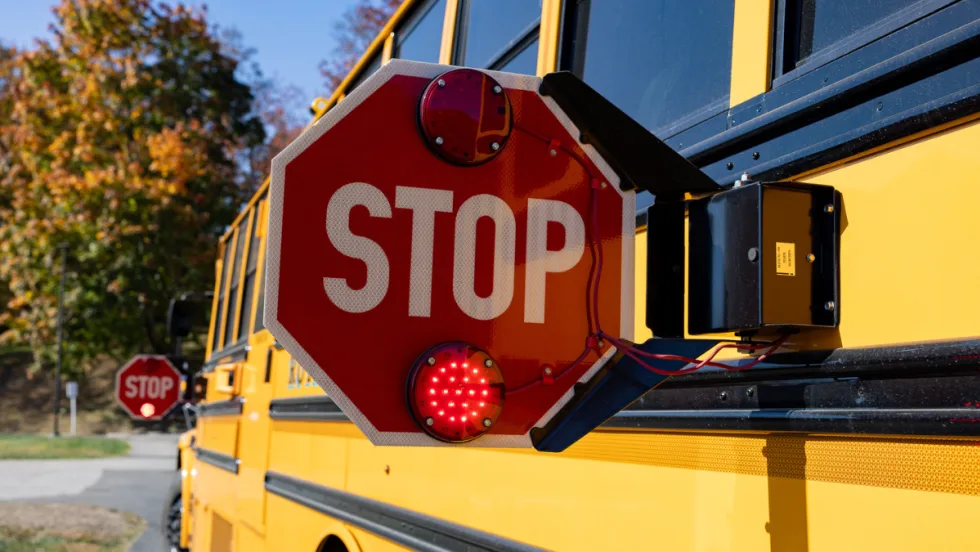
Illegal School Bus Passing Drops 24% in New York Districts
With fewer than 5% of citations involving repeat offenders, Westchester County officials said enforcement, education, and community partnerships are helping change driver behavior.
Read More →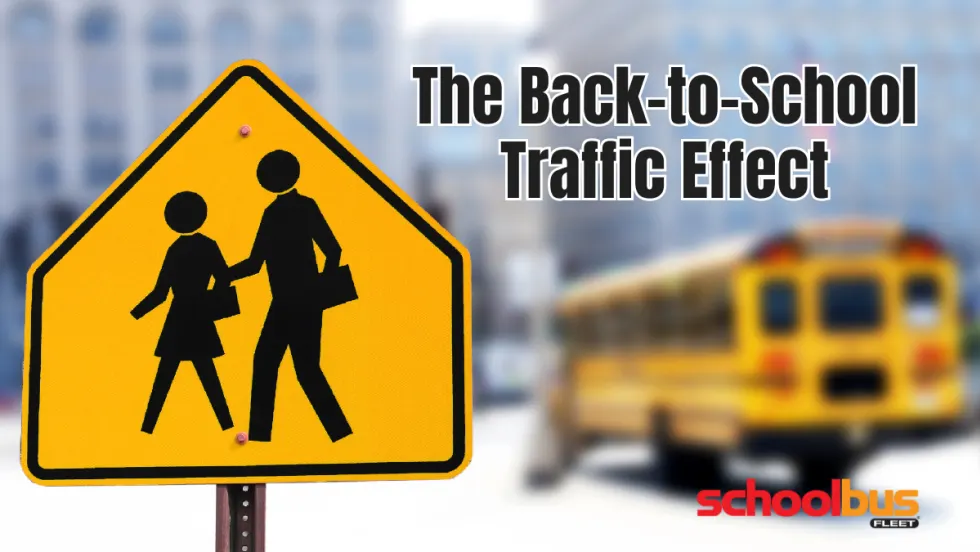
School's Back. Here's What Happened to Traffic, Speeding & Distraction
What happens to traffic when school resumes? New data analysis examines changes in distracted driving, congestion, and speeding around schools.
Read More →
Geotab Expands Fleet Safety Tools With Video Coaching, Risk Insights
New safety and video capabilities aim to help fleet managers assess risk, support drivers, and take targeted action through video coaching, red-light violation detection, and more.
Read More →

How to Build a Better School Bus Driver Training Program
Is it time to strengthen your driver training? Here’s how to pick the right talent and improve recruitment, retention, and safety. This video is brought to you by IC Bus.
Read More →
Recent School Bus Accidents Leave 2 Dead, 2 Injured
Four school bus crashes in Florida, Illinois, and Georgia highlight risks in transportation lots, at bus stops, and during student loading and unloading.
Read More →
When Every Second Matters, Clarity Keeps Routes Moving
From routine delays to urgent incidents, strong communication practices help drivers, dispatchers, schools, and families respond with confidence.
Read More →
What Happens When a School Bus Catches Fire — and What Can Help
School bus fires are rare but can be devastating. Learn how advances in fire suppression and asset protection help fleets detect fires earlier, reduce damage, and improve safety.
Read More →
Geotab Launches Tool to Help Fleets Investigate Road Incidents
Geotab Investigations combines telematics data, video, documents, and other evidence to help fleets reconstruct incidents, resolve claims, and determine what happened.
Read More →
Texas Sixth Grader Wins 2026 National School Bus Safety Poster Contest
Sai Darshana Yekolu of Moseley Middle School in Prosper, Texas, was named the newest winner for her artwork, bringing the theme of “Safe Rides, Everyday Heroes” to life.
Read More →
Doing More With Less: How Transportation Directors Can Prioritize Safety Amid Budget Uncertainty
With diesel prices soaring and nearly one-third of transportation directors expecting budget cuts, maintaining student safety has never been more challenging. Download this guide to learn how leading districts are prioritizing risk, funding critical safety technology, and building stronger budget cases with data.
Read More →