




NAPT Submits Comments to NHTSA on Rear Seat Belt Warning Systems
The National Association for Pupil Transportation’s concerns address bus driver responsibility and how that might exacerbate driver shortage, and the extra time the systems would add to bus trips.

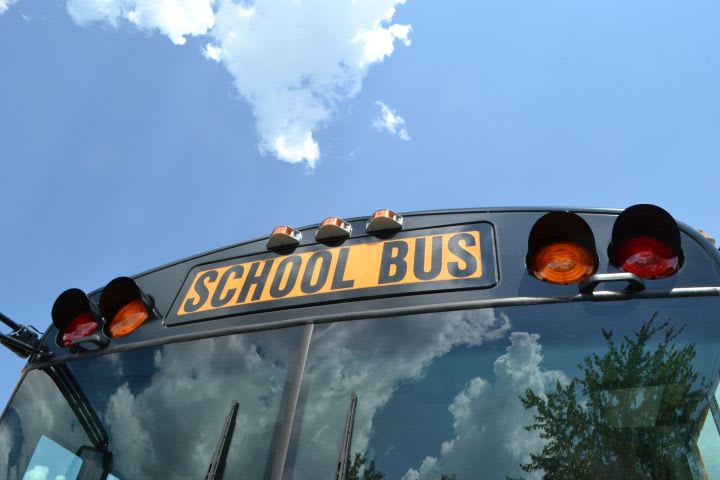
The National Association for Pupil Transportation provided feedback, including concerns about bus driver responsibility and more time added to trips, on a proposed requirement for a seat belt use warning system for rear seats. File photo
The National Association for Pupil Transportation provided feedback, including concerns about bus driver responsibility and more time added to trips, on a proposed requirement for a seat belt use warning system for rear seats. File photo
ALBANY, N.Y. — The National Association for Pupil Transportation (NAPT) recently provided feedback, including concerns about bus driver responsibility and more time added to trips, on a proposed requirement for a seat belt use warning system for rear seats.
The NAPT submitted comments on Nov. 26 to the National Highway Traffic Safety Administration (NHTSA) regarding its Advanced Notice of Proposed Rulemaking (ANPRM) on rear seat belt warning systems, the association said in a newsletter on Tuesday.
As SBF previously reported, the Moving Ahead for Progress in the 21st Century Act of 2012 (MAP-21) directs NHTSA to initiate a rulemaking proceeding to amend Federal Motor Vehicle Safety Standard (FMVSS) No. 208, ‘‘Occupant crash protection,’’ which would require the system, according to the docket. The standard requires a seat belt warning system for the driver’s seat, but not other seating positions.
The change that NHTSA is considering would require seat belt use warning systems for the rear seats in a variety of passenger-carrying vehicles, including school buses.
When this requirement was included in MAP-21, most people thought it was intended to require NHTSA to investigate the utilization and safety benefits of these systems primarily for rear-seat passengers riding in common use passenger vehicles such as cars, light trucks, vans, and SUVs, according to NAPT. NHTSA in this ANPRM was seeking broader public comments as to whether the requirement should extend to larger commercial vehicles, including school buses.
NAPT offered several concerns and unanswered questions for NHTSA to consider. Those include:
If a driver gets an audible alert at each of the many stops that a seat belt (or many seat belts) was/were not fastened, what is he/she to do? Would the driver be required to walk the aisle like an airplane flight attendant inspecting the entire bus and requiring students to buckle up? Would the driver be required to refuse to move the bus until all belts are buckled? What if some kids balk?
Would a driver be legally liable in a crash if a student is not buckled up and injured if it was ascertained that the driver got a warning that not all belts were fastened and did nothing, or not enough? Would the addition of such a system, therefore, become a de facto mandate forcing school systems to hire bus monitors to supervise belt use, adding a significant cost to state and local budgets?
Classroom start times depend on school bus schedules and, likewise, parents rely on the school bus to arrive at the neighborhood drop-off point on time at the end of the school day. If school bus drivers were compelled to respond to audible seat belt reminders, it would likely extend the time required to drive a route.
By the same token, what would be the impact on other motorists (often commuters during rush hours) stopped in either direction while the bus is loading/unloading? Would delays exacerbate the existing epidemic in this country (estimated to be nearly 18 million times a year) of motorists passing stopped school buses illegally while stop lamps are flashing, and for which there is a concern within our industry, pending legislation in Congress and interest by the NTSB?
There is a national school bus driver shortage. Any belt-monitoring requirement would be still one more driver responsibility/distraction on top of many others. In addition to driving safely and on time, school bus drivers today are involved in homeland security awareness around bus stops, and deal daily with student misbehavior, including bullying and physical assaults. We believe a part of the driver shortage problem involves the increasing and complex demands of the job.
Because children that ride in school buses are of varying ages and sizes, and smaller school buses often include children with fragile medical circumstances, we wonder if the sensors that would monitor belt usage are sophisticated enough to deal with the variations found in the school bus operating environment.
Requiring seat belt warning systems in commercial applications with large numbers of passengers gets to a more fundamental question that NHTSA should address in its consideration of the matter: Whose job is it to enforce buckling up? Is it the driver's responsibility, or the responsibility of passengers to avail themselves of the belt and obey any applicable state law? Does the answer to that question change when the passengers are under the age of 18? Or 16?
Ultimately, NAPT suggested that school buses be exempt from the requirement and offered to discuss its concerns in greater detail with the NHSTA staff during its deliberations on this matter, the association stated in its enewsletter.
To view the docket and read other comments that were submitted to NHTSA, go here.
More Safety
Geotab Expands Fleet Safety Tools With Video Coaching, Risk Insights
New safety and video capabilities aim to help fleet managers assess risk, support drivers, and take targeted action through video coaching, red-light violation detection, and more.
Read More →
How to Build a Better School Bus Driver Training Program
Is it time to strengthen your driver training? Here’s how to pick the right talent and improve recruitment, retention, and safety. This video is brought to you by IC Bus.
Read More →
Recent School Bus Accidents Leave 2 Dead, 2 Injured
Four school bus crashes in Florida, Illinois, and Georgia highlight risks in transportation lots, at bus stops, and during student loading and unloading.
Read More →

When Every Second Matters, Clarity Keeps Routes Moving
From routine delays to urgent incidents, strong communication practices help drivers, dispatchers, schools, and families respond with confidence.
Read More →
What Happens When a School Bus Catches Fire — and What Can Help
School bus fires are rare but can be devastating. Learn how advances in fire suppression and asset protection help fleets detect fires earlier, reduce damage, and improve safety.
Read More →
Geotab Launches Tool to Help Fleets Investigate Road Incidents
Geotab Investigations combines telematics data, video, documents, and other evidence to help fleets reconstruct incidents, resolve claims, and determine what happened.
Read More →
Texas Sixth Grader Wins 2026 National School Bus Safety Poster Contest
Sai Darshana Yekolu of Moseley Middle School in Prosper, Texas, was named the newest winner for her artwork, bringing the theme of “Safe Rides, Everyday Heroes” to life.
Read More →
Doing More With Less: How Transportation Directors Can Prioritize Safety Amid Budget Uncertainty
With diesel prices soaring and nearly one-third of transportation directors expecting budget cuts, maintaining student safety has never been more challenging. Download this guide to learn how leading districts are prioritizing risk, funding critical safety technology, and building stronger budget cases with data.
Read More →
Walton County Schools Adds Gatekeeper Stop-Arm Enforcement System
The Florida district will deploy Gatekeeper’s updated Student Protector technology, which now incorporates AI to improve video evidence.
Read More →
How To Build a More Secure School Bus Yard During and After Hours
As thefts and overnight security threats continue, school transportation leaders are combining stronger operational practices with AI-enabled surveillance to better protect buses, facilities, and staff.
Read More →