




NAPT speakers emphasize transportation's role in education system
Industry experts, government representatives and motivational speakers all point to the pivotal role of the yellow school bus in getting students safely to school ready to learn.

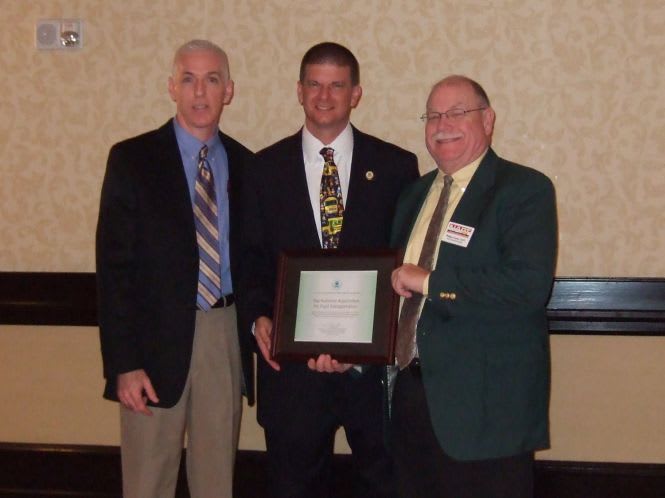
NAPT Executive Director Mike Martin (left) and President Bill Tousley (right) accept a $5 million grant from the EPA's Jim Blubaugh during the general session Tuesday.
LOUISVILLE, Ky. - National Association for Pupil Transportation (NAPT) members have heard a common thread emerge from speakers at the 2009 Summit: transportation is a key part of the education system, and members must take on and promote that role in order to achieve larger safety and educational goals.
Peggy Burns of Education Compliance Group Inc. started Monday's general session with a keynote address on the need to balance pressing issues that garner media attention, such as the H1N1 virus, sexual predators, global warming and terrorism, while still dealing with the perennial issues that arise in pupil transportation and should not be ignored, such as incidents of student assault or harassment on the school bus.
"Think of each staff member as having an individual responsibility to the goal of getting students to school ready to learn; how does each person function to that end?" she said.
Next, National Transportation Safety Board (NTSB) special investigator Dennis Collins presented an update on the agency's recent report on pedal misapplication accidents (available at http://www.ntsb.gov/publictn/2009/SIR0902.pdf). Four of the five accidents discussed in the report involve school buses, with available evidence pointing to pedal misapplication (mistaking the accelerator for the brakes) as the cause.
Collins told attendees that NTSB's recommendations in the report include the installation of brake transmission shift interlock devices on all new school buses, research on pedal design, the installation of event data recorders, driver familiarization with the pedals on different bus models, physically separating buses from pedestrians with bollards or other obstacles, and encouraging school administrators to consider altering loading and unloading procedures to address safety issues.
In a keynote presentation that afternoon, Teena Fitzroy told her life story with the aim of helping attendees understand the perspective of students with special needs. Fitzroy, a family information specialist for Monroe #1 BOCES in Fairport, N.Y., grew up with cerebral palsy and was the first child with a disability to attend her local elementary school. "Tell kids with disabilities to learn to live successfully with [them]," she said. She urged attendees to be friends and heroes to students with special needs, removing obstacles to their path to education.
On Tuesday, the general session focused on federal issues, with representatives from the Transportation Security Administration (TSA), Federal Motor Carrier Safety Administration (FMCSA) and the Environmental Protection Agency (EPA) addressing NAPT.
Jim Blubaugh (center in photo), director of the EPA's Clean Diesel program, announced a $5 million grant to NAPT that will allow school districts to reduce monthly lease payments for CNG buses. The National School Bus Equity Investment Lease Program will provide funds that can be recycled year after year, and Blubaugh said the EPA expects to leverage over $120 million over the course of the program.
The keynote presentation Tuesday morning was given by Hon. Dirk Kempthorne, former governor of Idaho, U.S. senator and Secretary of the Interior (read SBF's interview here). A champion of the school bus industry, he mentioned a wooden school bus model presented to him during his time as governor, "a reminder of what I consider a cornerstone of our education system," he said.
"The political process requires the best in all of us, and I believe that means an involved citizenry," he said. "NAPT is representative of that."
Next, TSA Highway and Motor Carrier Division Manager Bill Arrington updated NAPT on the agency's involvement in school bus security efforts.
In 2010, he reported, TSA has slated three exercises focusing on school bus security and is developing a security guidance booklet for school bus operators. The long-awaited school bus assessment has been completed, he said, and is going through clearance for presentation to Congress. He expects Congress to have it by the end of this year, and hopes it will produce federal funding for school bus security efforts.
John Van Steenburg, FMCSA's director of enforcement and compliance, in his address called the school bus industry a model for other modes of surface transportation, due to its record of safety. He reported to attendees on the agency's roadside inspections, upcoming rulemakings and its Passenger Carrier Technical Advisory Group, which NAPT participated in last year.
He reported that FMCSA hopes to create an approved list of medical examiners for CDL certifications and a pre-employment driver database accessible to school bus operators.
More Management

EverDriven Launches Route Consolidation Calculator to Estimate Diesel Savings
As diesel prices hit record highs, the largest alternative transportation provider says a 10% route consolidation could save a 120-route district more than $78,000 a year in fuel alone.
Read More →
Zum Secures Continued Financing Support for School Bus Expansion
Generate Private Credit has financed approximately $75 million in school bus deployments across three states, supporting more than 500 buses as Zum expands across the county.
Read More →
Beyond Discipline: A Different Approach to Student Behavior on the Bus
After implementing a dean of students program in Oregon, North Clackamas is seeing positive improvements. Here’s how it worked. The Route is brought to you by IC Bus.
Read More →
A Dean of Transportation's Different Approach to Student Behavior on the School Bus
After implementing a dean of students program in Oregon, North Clackamas is seeing positive improvements on the bus. Here’s how it worked.
Read More →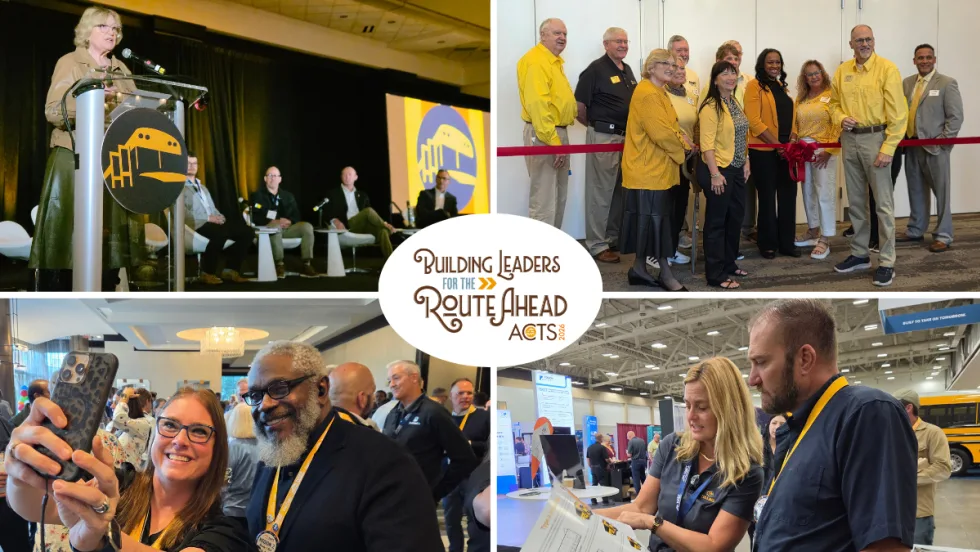
Inside NAPT ACTS 2026: Highlights from Louisville
From federal updates and student behavior strategies to new school bus technology and industry awards, see highlights from NAPT ACTS 2026 in Louisville.
Read More →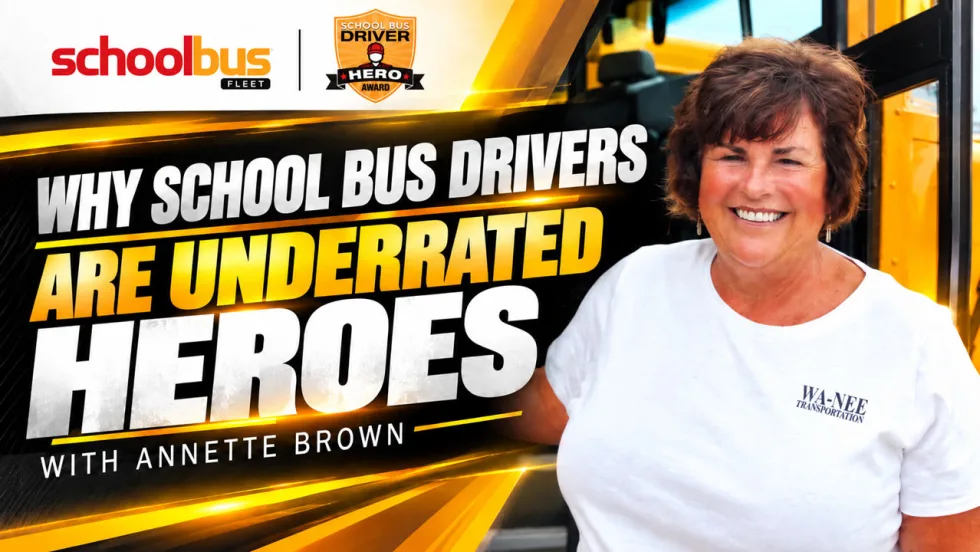
Meet the 2025 School Bus Driver Hero Winner: Annette Brown
We caught up with Wa-Nee Community Schools' Annette Brown on site at SBFX, where she was named the 2026 School Bus Driver Hero Award winner. Hear about her reaction, what she loves most about being a school bus driver, and more!
Read More →
Predictability Is Like Ketchup (According to 6-Year-Olds)
To students, a different school bus can feel like a full-blown crisis. One driver reflects on why familiar routines, showing up on time, and being reliably boring matter more than we think.
Read More →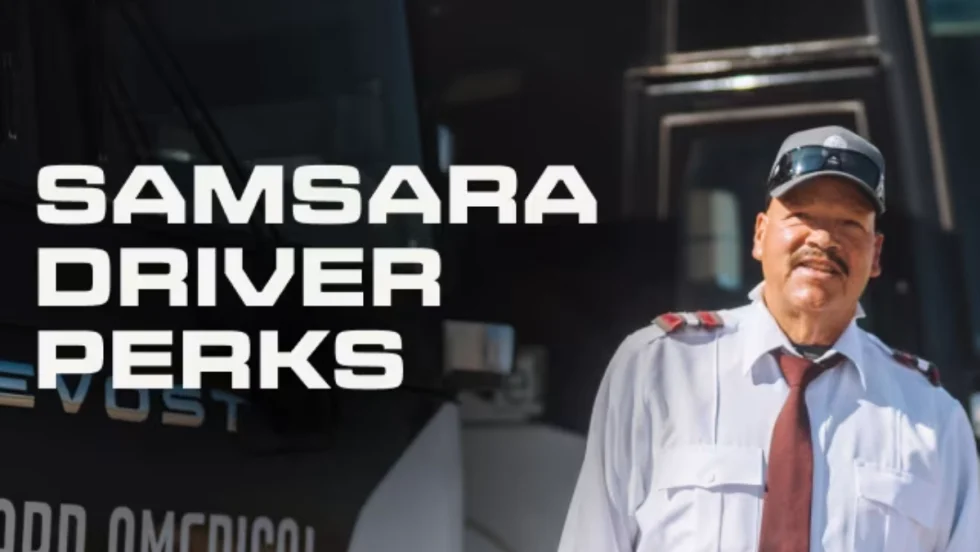
Samsara Launches Free Driver Rewards Program
The new Driver Perks program gives eligible professional drivers access to discounts and offers without adding a cost for participating fleets.
Read More →
How Tax-Exempt Municipal Leases Can Help Finance School Buses
Let’s explore school bus financing options, including municipal leases, vendor payable accounts, and balloon payments, and how they can help stretch fleet budgets.
Read More →
Nominate Rising School Transportation Pros Under 40!
We’re searching for the next generation of leaders making an impact across the K-12 student transportation industry to recognize as SBF’s 2027 Trailblazers. Nominations are open now!
Read More →