




Motorcoach, School Bus Associations Come Together to Urge Congress to Pass CERTS Act
The U.S. private motorcoach, school bus, and domestic passenger vessel industries have suffered unprecedented economic losses and furloughed hundreds of thousands of employees over the past four months due to the COVID-19 pandemic.
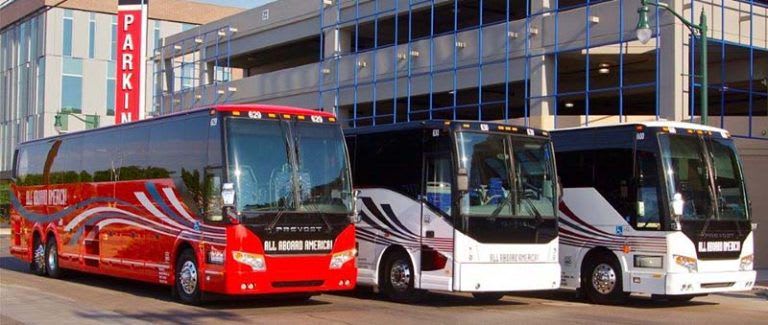
In a letter from multiple industries critical to the U.S. national transportation network, the group stated that the CERTS Act provides much needed grant and economic assistance to transportation industries overlooked in previously enacted COVID-19 economic relief packages.
All Aboard America
More than 30 associations came together to urge Congressional leaders to support the Coronavirus Economic Relief for Transportation Services Act (CERTS Act), introduced jointly by Sens. Jack Reed (D-R.I.) and Susan Collins (R-Maine). In a letter from multiple industries critical to the U.S. national transportation network, the group stated that the CERTS Act (S.4150) provides much needed grant and economic assistance to transportation industries overlooked in previously enacted COVID-19 economic relief packages.
The letter signed by Peter Pantuso of the American Bus Association, Larry Killingsworth of the United Motorcoach Association, John Groundwater of the Passenger Vessel Association, Curt Macysyn of the National School Transportation Association, and John Costa of the Amalgamated Transit Union states:
“The U.S. private motorcoach, school bus, and domestic passenger vessel industries have suffered unprecedented economic losses and furloughed hundreds of thousands of employees over the past four months due to the COVID-19 pandemic. Based on the nature of their operations, most businesses and workers in these sectors are not likely to resume any time soon or only in a severely reduced capacity. Unlike other modes of transportation, such as airlines, rail, and public transit, these transportation industries have not received direct economic relief to date, placing them in a perilous position, with many on the brink of closing their doors forever.
The U.S. private motorcoach, school bus, and domestic passenger vessel industries, collectively, employ over 400,000 employees and provide diverse, essential, and often critical passenger transportation services nationwide.
The U.S. motorcoach industry employs nearly 100,000 individuals and provides nearly 600 million passenger trips per year ensuring vital intercity connections for rural communities, relieving congestion, and providing reliable commuter operations for urban areas. Motorcoaches connect people to their jobs, whether those jobs are in cities, mines, farms, and other locations. Charter and tour operations are an essential part of the travel and tourism industry and will be essential to help those businesses as the nation recovers from the pandemic. Motorcoaches are also a key element of our nation’s defense system and support military troop movements and take people out of harm’s way by supplying evacuation services during hurricanes, fires, and other national emergencies.
Private school bus transportation companies provide nearly 40% of the nation’s school bus service under contract to school districts, employing over 250,000 employees. School bus transportation is the safest form of transportation for students to get to and from school according to DOT statistics. School bus companies have been severely impacted by the pandemic as they have experienced reduced or lapsed payments due to school closures in the spring, cancellation of summer camps and activities and planning for wide variations across the country regarding school re-openings, activity trips, and sports activities in the fall. School bus transportation is an extension of the education system and for many, the only way to get to and from school. For 26 million children, their trained and skilled professional school bus driver is the first and last person they see during their school day. It is critical to ensure the continued viability of school bus transportation for these children that rely on the yellow school bus.
The U.S. passenger vessel industry, which in good times carries more than 200 million passengers annually has been literally shut down because of the coronavirus pandemic. The passenger vessel industry includes public and private ferries, dinner boats, sightseeing and excursion vessels, whale watch and wildlife tour boats, sailing vessels, and small U.S. overnight cruise ships. These small businesses, which are in virtually every port in our nation, employ thousands of U.S. citizens and U.S. mariners make a significant contribution to the transportation and travel and tourism sectors.
These transportation industries and their employees all provide vital transportation services, playing an essential and critical role in the national transportation network. If these industries fail, it will have a devastating and reverberating effect throughout the entire economy. The impact will affect not only the capacity of the national transportation network, but also schools, national emergency response capabilities, the manufacturing sector, the financial sector, the tourism sector, and beyond. All citizens deserve vital, reliable, and affordable transportation services for their daily lives, and require safe and reliable transportation services for their children to attend school and educational events.”
The letter was supported by more than 30 organizations in the transportation industry.
Originally posted on Metro
More Management
How to Build a Better Driver Training Program
Ready to boost up your school bus instructor training? Here’s how to pick the right talent and improve recruitment, retention, and safety.
Read More →
CALSTART and Forth Combine to Form Catalyst Mobility
The new name represents a renewed vision for the nonprofit focused on advancing clean, equitable, and affordable transportation solutions that move people and goods.
Read More →
What Makes a Great School Bus Driver Trainer?
Choosing the right school bus driver trainer takes more than experience. Learn six keys to selecting and developing trainers and evaluating program effectiveness.
Read More →


School Bus Contractors Expand Through New Deals, Acquisitions & Partnerships
STA's Canadian division acquires Ontario-based G&L Stevenson Transport while Durham School Services adds a new district contract in California, First Student adds a New Jersey contract, and Minnesota Coaches acquires Halo Transportation.
Read More →
Logan Bus Company Rolls Out AI Phone System for NYC School Bus Families
A summer pilot found that AI agents could handle most routine calls, freeing up time for customer service staff to focus on emergencies and complex family concerns.
Read More →
From Intent to Impact: What I Learned About Leadership from TAPT
A Texas transportation supervisor shares lessons on self-awareness, accountability, managing stress and building trust — and why investing in leadership development matters at every stage of your career.
Read More →
NAPT Names 2026 Award Recipients, Hall of Fame Inductee
Who earned national recognition for their work in student transportation? This year, NAPT named five recipients of its 2026 awards for service, safety, and leadership, plus its newest Hall of Famer.
Read More →
2026 State of Student Transportation Report
Driver shortages. Rising costs. Growing safety expectations. More data, but not enough time to act on it. The 2026 State of Student Transportation Report reveals what transportation leaders say is putting the most pressure on their operations—and where they’re investing next. See how your priorities compare.
Read More →
How to De-Escalate an Angry Person: 5 Steps for Handling Workplace Conflict
What makes emotions run high, and how should you handle an angry colleague or parent? Follow these steps for staying calm, listening, showing empathy, and resolving conflict.
Read More →
What Readiness Looks Like This School Year
Learn about the challenges shaping the 2026–2027 school year, from persistent driver shortages and budget pressure to technology and readiness gaps. See how school districts are responding and adapting in Zonar’s 2026 Back-to-School Readiness Report.
Read More →