




LiquidSpring Suspension System Available for Some IC Buses
CLASS is designed to automatically change the spring stiffness and damping at each wheel in response to road and driving conditions for a smoother ride. It is available as an option on IC’s Type C buses.
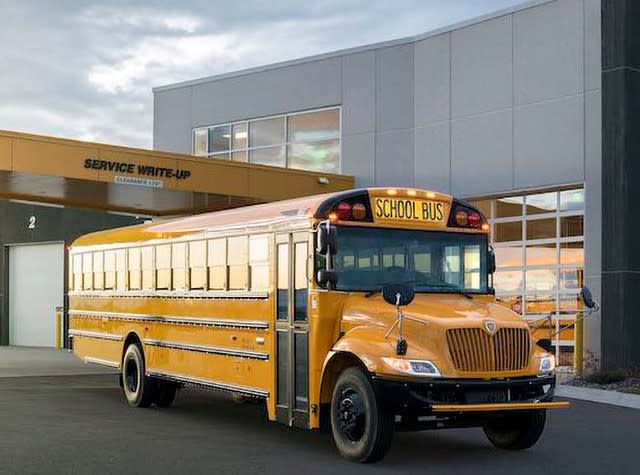
LiquidSpring’s smart suspension system is now available as an option on IC Bus's Type C buses.
Photo courtesy LiquidSpring
LiquidSpring has partnered with IC Bus to offer the CLASS suspension system as an approved upgrade option for some of the bus manufacturer’s school buses.
LiquidSpring’s smart suspension system is designed to automatically change the spring stiffness and damping at each wheel in response to road and driving conditions, according to a news release from the suspension system supplier. When the vehicle makes sharp turns or emergency evasive maneuvers, the suspension stiffens to provide stability and eliminates roll. The onboard processor enables the suspension to adjust without driver intervention for a fluid, seamless experience.
The suspension system is available as an option on IC Bus’s Type C buses, Sudha Veerapaneni, IC Bus’s product marketing director, told School Bus Fleet.
One immediately noticeable change a user has experienced is a smoother ride, enhancing comfort for drivers and passengers, according to LiquidSpring.
“I couldn’t get my staff, the passengers, to slide out of their seats, which had happened when I was a new driver,” said Nancy Geesey, the director of transportation for Kingman Academy of Learning in Kingman, Ariz.
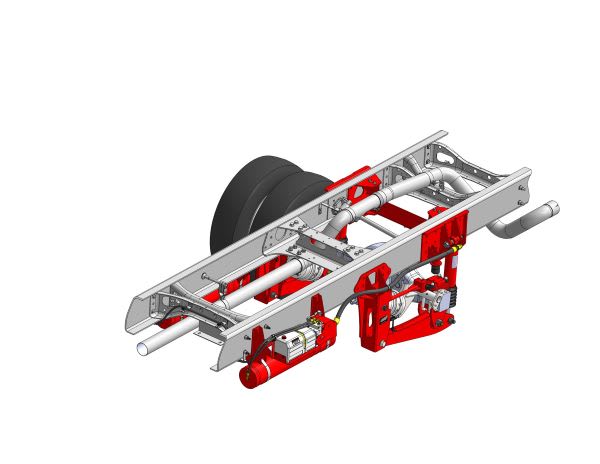
The CLASS suspension system is designed to automatically change the spring stiffness and damping at each wheel in response to road and driving conditions for a smoother ride.
Rendering courtesy LiquidSpring
LiquidSpring can also provide a substantial reduction in bouncing and body roll, so drivers experience less fatigue and safer handling. A smoother ride is not just a luxury: drivers can work longer shifts when they are able to stay upright and comfortable in their seats. The constant fight against sway and neck-snapping induced by the road with a traditional suspension can add significant fatigue.
Enhanced comfort can also be an advantage to special-needs students, especially those with reduced motor function and less ability to fight the constant motion and resulting pain caused by a rough ride.
Meanwhile, the suspension system can benefit bus monitors as well. These assistants often sit in the back of the bus, where the ride is noticeably less smooth, leading to more physical strain to remain in their seats.
For areas with poorly maintained roads, the suspension system can also improve school bus maintenance issues, according to LiquidSpring. The same comfort provided to passengers is simultaneously at work reducing vibration and flexing issues with the frame. The frame bends upwards at the point of the highest stress because each wheel experiences differing force levels. Anything bolted to the frame will be stressed along with it. This repeated movement can make bolts loosen, bolt holes enlarge, and rivets pop, and cause undue wear on components and body panels.
IC Bus has a focus on smart technologies: safety features such as electronic stability control, along with collision mitigation in the form of automatic braking via forward sensors, are standard on all models. LiquidSpring’s improved handling can be added to this list of safety features.
“We have powered so many other systems in our vehicles, from antilock brakes to power steering to collision prevention, yet suspensions have mostly stayed unpowered due to their complexity — until now,” said Carl Harr, director of sales and marketing at LiquidSpring. “LiquidSpring’s smart controls work in real time, with no driver intervention. It optimizes the ride based on speed, leveling, braking, and individual wheel heights automatically.”
For more information contact your local IC Bus dealer or Travis Ward, LiquidSpring’s national bus sales representative, at (765) 474-7816.
More Maintenance
The Essential Guide to School Bus Maintenance and Student Safety
Your district's buses carry students to school every day. This guide shows how predictive maintenance powered by fleet data helps keep buses reliable, drivers accountable and students safer from the first bell to the last stop.
Read More →
Kerry Brothers Grows Michigan School Bus Repair Network
The acquisition of Downriver Truck and Bus expands Kerry Brothers’ school bus maintenance footprint across southeast Michigan, adding repair capacity, diagnostic resources, and state inspection support.
Read More →
Noregon Introduces CAN Bus Diagnostic Tool, Expands JPRO Features
CAN Mentor and the latest JPRO update aim to simplify vehicle network diagnostics and improve repair efficiency for technicians of all experience levels.
Read More →
Cummins on Smarter, Simpler Engine Innovation
Cummins discusses its first-ever gasoline engine for school buses, EPA 2027, and why bus fleets still want durable, simpler internal combustion options.
Read More →
Report: 72% of Diesel School Buses Now Use Advanced Low-Emission Engines
New data shows advanced low-emission diesel technology continues expanding across school bus fleets, even as electric bus adoption gains momentum.
Read More →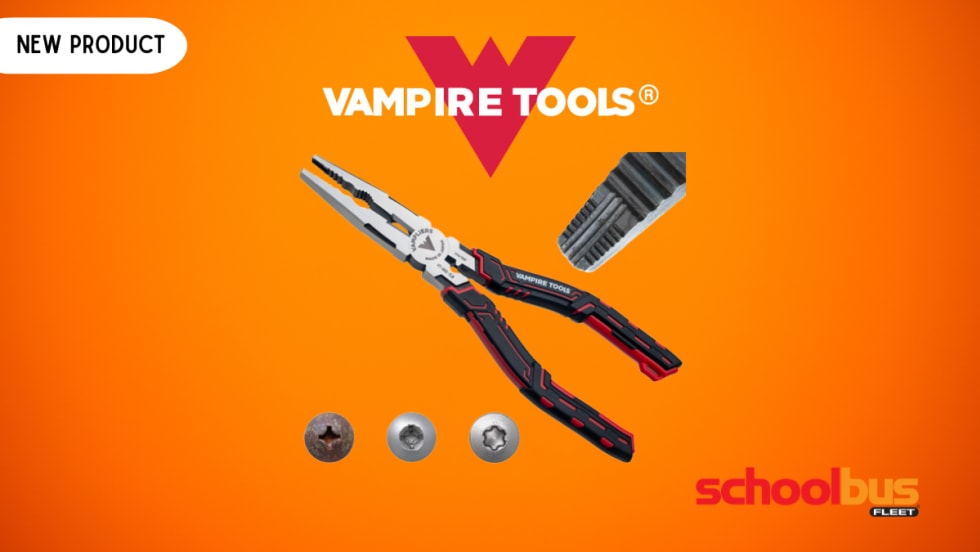
Vampire Tools' CAIMAN 7.5-Inch Multi-Purpose Screw Extractor Long-Nose Pliers with Crimper
Vampire Tools introduced the VAMPLIERS Caiman 7.5-inch multi-purpose pliers, combining screw extraction, cutting, crimping, and gripping functions into a single tool designed for fleet maintenance professionals.
Read More →
How Advanced Diagnostics Helps Bus Fleets Stay Ahead of Repairs
Chat with Noregon’s Kevin Smallhorn at ACT Expo about bus diagnostic tools, telematics integration, CNG maintenance support, and strategies to help reduce downtime and improve uptime.
Read More →
How School Bus Fleets are Getting Ahead of Breakdowns
Don’t let bus downtime wear you down. Here’s how bus operators are shifting from manual processes to AI-powered, data-driven maintenance systems for improved reliability and safety.
Read More →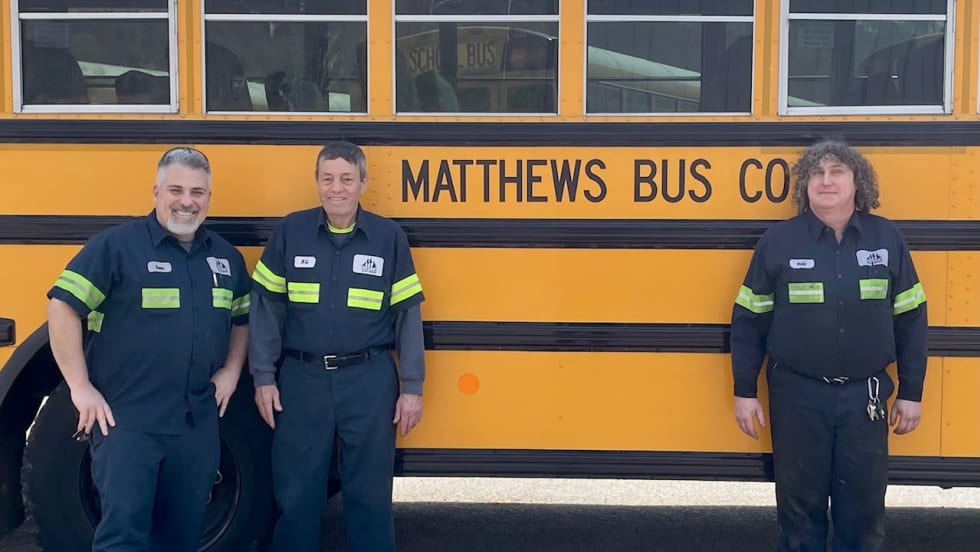
Pennsylvania School Bus Maintenance Team Praised for Dedication to Safety
Matthews Bus Company’s West Jefferson received a letter of commendation from the Pennsylvania State Police for their fleet inspections.
Read More →
From Chaos to Clarity: How School Districts Are Running Leaner Transportation Operations
Covering 38 routes on a Friday afternoon. Buses idling while routes overlap. Parents calling nonstop about late arrivals. Sound familiar? This whitepaper explores how district transportation leaders solved these exact problems — and what measurable results followed.
Read More →