




Keeping Pace With Technology a Key Theme for School Bus Contractors
At NSTA’s annual meeting, contractors discuss the potential benefits of new safety technologies — and the potential threat of Uber and other ride-sharing apps.

Thomas McMahon・Executive Editor

Barry Stock of Landmark Student Transportation led a discussion on Uber and other ride-sharing services at the NSTA annual meeting.
3 min to read
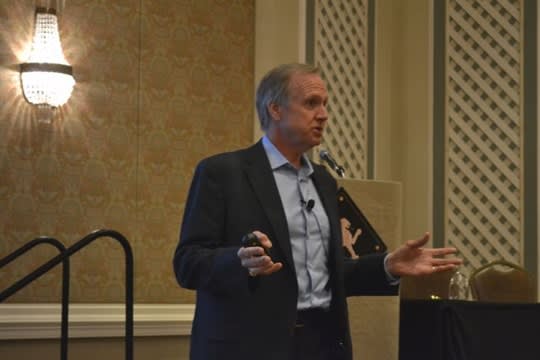
Barry Stock of Landmark Student Transportation led a discussion on Uber and other ride-sharing services at the NSTA annual meeting.
GREENSBORO, N.C. — There’s a host of new and emerging transportation-related technologies, but which ones have the most potential to enhance pupil transportation? And which ones could even pose a threat? (Think Uber.)
Those were overarching issues in discussions among school bus contractors at the National School Transportation Association’s (NSTA’s) annual meeting, which was held this week in Greensboro.
Several speakers touched on technologies like video systems that give a full view around the bus, sensors that detect students in the danger zone, and telematics programs that give managers instant updates about their buses. For contractors, determining which tech investments will provide the most value for their companies and, ultimately, their customers will be critical in the coming years.
That message was conveyed in a session on safety technologies around the school bus. Presenter John Elliott Jr. of National Express LLC recommended being mindful of how these systems can be used in boosting driver training and behavior and in providing real-time information about the fleet.
In another session, the major school bus OEMs briefed NSTA attendees on the latest technologies and alternative-fuel systems available for their buses. Those include new telematics platforms, electronic stability control, and collision avoidance systems, along with an expanding lineup of propane, compressed natural gas, and gasoline options.
The session that likely generated the most discussion was on another timely topic: ride-sharing apps. Barry Stock of Landmark Student Transportation gave an overview of these services, from the ubiquitous Uber and Lyft to the more niche ventures that have been launched to transport children, such as HopSkipDrive, Kango, and Zum.
Stock pointed out that these ride-sharing services for children seem to be moving into the domain of the school bus. For example, they conduct background checks on their drivers, require clean driving records, and present an image of safety and security to parents.
So, Stock asked, “Why should we care?” For one, there is strong demand for ride-sharing services, he noted. This year, a projected 15 million adults in the U.S. will use ride-sharing services, which is a 20% increase from last year. The ride-sharing apps also make use of the smartphones that most people have come to rely on, and they tout their convenience in helping families with busy schedules.
To further drive home the point, Stock broached an underlying concern: the possibility of a school district opening up its transportation service RFP to include Uber, Lyft, and the like.
To that end, Stock recommended that the school bus industry increase its efforts to educate parents, legislators, and the public in general about the safety advantages of school buses compared to ride-sharing services.
During a group discussion after Stock’s presentation, NSTA President Todd Monteferrario of First Student raised another related issue: The popularity of Uber and Lyft may be inhibiting the pupil transportation industry’s recruitment efforts by attracting people who might have otherwise considered becoming school bus drivers. These services, after all, allow their drivers to essentially “be their own boss” and drive when it’s convenient for their schedules.
To help members stay abreast of developments with the ride-sharing providers, NSTA launched a page on its website that aggregates news stories and studies on the topic.
Also at the annual meeting, NSTA attendees heard presentations on school bus seat belts, trends in contracting, and legislative and regulatory issues. The latter included updates on the Federal Motor Carrier Safety Administration’s entry-level driver training negotiated rulemaking, IRS guidance on calculating part-time status for employees, and the National Highway Traffic Safety Administration’s recent seat belt-related activities.
Next year’s NSTA annual meeting will be held in Indianapolis from July 15 to 19.
More Management

How to Build a Better Driver Training Program
Ready to boost up your school bus instructor training? Here’s how to pick the right talent and improve recruitment, retention, and safety.
Read More →
CALSTART and Forth Combine to Form Catalyst Mobility
The new name represents a renewed vision for the nonprofit focused on advancing clean, equitable, and affordable transportation solutions that move people and goods.
Read More →
What Makes a Great School Bus Driver Trainer?
Choosing the right school bus driver trainer takes more than experience. Learn six keys to selecting and developing trainers and evaluating program effectiveness.
Read More →

School Bus Contractors Expand Through New Deals, Acquisitions & Partnerships
STA's Canadian division acquires Ontario-based G&L Stevenson Transport while Durham School Services adds a new district contract in California, First Student adds a New Jersey contract, and Minnesota Coaches acquires Halo Transportation.
Read More →
Logan Bus Company Rolls Out AI Phone System for NYC School Bus Families
A summer pilot found that AI agents could handle most routine calls, freeing up time for customer service staff to focus on emergencies and complex family concerns.
Read More →
From Intent to Impact: What I Learned About Leadership from TAPT
A Texas transportation supervisor shares lessons on self-awareness, accountability, managing stress and building trust — and why investing in leadership development matters at every stage of your career.
Read More →
NAPT Names 2026 Award Recipients, Hall of Fame Inductee
Who earned national recognition for their work in student transportation? This year, NAPT named five recipients of its 2026 awards for service, safety, and leadership, plus its newest Hall of Famer.
Read More →
Sponsored•September 2, 2026
2026 State of Student Transportation Report
Driver shortages. Rising costs. Growing safety expectations. More data, but not enough time to act on it. The 2026 State of Student Transportation Report reveals what transportation leaders say is putting the most pressure on their operations—and where they’re investing next. See how your priorities compare.
Read More →
How to De-Escalate an Angry Person: 5 Steps for Handling Workplace Conflict
What makes emotions run high, and how should you handle an angry colleague or parent? Follow these steps for staying calm, listening, showing empathy, and resolving conflict.
Read More →
Sponsored•September 1, 2026
What Readiness Looks Like This School Year
Learn about the challenges shaping the 2026–2027 school year, from persistent driver shortages and budget pressure to technology and readiness gaps. See how school districts are responding and adapting in Zonar’s 2026 Back-to-School Readiness Report.
Read More →