




Judge approves transit agency’s new school service plan
ROCHESTER, N.Y. — In a new twist to a case pitting transit agency against school bus contractor, a judge on Thursday struck down a decision by the Fe...

ROCHESTER, N.Y. — In a new twist to a case pitting transit agency against school bus contractor, a judge on Thursday struck down a decision by the Federal Transit Administration (FTA), paving the way for the Rochester-Genesee Regional Transportation Authority (RGRTA) to create new bus routes to serve students.
The FTA had ruled in January 2007 that the RGRTA was providing illegal service for the Rochester City School District (RCSD), displacing routes that had been operated by Laidlaw Education Services (which is now part of First Student).
Later in the year, U.S. District Judge David Larimer upheld the FTA’s ruling but, on two occasions, extended the deadline by which RGRTA was supposed to cease its school routes.
RGTA proposed to replace the routes in question with new routes that it would call “Express Service.” The service would be clearly marked as open to the public, and it would run along existing routes but bypass downtown Rochester. And while the agency’s original routes at issue had no stops within 1.5 miles of schools — because RCSD doesn’t receive state subsidies for busing students within that range — the Express Service would.
Still, the FTA determined in October that the Express Service would also be in violation of its school bus regulations.
The regulations — issued in 1976 by the FTA’s predecessor, the Urban Mass Transportation Administration (UMTA) — prohibit federally subsidized transit agencies from providing school transportation “that exclusively transports students and school personnel in competition with a private school bus operator.”
However, an exception is given for “tripper service,” which is defined as “regularly scheduled mass transportation service which is open to the public, and which is designed or modified to accommodate the needs of school students and personnel, using various fare collections or subsidy systems.”
Tripper buses can’t carry designations such as “school bus” or “school special,” and they have to be part of the transit agency’s regular, published route service and stop at regular service stops.
Another exemption from the school bus regulations is granted to transit agencies when no school bus contractor can provide the service a district requires.
In the Rochester case, the district had decided before the 2006-07 school year to move the start time of some of its high schools to an hour earlier. Laidlaw reportedly could not continue to provide service for those high schools because of a conflict with the service it was providing for RCSD’s elementary schools.
The district then entered into a “tripper service subsidy agreement” with RGRTA to serve the high schools. In June 2006, a union representing Laidlaw employees filed a complaint with the FTA, alleging a violation of the school bus regulations.
In his ruling on Thursday, Larimer found that the FTA was “arbitrary and capricious” in denying RGRTA’s proposed Express Service — to replace the original routes at issue — on the basis that it was “not generally designed for the public” and that “the demand for this service comes from RCSD, not the general public.”
The judge pointed to a notice that the UMTA had issued to accompany the school bus regulations. The UMTA wrote that “federally assisted buses must remain open to the public at all times and be clearly marked for public use. This requirement was added to prevent federally assisted operators from operating special routes for schoolchildren which are not generally available to the public.”
Citing the notice, Larimer wrote that “UMTA did not state, then, that routes must be generally designed for the public, but that they must be generally available to the public. The clear import is that the agency sought to prohibit subsidized operators from running buses for schoolchildren from which other members of the public are excluded.”
Larimer also cited an earlier case, United States ex rel. Lamers v. City of Green Bay, in which the court determined that a federally subsidized transit agency “may completely redesign its transit system to accommodate schoolchildren as long as all routes are accessible to the public and the public is kept informed of route changes.”
Larimer wrote that the FTA appeared to be selectively interpreting its school bus regulations by ignoring the statement that tripper service may be “designed” to accommodate students. He said that the RGRTA’s proposed Express Service appeared to meet all of the criteria for permissible tripper service.
The judge extended the stay of the FTA’s cease-and-desist order until March 24, allowing RGRTA to continue its original school routes until it could implement the new Express Service.
More Safety

How to Build a Better School Bus Driver Training Program
Is it time to strengthen your driver training? Here’s how to pick the right talent and improve recruitment, retention, and safety. This video is brought to you by IC Bus.
Read More →
Recent School Bus Accidents Leave 2 Dead, 2 Injured
Four school bus crashes in Florida, Illinois, and Georgia highlight risks in transportation lots, at bus stops, and during student loading and unloading.
Read More →
When Every Second Matters, Clarity Keeps Routes Moving
From routine delays to urgent incidents, strong communication practices help drivers, dispatchers, schools, and families respond with confidence.
Read More →

What Happens When a School Bus Catches Fire — and What Can Help
School bus fires are rare but can be devastating. Learn how advances in fire suppression and asset protection help fleets detect fires earlier, reduce damage, and improve safety.
Read More →
Geotab Launches Tool to Help Fleets Investigate Road Incidents
Geotab Investigations combines telematics data, video, documents, and other evidence to help fleets reconstruct incidents, resolve claims, and determine what happened.
Read More →
Texas Sixth Grader Wins 2026 National School Bus Safety Poster Contest
Sai Darshana Yekolu of Moseley Middle School in Prosper, Texas, was named the newest winner for her artwork, bringing the theme of “Safe Rides, Everyday Heroes” to life.
Read More →
Doing More With Less: How Transportation Directors Can Prioritize Safety Amid Budget Uncertainty
With diesel prices soaring and nearly one-third of transportation directors expecting budget cuts, maintaining student safety has never been more challenging. Download this guide to learn how leading districts are prioritizing risk, funding critical safety technology, and building stronger budget cases with data.
Read More →
Walton County Schools Adds Gatekeeper Stop-Arm Enforcement System
The Florida district will deploy Gatekeeper’s updated Student Protector technology, which now incorporates AI to improve video evidence.
Read More →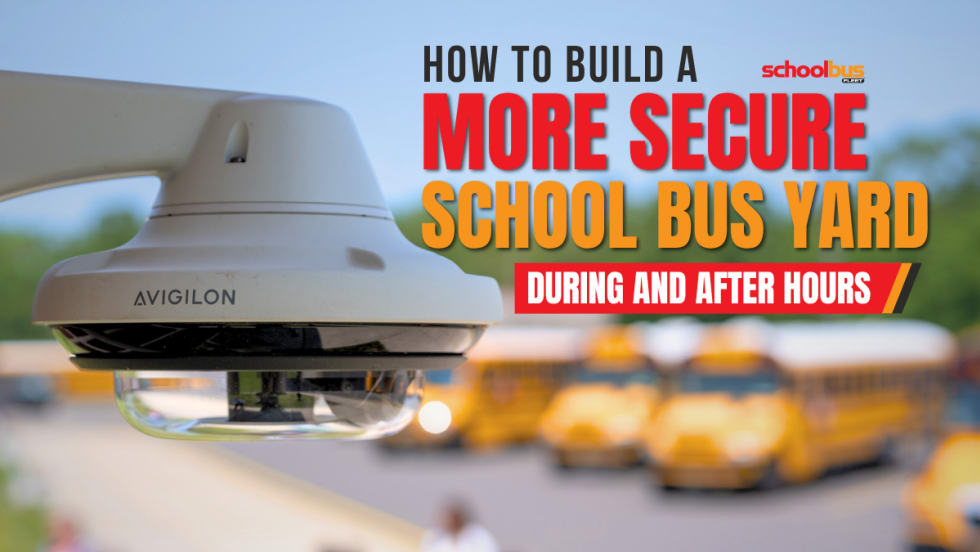
How To Build a More Secure School Bus Yard During and After Hours
As thefts and overnight security threats continue, school transportation leaders are combining stronger operational practices with AI-enabled surveillance to better protect buses, facilities, and staff.
Read More →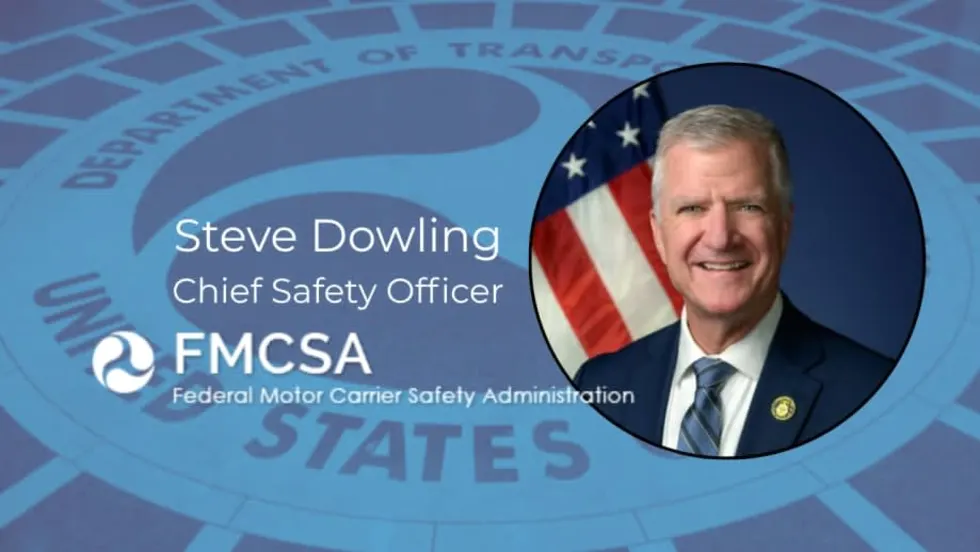
FMCSA Names New Chief Safety Officer: What School Bus Operators Should Know
Steve Dowling is set to lead the federal agency's efforts to advance commercial motor vehicle safety and reduce crashes, fatalities, and injuries on the nation's roadways.
Read More →