




Related: Illegal Passing Prevention Efforts Shared at NAPT Conference
Indiana Stop-Arm Running Crackdown May Include Seizing Cars of Offenders
Senate Bill 219 would let police seize a stop-arm runner’s vehicle. Meanwhile, Gov. Eric Holcomb announces that over 2,500 citations were issued as part of an illegal passing prevention program.

Nicole Schlosser・Former Executive Editor
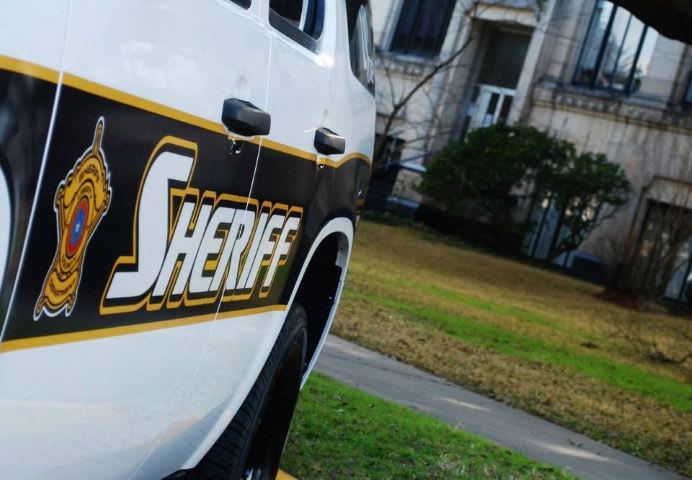
Indiana Senate Bill 219 would let police seize a stop-arm runner’s vehicle. Meanwhile, Gov. Eric Holcomb announced that over 2,500 citations were issued as part of an illegal passing prevention program. Photo courtesy Liberty County (Texas) Sheriff's Office
3 min to read
Indiana Senate Bill 219 would let police seize a stop-arm runner’s vehicle. Meanwhile, Gov. Eric Holcomb announced that over 2,500 citations were issued as part of an illegal passing prevention program. Photo courtesy Liberty County (Texas) Sheriff's Office
INDIANAPOLIS — The introduction of a bill amendment that would let police seize the vehicle of a motorist who illegally passes a stopped school bus follows an announcement of a special school bus stop safety patrol program’s results.
Senate Bill 219, sponsored by Sen. Ron Alting, seeks to amend Indiana code related to criminal law and procedure by permitting civil forfeiture of a vehicle that is used to “recklessly” pass a school bus that is stopped and has its stop arm extended. The bill also addresses civil forfeiture of vehicles used to transport illegal substances, stolen property, hazardous waste, “A bomb … or weapon of mass destruction …,” or commit other crimes.
Senate Bill 219 was introduced and referred to the Judiciary Committee on Jan. 6. If the bill passes, the law would go into effect on July 1, according to the Indiana General Assembly's website.
Meanwhile, Gov. Eric Holcomb recently announced that more than 2,500 citations, of which 453 were for stop-arm violations, were issued as part of a program created to thwart illegal school bus passing around bus stops, the Chronicle-Tribune reports.
The Stop Arm Violation Enforcement (SAVE) grant program, which is funded by the National Highway Transportation Safety Administration (NHTSA) and administered by the Indiana Criminal Justice Institute, provided funds to nearly 40 law enforcement agencies to conduct overtime patrols of school bus stops. As School Bus Fleet previously reported, Holcomb announced $380,000 in grant funding in August from the Indiana Criminal Justice Institute for increased traffic enforcement near school bus stops across the state.
The departments issued a total of 2,675 citations and 1,430 warnings during a two-month period at the beginning of the 2019-20 school year, according to the newspaper. With the funding, law enforcement officers conducted an additional 2,057 patrols and worked an extra 5,690 hours, focusing on speeding, aggressive driving, and stop-arm violations, among other dangerous maneuvers, near bus routes and stops.
Holcomb made the announcement on Jan. 2, WBIW reports.
Devon McDonald, the executive director of the Indiana Criminal Justice Institute, told the Chronicle-Tribune that the program is the first of its kind in Indiana and neighboring states and that a “critical component” was teamwork between school bus drivers and law enforcement.
“There’s no excuse for driving dangerously or distracted around a school bus, but there are consequences,” Holcomb said in a Jan. 3 post on his Facebook page. “Parents shouldn’t have to worry about the safety of their child going to and from school, which is why we’ll continue to make improving bus stop safety a priority.”
A statewide crackdown on stop-arm running was spurred by a tragic crash that killed three students who were siblings and injured one other as they were trying to board their school bus on Oct. 30, 2018. It has included a new law, signed by Holcomb in May, that increased penalties for violating a stop arm from a Class B misdemeanor to a Class A misdemeanor, and an opinion from the state’s attorney general that the board that establishes school bus safety standards can allow the use of extended stop arms in the state.
More Safety

How to Build a Better School Bus Driver Training Program
Is it time to strengthen your driver training? Here’s how to pick the right talent and improve recruitment, retention, and safety. This video is brought to you by IC Bus.
Read More →
Recent School Bus Accidents Leave 2 Dead, 2 Injured
Four school bus crashes in Florida, Illinois, and Georgia highlight risks in transportation lots, at bus stops, and during student loading and unloading.
Read More →
Sponsored•September 8, 2026
When Every Second Matters, Clarity Keeps Routes Moving
From routine delays to urgent incidents, strong communication practices help drivers, dispatchers, schools, and families respond with confidence.
Read More →

What Happens When a School Bus Catches Fire — and What Can Help
School bus fires are rare but can be devastating. Learn how advances in fire suppression and asset protection help fleets detect fires earlier, reduce damage, and improve safety.
Read More →
Geotab Launches Tool to Help Fleets Investigate Road Incidents
Geotab Investigations combines telematics data, video, documents, and other evidence to help fleets reconstruct incidents, resolve claims, and determine what happened.
Read More →
Texas Sixth Grader Wins 2026 National School Bus Safety Poster Contest
Sai Darshana Yekolu of Moseley Middle School in Prosper, Texas, was named the newest winner for her artwork, bringing the theme of “Safe Rides, Everyday Heroes” to life.
Read More →
Sponsored•August 27, 2026
Doing More With Less: How Transportation Directors Can Prioritize Safety Amid Budget Uncertainty
With diesel prices soaring and nearly one-third of transportation directors expecting budget cuts, maintaining student safety has never been more challenging. Download this guide to learn how leading districts are prioritizing risk, funding critical safety technology, and building stronger budget cases with data.
Read More →
Walton County Schools Adds Gatekeeper Stop-Arm Enforcement System
The Florida district will deploy Gatekeeper’s updated Student Protector technology, which now incorporates AI to improve video evidence.
Read More →
How To Build a More Secure School Bus Yard During and After Hours
As thefts and overnight security threats continue, school transportation leaders are combining stronger operational practices with AI-enabled surveillance to better protect buses, facilities, and staff.
Read More →
FMCSA Names New Chief Safety Officer: What School Bus Operators Should Know
Steve Dowling is set to lead the federal agency's efforts to advance commercial motor vehicle safety and reduce crashes, fatalities, and injuries on the nation's roadways.
Read More →