




COTA, Ohio School District Partner on Student Transportation
Indiana District Seeks New School Transportation Plan
The new plan for Indianapolis Public Schools includes options for a walk zone policy, using the district’s yellow school buses, and partnering with IndyGo, the local transit agency.

Sadiah Thompson・Assistant Editor
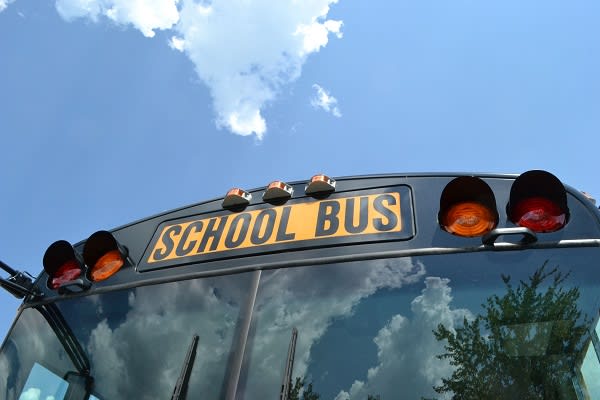
Indianapolis Public Schools developed a new transportation plan that includes options for a walk zone policy, using the district’s yellow school buses, and partnering with IndyGo, the local transit agency.
File photo
4 min to read
Indianapolis Public Schools (IPS) is seeking to update the ways in which students get to and from school for the 2021-22 school year, including options for walking, riding the district’s yellow buses, and using IndyGo, the city’s public transit agency.
IPS developed this new transportation plan as a result of high transportation costs per student, coupled with several factors related to COVID-19 and a $15 million budget shortfall, according to the district’s website. The plan was reportedly presented to the IPS board of commissioners during its meeting on March 25, and the board is expected to vote on the plan on April 29, according to a news release from IPS.
“Thinking about the proposal regarding IndyGo, it is a critical transition from a financial standpoint for the district,” said Aleesia Johnson, superintendent for IPS, in the news release. “There’s no need to duplicate services when we have a strong service in the city. We think this is a partnership that makes sense, will help us save dollars, and give our students not only access to school each day, but also access to the broader community.”
Inez Evans, president and CEO of IndyGo, added that the transit agency has the necessary infrastructure when it comes to the number of buses to complete IPS’s new transportation plan.
As School Bus Fleetpreviously reported, in 2018, IPS partnered with IndyGo for a pilot program encouraging students from Shortridge and Arsenal Technical high schools to use the city’s public transit buses. A year later, in 2019, the pilot was extended for another two years and expanded to include students from those schools as well as students from Crispus Attucks, George Washington, and KIPP Legacy high schools. Even though the district continued to provide yellow school bus service during this time, the pilot program was designed to help cut the district’s high school transportation costs.
Now, under the new plan, IPS is seeking a partnership with IndyGo to provide transportation to select students from the high schools listed above, in addition to Emmerich Manual, Graduation Academy, Newcomer Program at Northwest Middle School, and Thrival Academy, according to the district. The plan will affect approximately 605 of the district’s high school students, according to an FAQ webpage about the proposed partnership.
IPS will provide students that use IndyGo as their sole means of school transportation with student ID cards annually with a free electronic bus pass. The bus passes, according to the district, will allow students to commute to and from school, work, and extracurricular activities. The following criteria will be used to determine which students will be eligible to use IndyGo:
Zero IndyGo bus transfers.
Less than 0.7-mile total walk.
No more than 50 minutes total travel time. (IPS expects the average total travel time for students to be 25 minutes.)
IPS will continue to provide yellow school bus service as an option for students who are not eligible for the IndyGo service. Students with special needs and those receiving McKinney-Vento services will continue to receive transportation services per their Individualized Education Plan or their McKinney-Vento status, respectively, according to the district. (In July 2020, IPS began contracting its school buses with First Student, according to the news release.)
In addition to using IndyGo and the district's school buses, IPS is executing a walk zone policy for K–12 students at all schools for the upcoming school year. Families affected by this change will be contacted directly by IPS about their “walker” designation based on their walking distance from the student's school (between 1 to 1.5 miles from their school depending on grade level).
“We executed our walk zones policy at 13 schools this school year in an effort to move more than 3,000 students off of yellow buses given COVID concerns,” Johnson said in the release. “We brought in crossing guards to help students safely travel to school and that’s been a successful endeavor. As a result, we think we’re positioned to expand that across all our schools to be sure our students are safe, the district gets some savings, but we’re not negatively impacting the experience our students have in schools every day.”
IPS said transportation may be provided for students within the walking distance guidelines when physical barriers, such as busy intersections, prevent safe travel to school, or required because of a qualifying medical condition.
More Management
How to Build a Better Driver Training Program
Ready to boost up your school bus instructor training? Here’s how to pick the right talent and improve recruitment, retention, and safety.
Read More →
CALSTART and Forth Combine to Form Catalyst Mobility
The new name represents a renewed vision for the nonprofit focused on advancing clean, equitable, and affordable transportation solutions that move people and goods.
Read More →
What Makes a Great School Bus Driver Trainer?
Choosing the right school bus driver trainer takes more than experience. Learn six keys to selecting and developing trainers and evaluating program effectiveness.
Read More →


School Bus Contractors Expand Through New Deals, Acquisitions & Partnerships
STA's Canadian division acquires Ontario-based G&L Stevenson Transport while Durham School Services adds a new district contract in California, First Student adds a New Jersey contract, and Minnesota Coaches acquires Halo Transportation.
Read More →
Logan Bus Company Rolls Out AI Phone System for NYC School Bus Families
A summer pilot found that AI agents could handle most routine calls, freeing up time for customer service staff to focus on emergencies and complex family concerns.
Read More →
From Intent to Impact: What I Learned About Leadership from TAPT
A Texas transportation supervisor shares lessons on self-awareness, accountability, managing stress and building trust — and why investing in leadership development matters at every stage of your career.
Read More →
NAPT Names 2026 Award Recipients, Hall of Fame Inductee
Who earned national recognition for their work in student transportation? This year, NAPT named five recipients of its 2026 awards for service, safety, and leadership, plus its newest Hall of Famer.
Read More →
Sponsored•September 2, 2026
2026 State of Student Transportation Report
Driver shortages. Rising costs. Growing safety expectations. More data, but not enough time to act on it. The 2026 State of Student Transportation Report reveals what transportation leaders say is putting the most pressure on their operations—and where they’re investing next. See how your priorities compare.
Read More →
How to De-Escalate an Angry Person: 5 Steps for Handling Workplace Conflict
What makes emotions run high, and how should you handle an angry colleague or parent? Follow these steps for staying calm, listening, showing empathy, and resolving conflict.
Read More →
Sponsored•September 1, 2026
What Readiness Looks Like This School Year
Learn about the challenges shaping the 2026–2027 school year, from persistent driver shortages and budget pressure to technology and readiness gaps. See how school districts are responding and adapting in Zonar’s 2026 Back-to-School Readiness Report.
Read More →